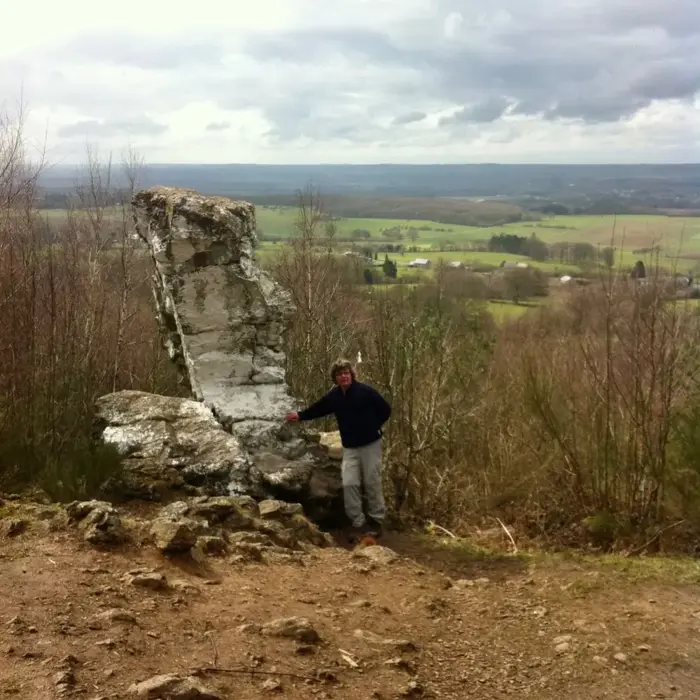




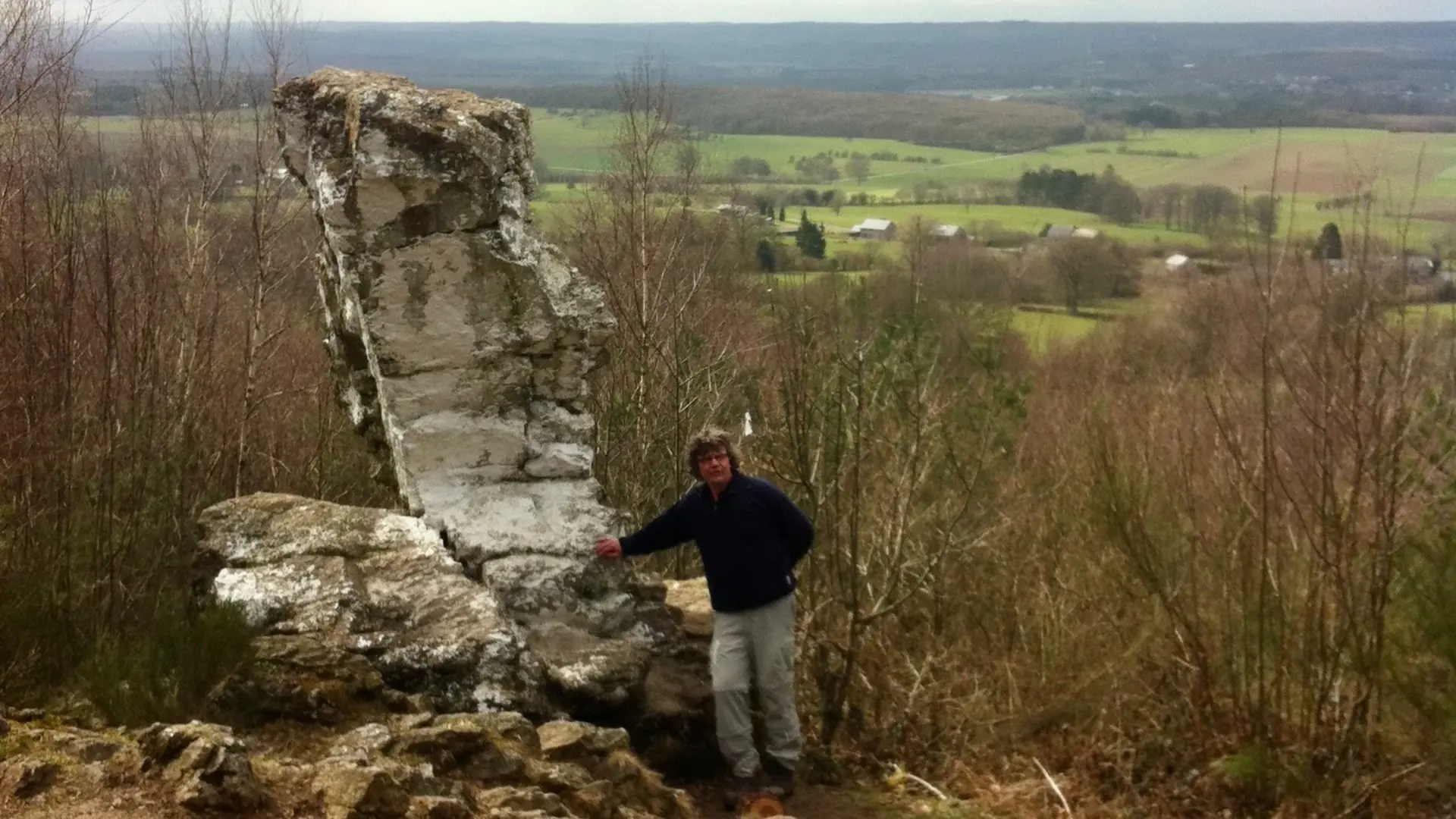








De Pierre Haina is een opvallende natuurlijke rotsformatie in de provincie Luxemburg in België, nabij Durbuy. De steen valt op in het omliggende bos door zijn sterke helling naar het oosten en rijst meer dan drie meter boven de grond uit. In tegenstelling tot de kenmerkende dolmens en menhirs van de regio staat Pierre Haina op een hoger gelegen, open plek met uitzicht over de vallei. In de omgeving liggen ook andere megalithische monumenten, zoals de Dolmen van Wéris, maar Pierre Haina onderscheidt zich door zijn eigen vorm en culturele betekenis binnen het landschap.
Archeologische en Historische Bevindingen
Wetenschappers beschouwen Pierre Haina niet als een door mensen opgericht megalithisch monument, maar als een natuurlijke rotsformatie. De naam zou mogelijk teruggaan op een oud woord dat kan worden geïnterpreteerd als “steen van de voorouders”, al is deze herkomst niet met zekerheid vastgesteld. De rots is ongeveer drie meter hoog en helt onder een hoek van ongeveer 45 graden naar het oosten. Volgens historische beschrijvingen en lokale traditie wordt de steen jaarlijks rond de herfstequinox witgekalkt. Deze handeling wordt gezien als een manier om de steen te “zuiveren” en kwade krachten op afstand te houden. In volksverhalen wordt deze gewoonte soms verbonden met veronderstelde rituelen uit de Neolithische tijd of uit de Keltische traditie.
Legenden, Volksverhalen en Mythen
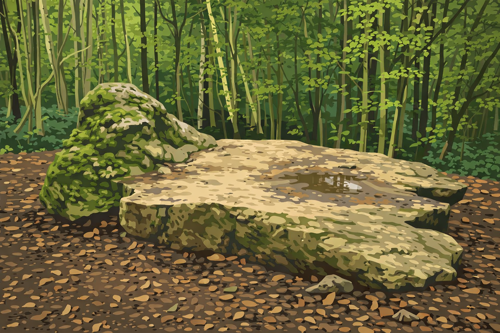
Pierre Haina staat centraal in een bekende lokale legende. Volgens de overlevering sluit de steen een opening af die naar het middelpunt van de aarde leidt, waar de duivel zou wonen. Het verhaal vertelt dat de duivel op bepaalde nachten de steen opzij duwt, naar buiten komt en door de omgeving zwerft voordat hij bij het aanbreken van de dag weer onder de grond verdwijnt. Om dit te voorkomen, zouden bewoners de steen elke herfstequinox witkalken, zodat de opening gesloten blijft en de duivel opgesloten blijft. Een ander volksverhaal verbindt Pierre Haina met een nabijgelegen plek die bekendstaat als het “Duivelsbed”, waar de duivel volgens de legende zou rusten nadat hij uit de aarde is gekomen, voordat hij weer terugkeert. Samen maken deze verhalen van de stenen rond Wéris een netwerk van mythische plekken in plaats van slechts één afzonderlijk monument.
Bereikbaarheid en Bezoekersinformatie
Vanuit het centrum van Wéris (bijvoorbeeld bij de Maison des Mégalithes of de dorpskerk) volg je de Rue du Mont omhoog. Langs het pad staan duidelijke borden richting “Pierre Haina”. De wandeling door het bos is ongeveer 2 kilometer lang en duurt rond de 30 minuten. Het pad is licht tot matig steil, maar goed gemarkeerd en voor de meeste bezoekers goed te doen. Stevige wandelschoenen zijn aan te raden, omdat het pad ongelijk en bij nat weer modderig kan zijn.