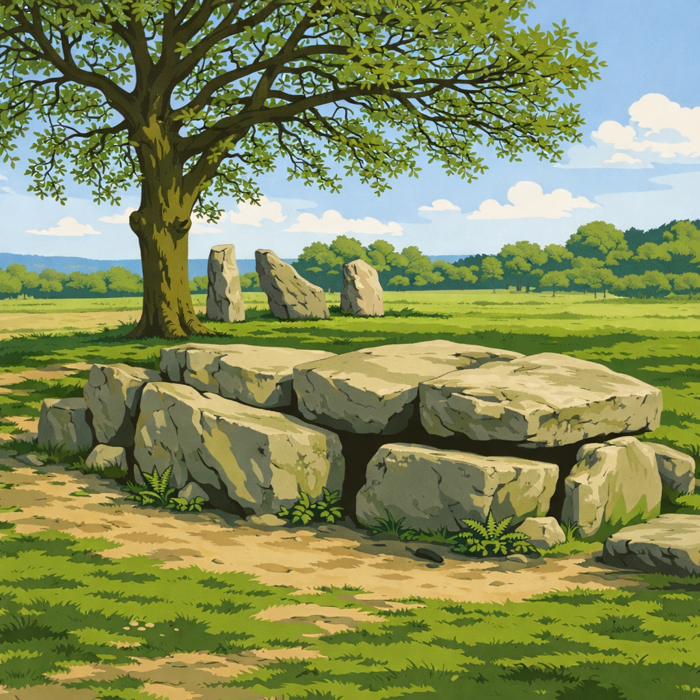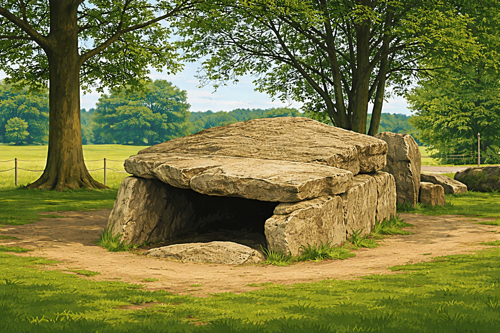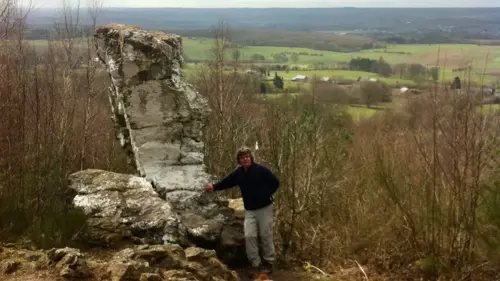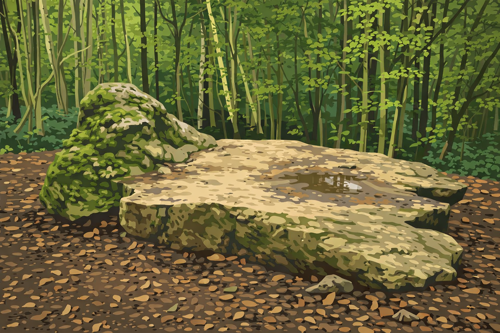




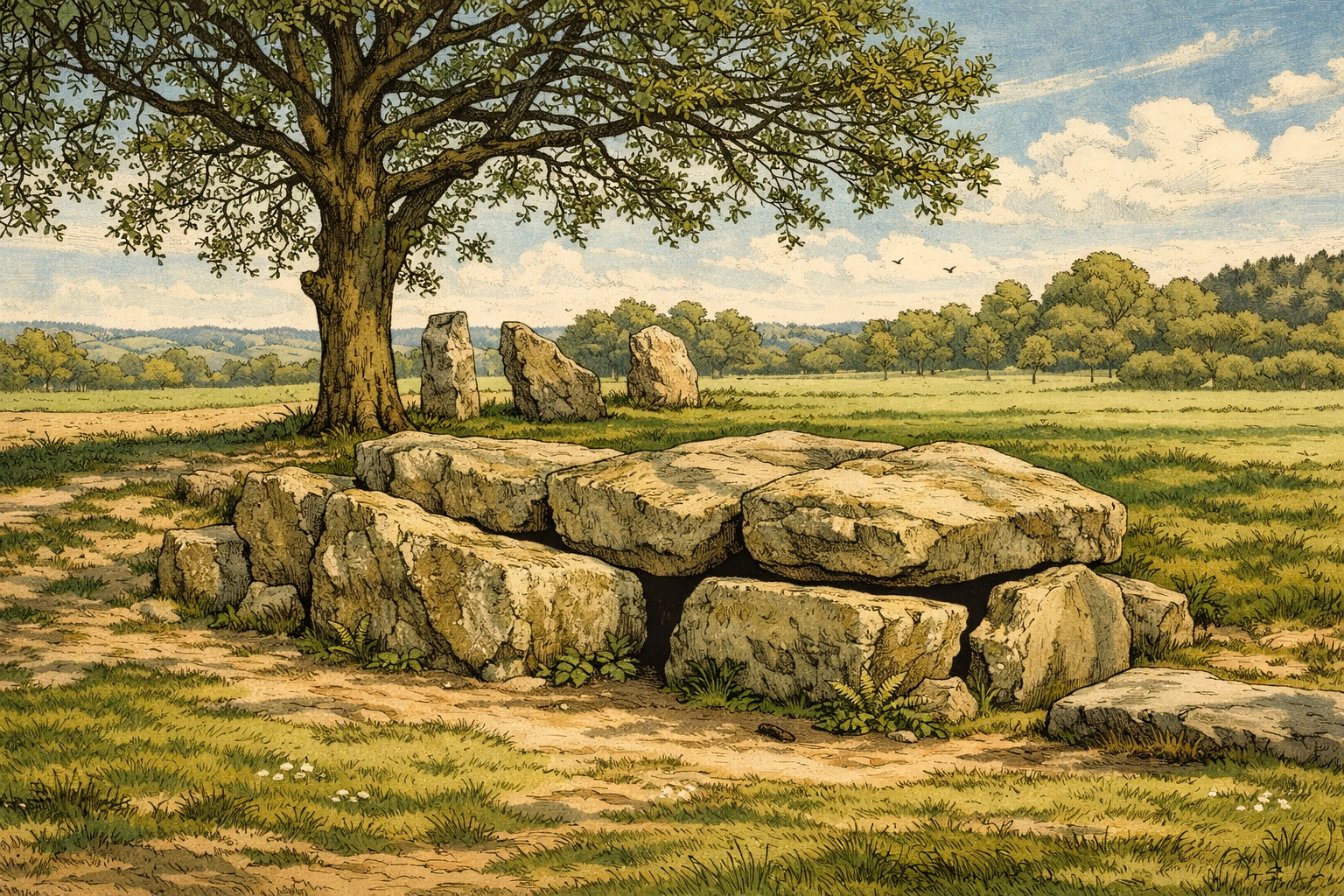









Known also as Wéris II, the Dolmen Sud Oppagne is an impressive prehistoric structure built from large blocks of local conglomerate stone. It is situated within open farmland, surrounded by patches of greenery, which contributes to a peaceful and somewhat isolated environment despite its accessibility. This dolmen lies roughly 1.5 kilometers south of its counterpart, Dolmen Nord (Wéris I), and is part of a small group of megalithic sites unique to Belgium. Both monuments, along with several nearby menhirs, are easily accessible and visible during a short walk in the area, making Wéris an important archaeological region.
Archaeological and Historical Findings
The dolmen was discovered in the late 19th century by Félix Lambert, the son of a local farmer, who noticed the large stones while helping clear boulders from a field. He realized their similarity to those at the nearby Wéris I site. Excavations conducted intermittently from 1906 through the late 20th century revealed the dolmen’s layout: it includes a trapezoidal burial chamber, an entrance corridor, and a large horizontal capstone at the back. These chambers served as communal burial sites for prehistoric communities. Finds such as pottery shards and stone tools support the site’s use as a tomb, probably dating back to the Late Neolithic or Early Bronze Age (around 2500–2000 BCE). Remains of at least ten individuals, spanning different age groups, were also recovered from the dolmen.
Archaeoastronomic Orientation
Currently, no credible evidence supports the idea that Dolmen Sud Oppagne is oriented according to specific astronomical events or alignments. Studies have not identified intentional positioning to correspond with solar or lunar phenomena at this location.
Local Legends, Folklore and Myths
No particular myths or legends have been directly linked to Dolmen Sud Oppagne itself, nor is the dolmen a focal point in local folklore. While the Wéris area is known for its rich storytelling traditions, none of the well-known tales specifically mention this dolmen, according to existing academic research.
Accessibility and Visitor Information
Dolmen Sud Oppagne can be reached on foot from either the center of Wéris village or the Maison des Mégalithes archaeological visitor center. The route covers approximately 1.5 kilometers along marked, maintained paths that pass through mostly flat farmland and light woodland. The walk is generally easy, with only gentle slopes and occasional uneven ground, making it accessible to most visitors; however, individuals using wheelchairs or with mobility difficulties may require assistance near the dolmen due to rough terrain.
Admission fee: The site is freely accessible. The nearby Maison des Mégalithes museum charges a small fee for entry to its exhibitions.
Guide Requirement: Visitors do not need a guide to visit the dolmen, though guided tours are available through the museum and visitor center.