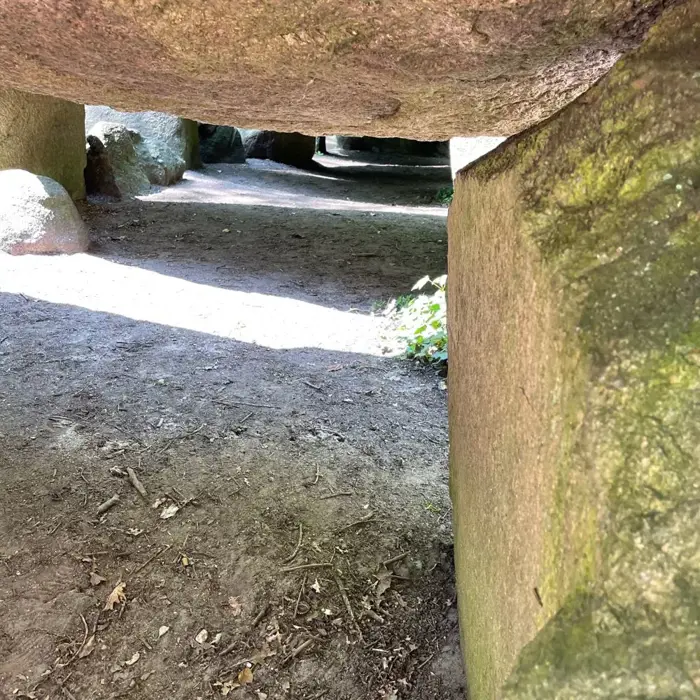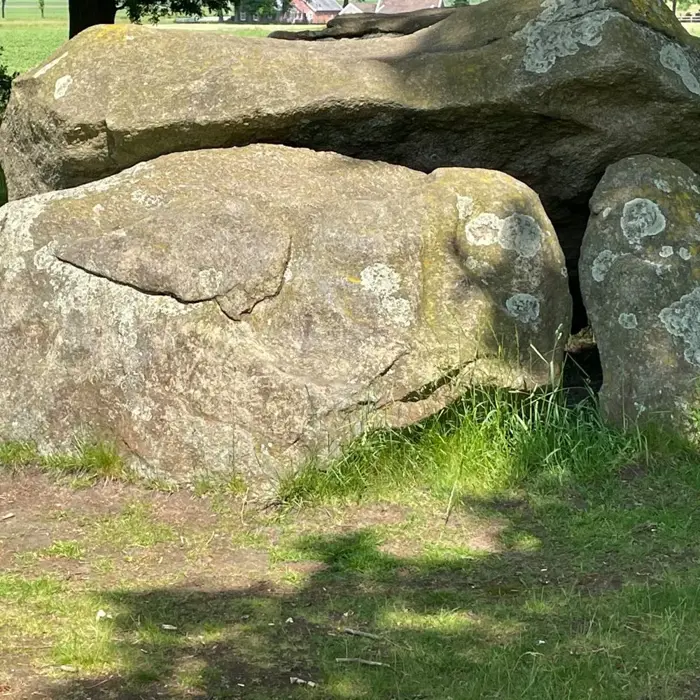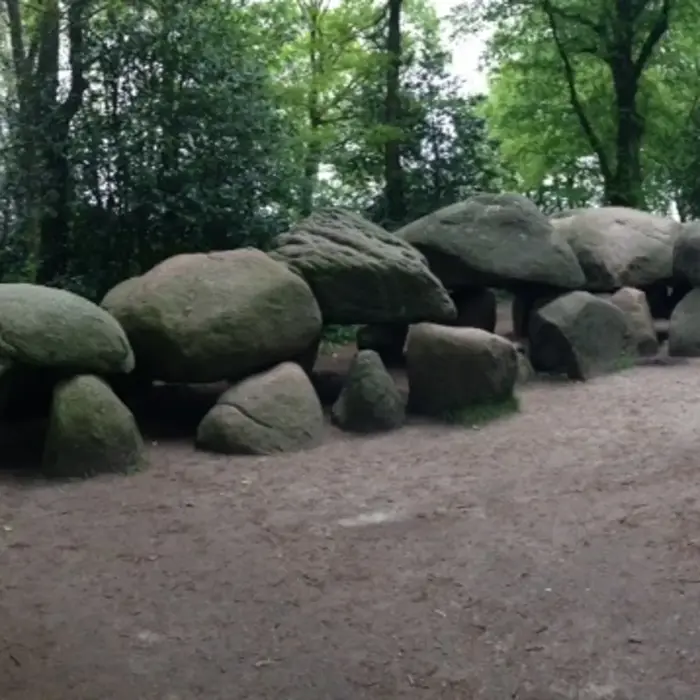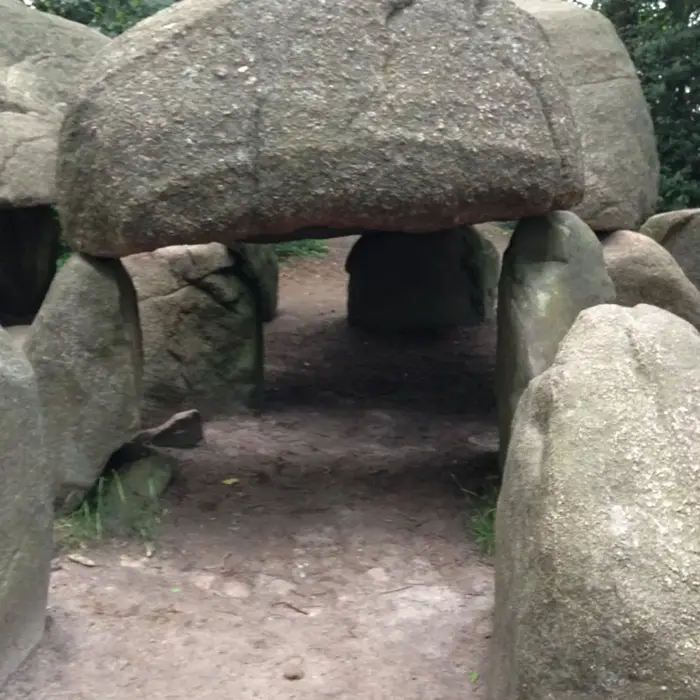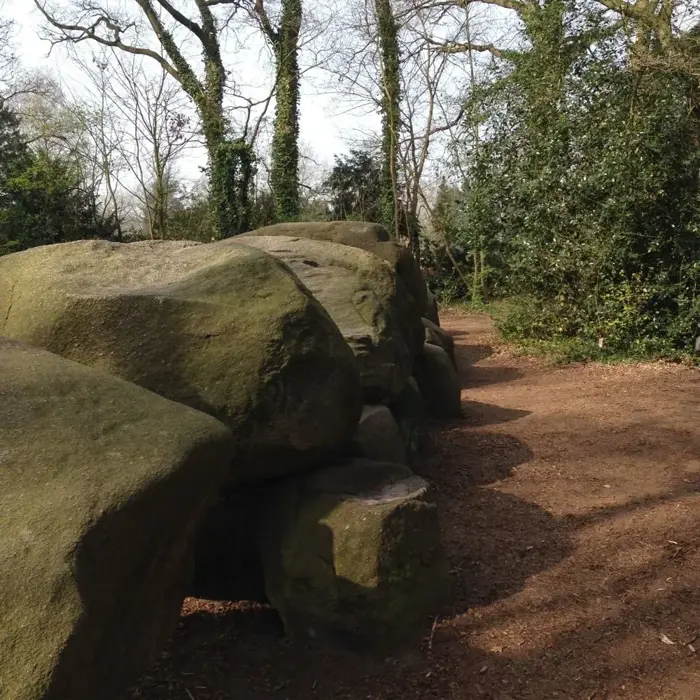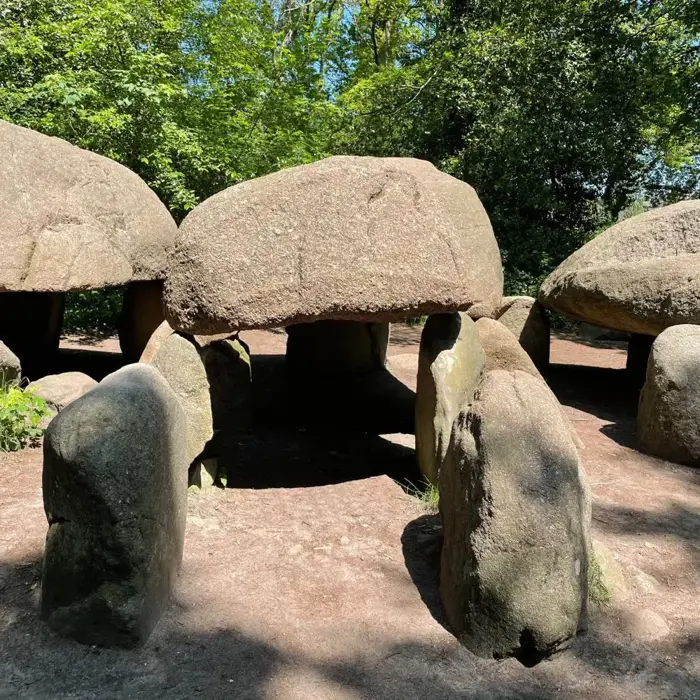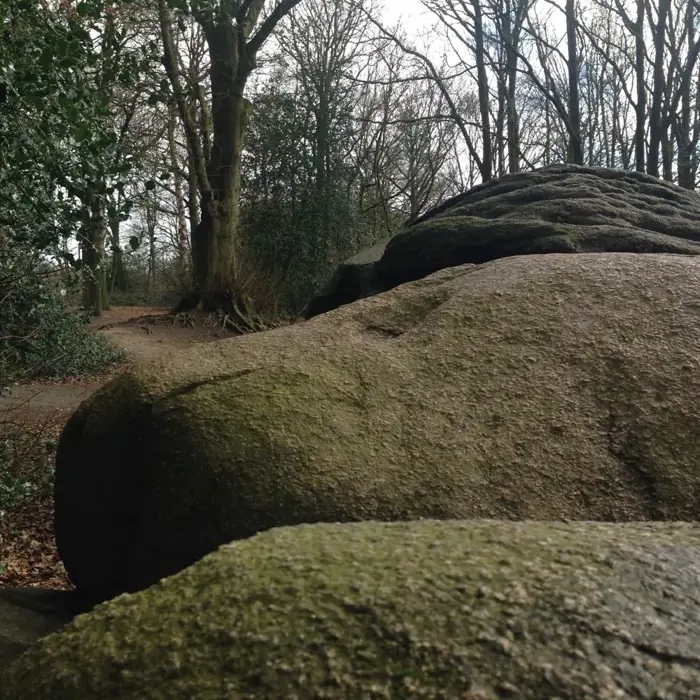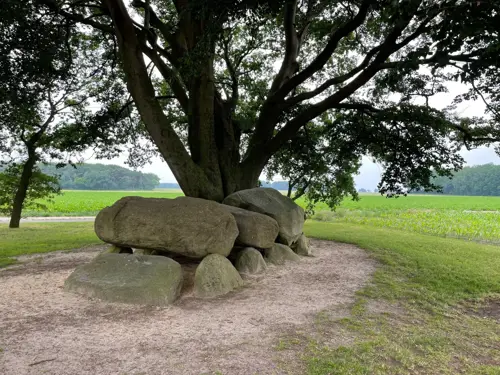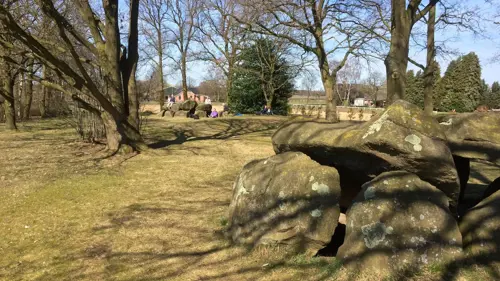




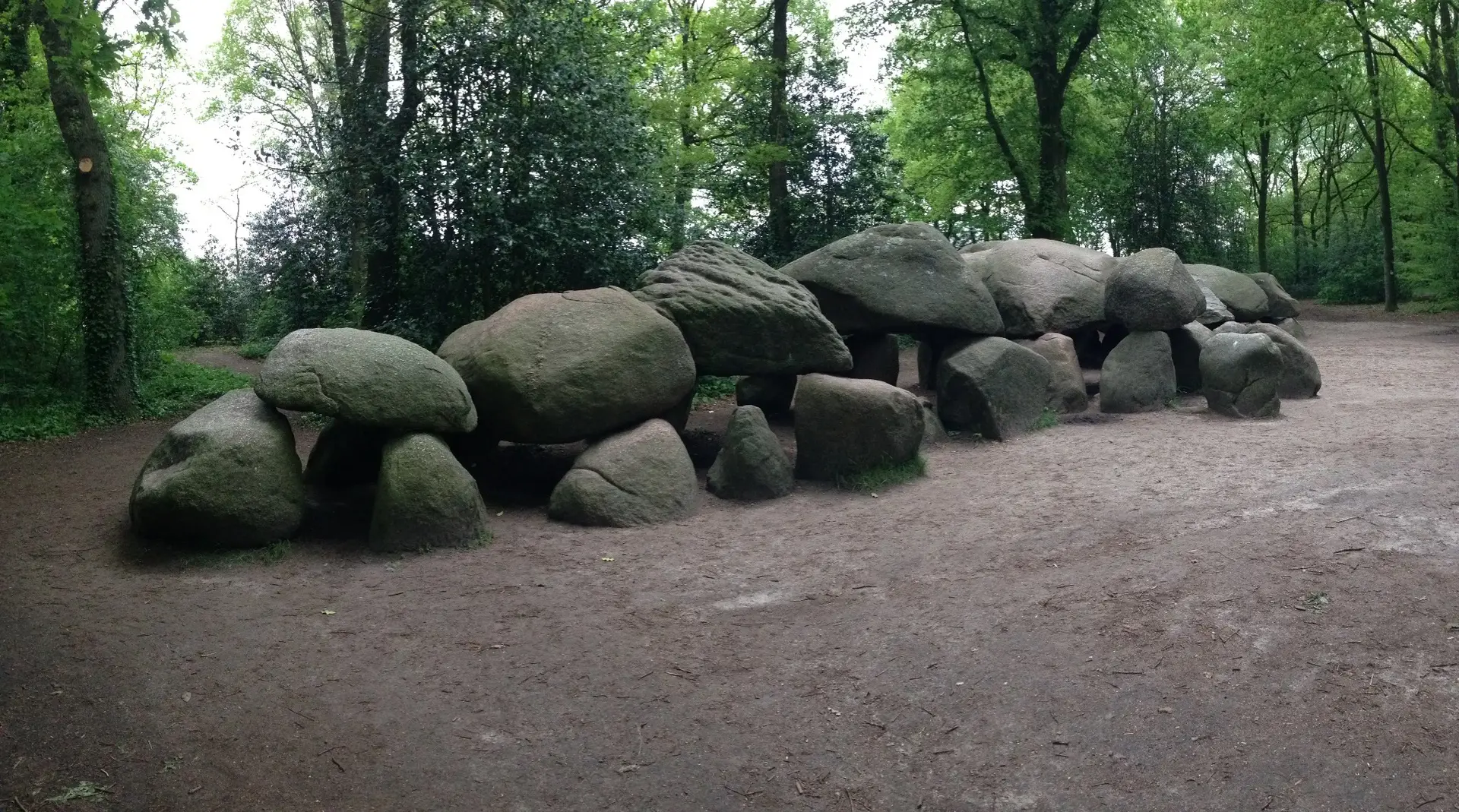








D27 holds the distinction of being the largest hunebed in the Netherlands, measuring an impressive 22.6 meters in length. It is situated just outside the Hunebed Centre in Borger, amidst a softly rolling landscape characterized by heathland, forest, and the quiet rural charm typical of Drenthe. The structure is comprised of nine enormous capstones resting on a base of 28 standing stones. Its size and architectural complexity distinguish D27 from the numerous other hunebeds nearby; the smaller D26 Hunebed and the educational displays of the Hunebed Centre are also close at hand.
Archaeological and Historical Findings
Experts date the construction of Hunebed D27 to approximately 3400 BCE, attributing it to the Funnel Beaker Culture, which lived in the region over 5,400 years ago. The stones used, many weighing in excess of 20,000 kilograms, were originally carried to the area by glacial movements during the Ice Ages. The monument consists of nine lintel stones, 28 upright stones supporting them, five gate stones, and two ring stones. Initially, smaller stones and sand would have filled the gaps and covered the entire monument with an earthen mound; however, these features have largely worn away or disappeared over time. Despite the monument’s significance, few artifacts have been found inside, as the chamber was disturbed as early as 1685 and later subjected to unauthorized excavations. Therefore its contents stayed predominantly unknown to researchers.
Legends, Folklore and Myths
While the hunebeds of Drenthe are often linked in popular tales with giants, commonly referred to as “hunen,” believed to have built these stone structures, no specific legends relating exclusively to D27 are recorded in academic or folklore sources. General stories about giant builders exist in the region, but none are directly attached to this particular monument.
Accessibility and Visitor Information
D27 is accessible via a short walk from the main entrance of the Hunebed Centre. The monument is located adjacent to the museum building, less than 100 meters from the entrance, along a paved, step-free path suitable for wheelchairs and strollers. The terrain is flat and easy to navigate, making it accessible for visitors of all ages and mobility levels. Access to hunebed D27 is free. Admission to the Hunebed Centre, which offers exhibitions and visitor services, costs €10.00 for adults, with discounted tickets available for children and groups (2025). Visitors are encouraged to check current prices directly with the centre.