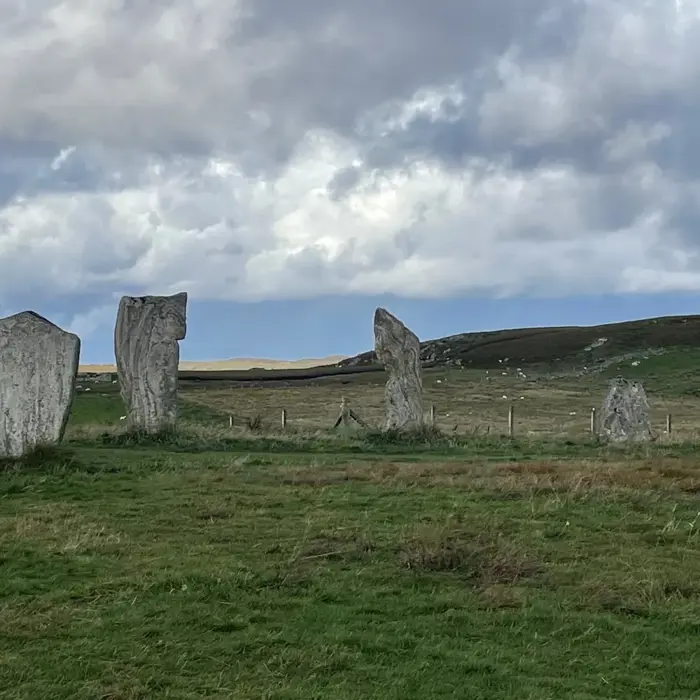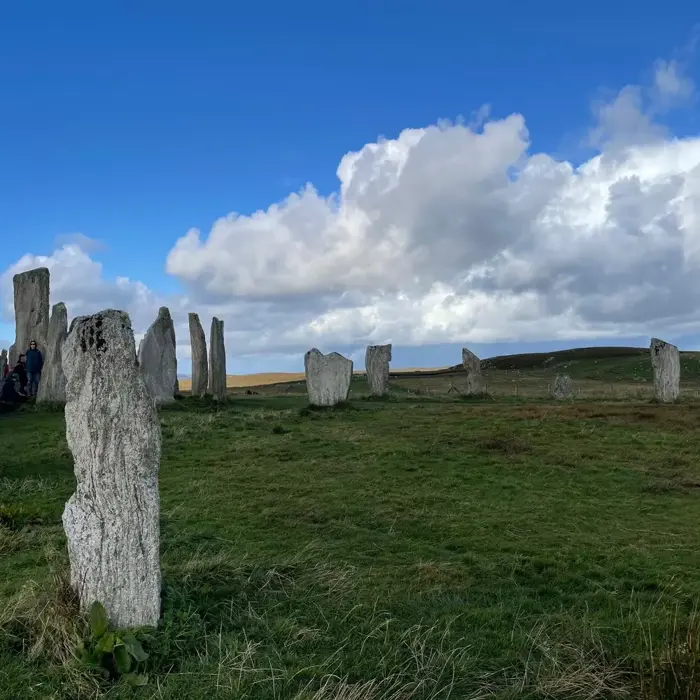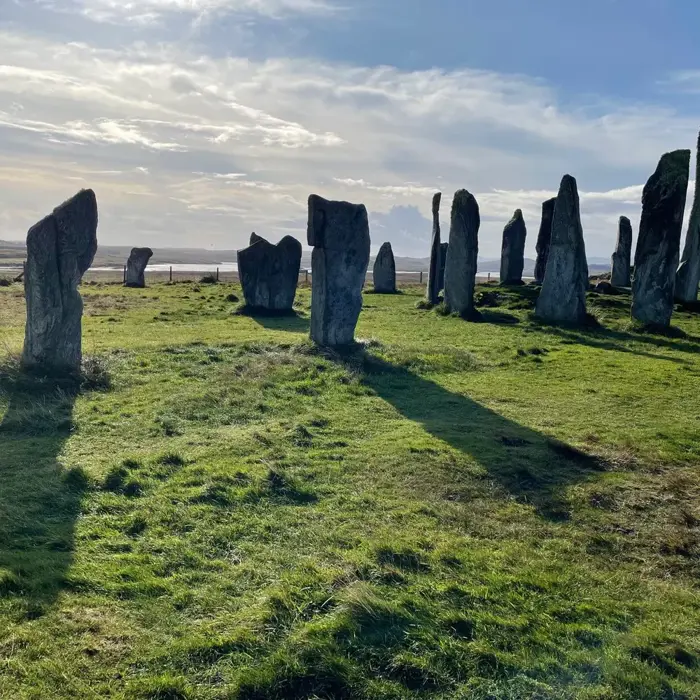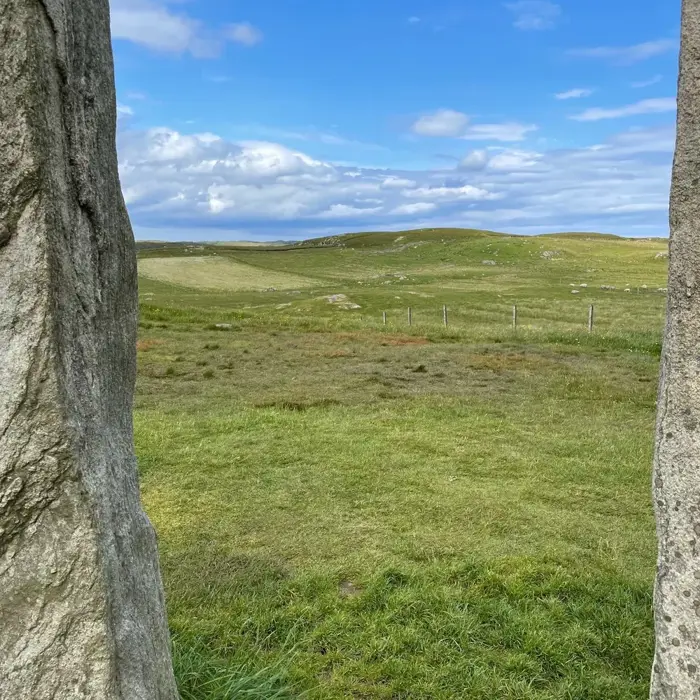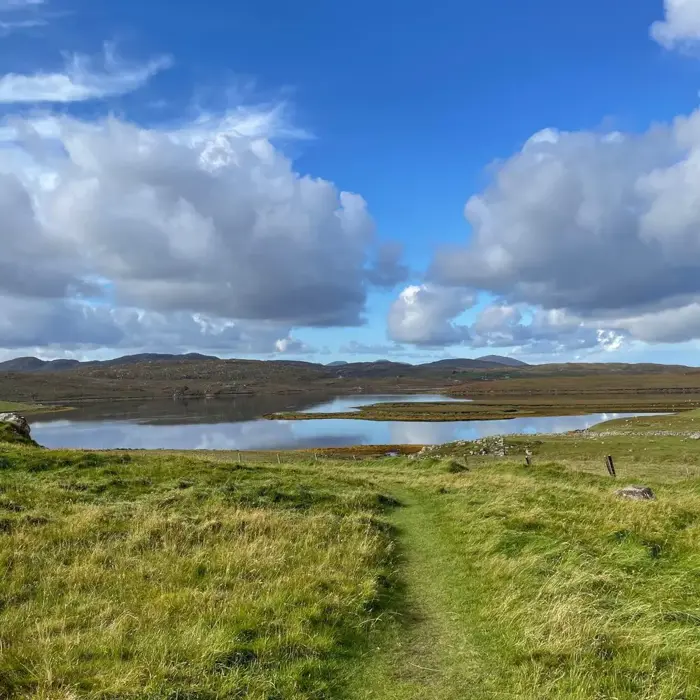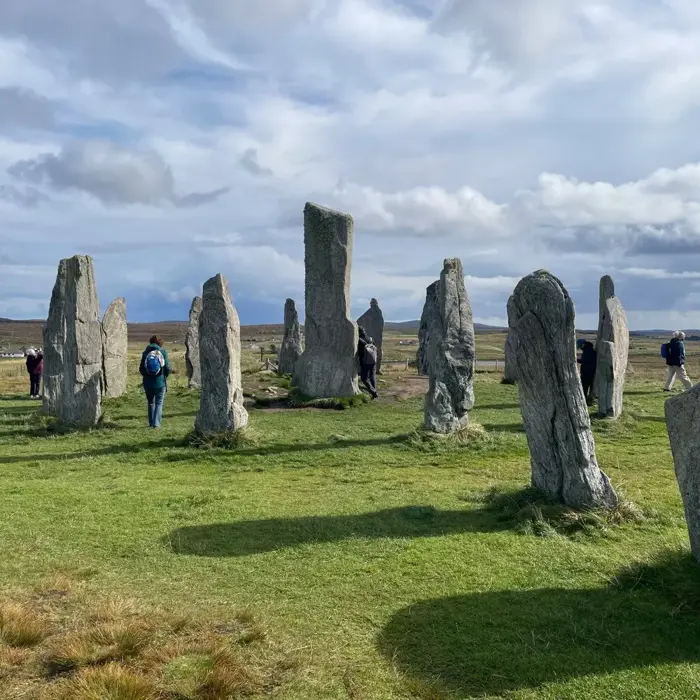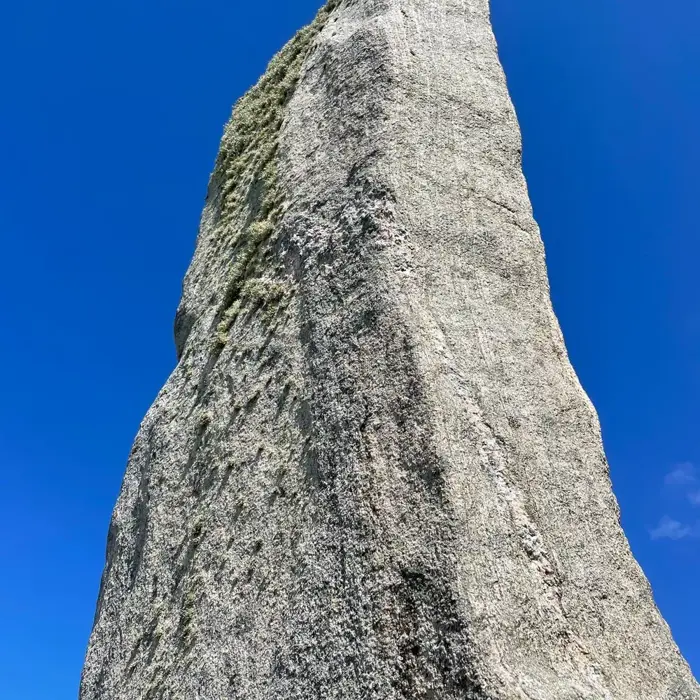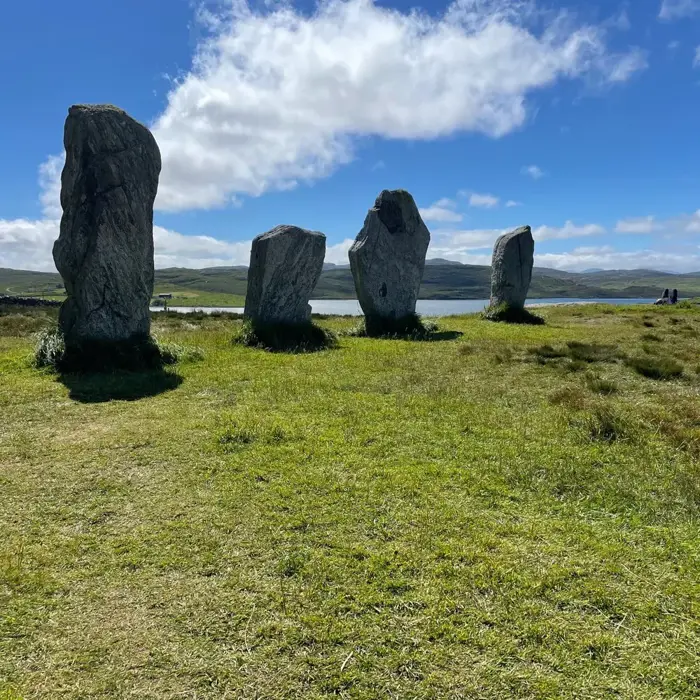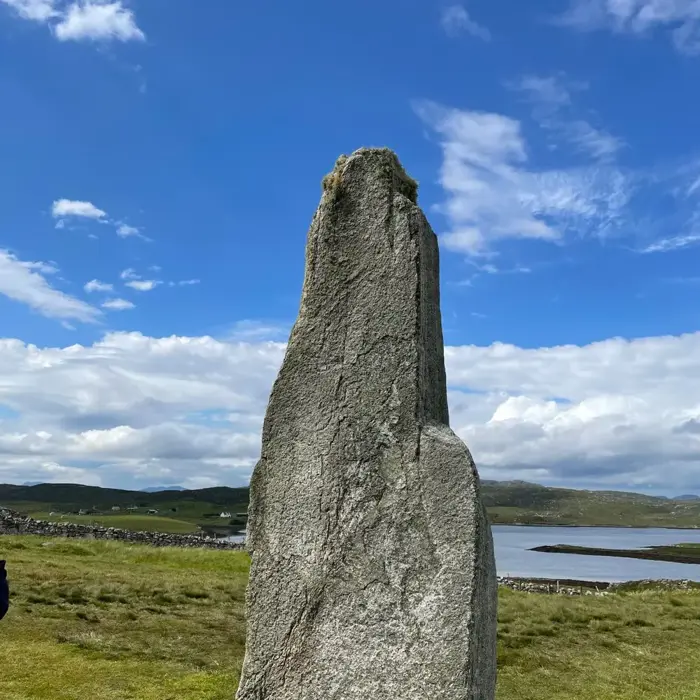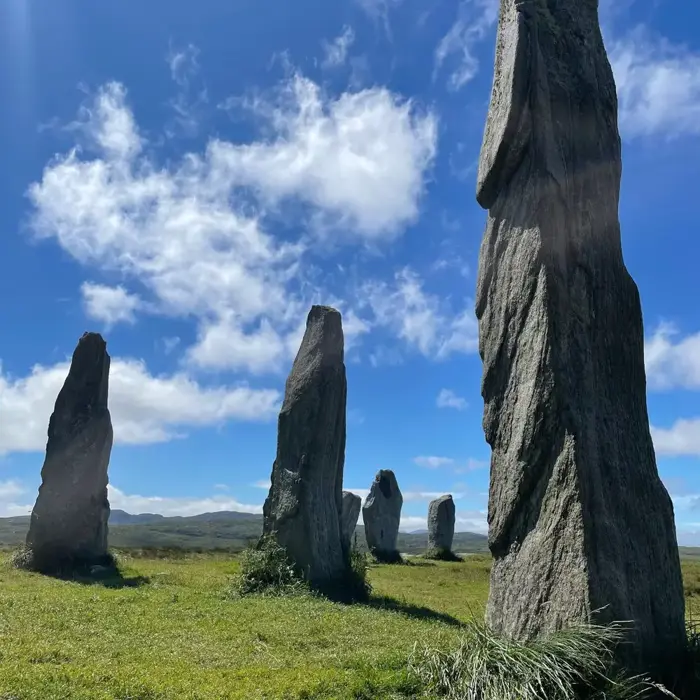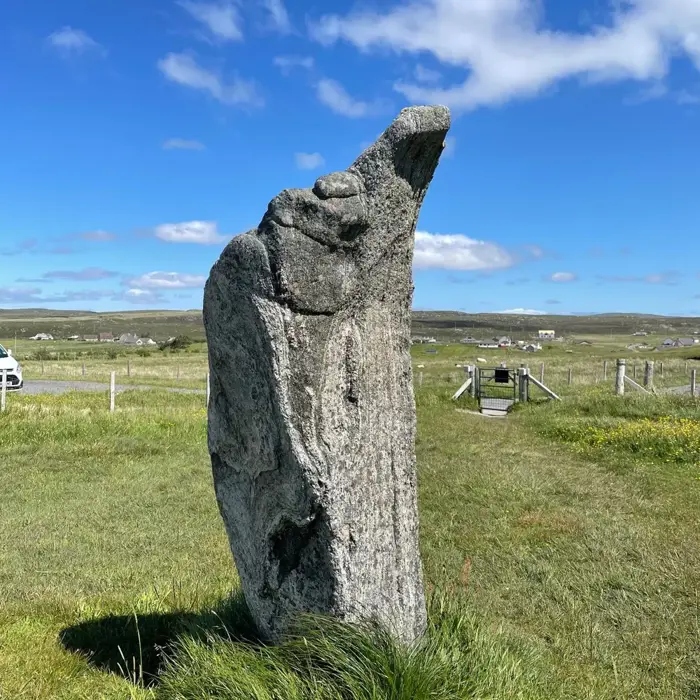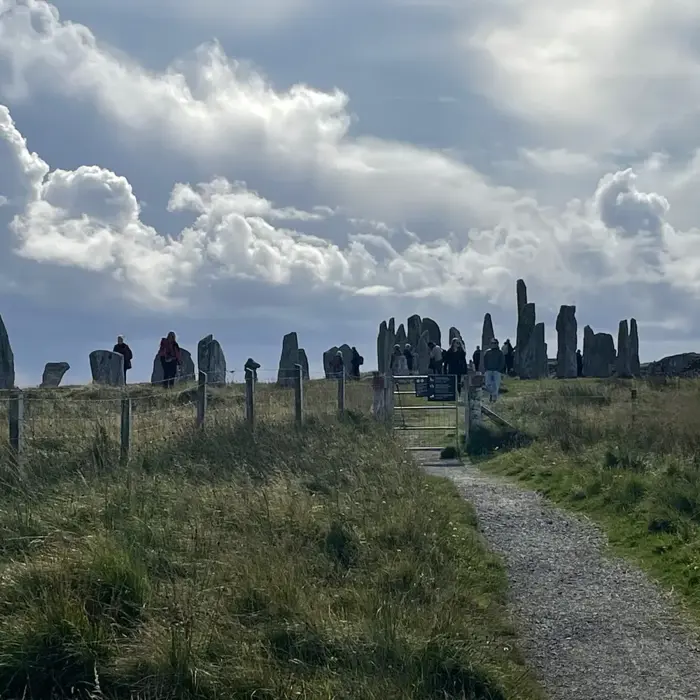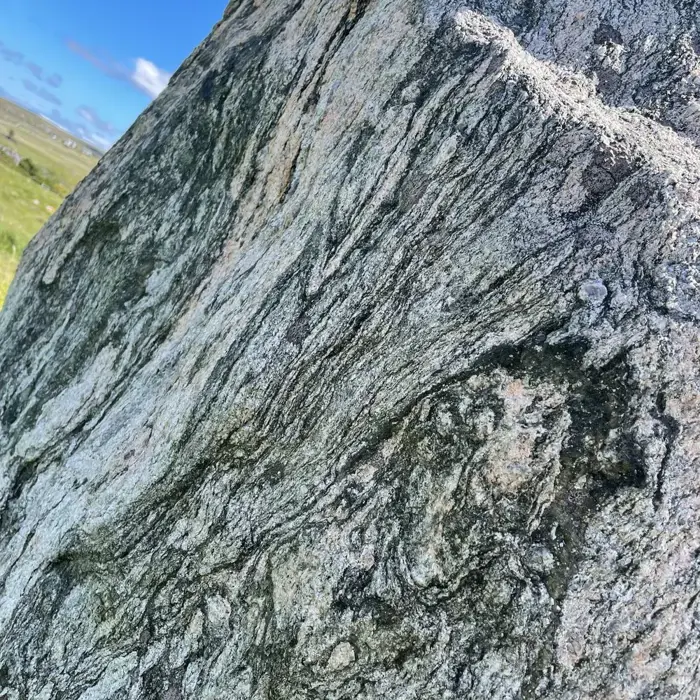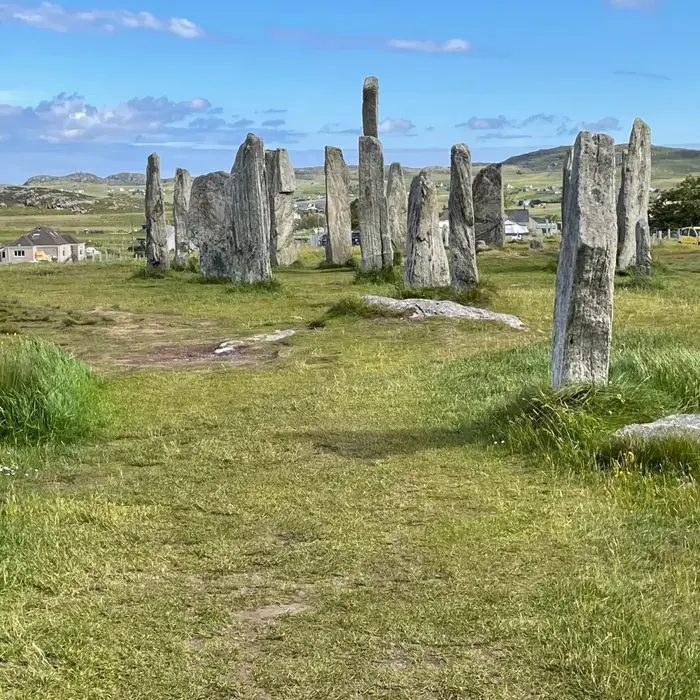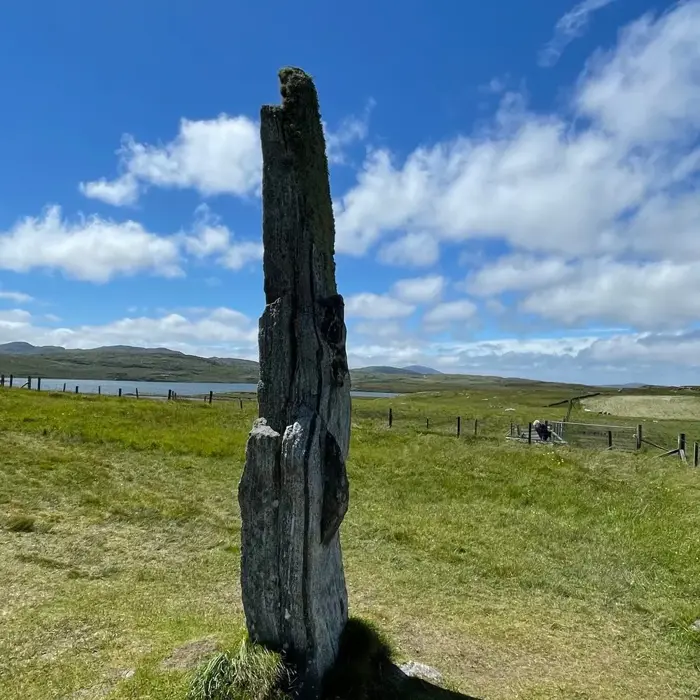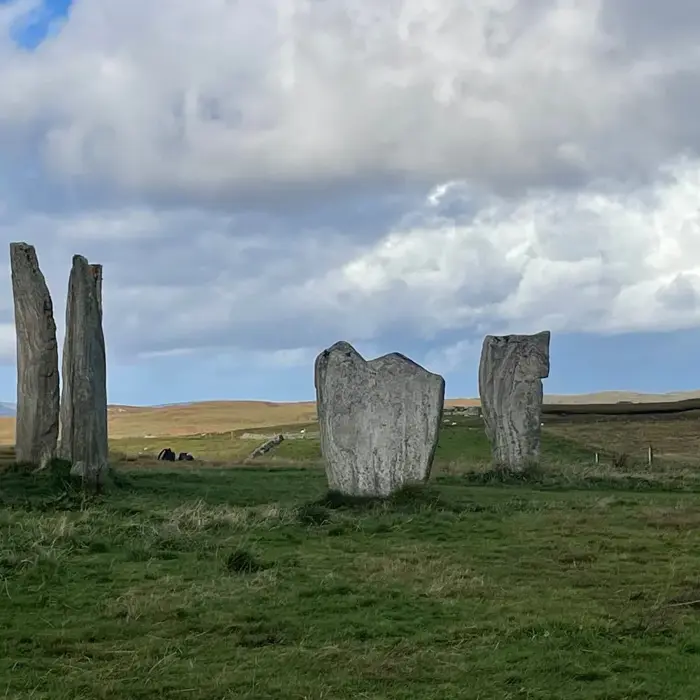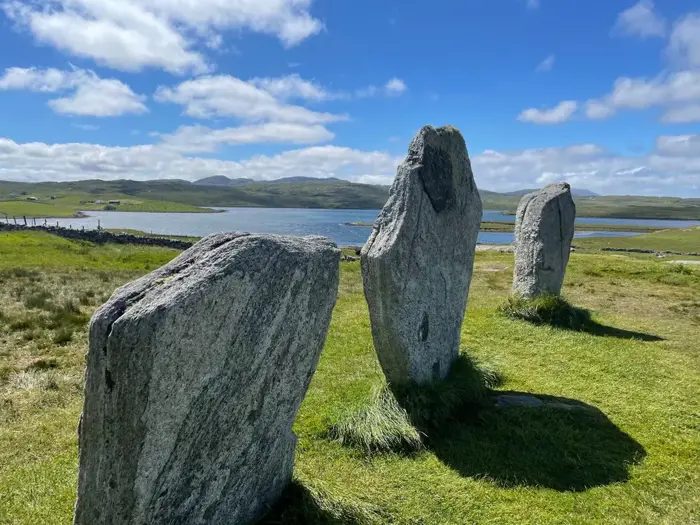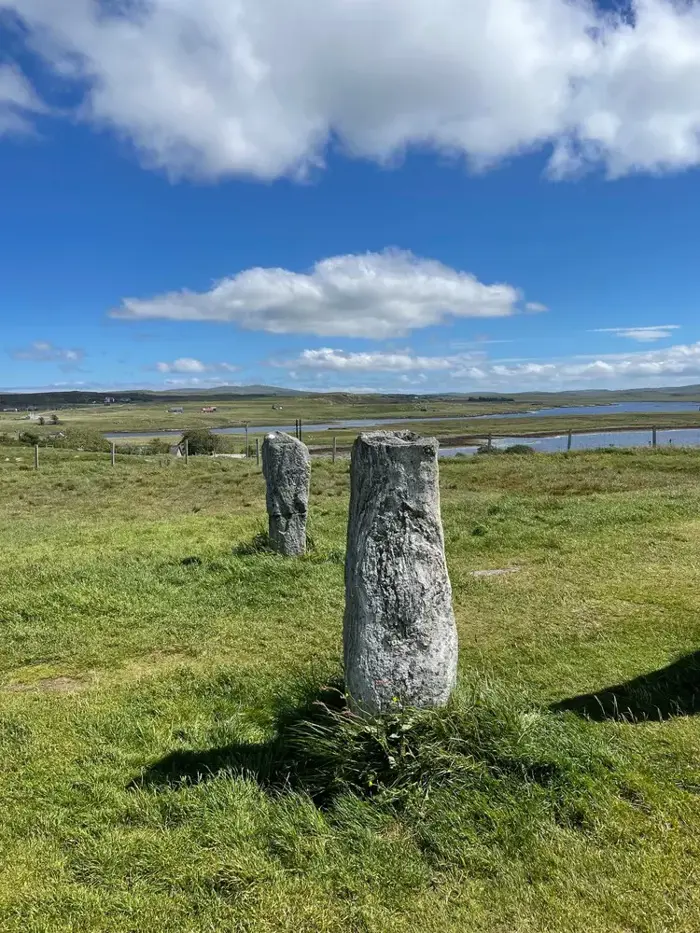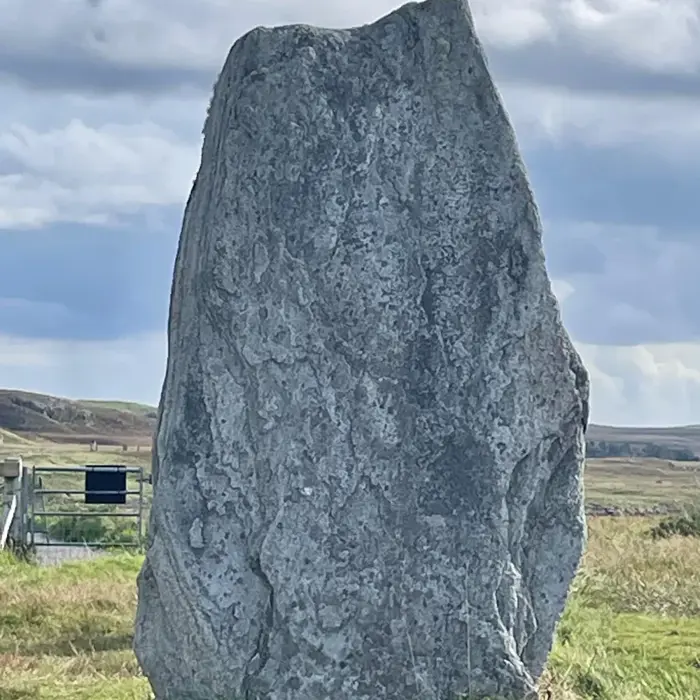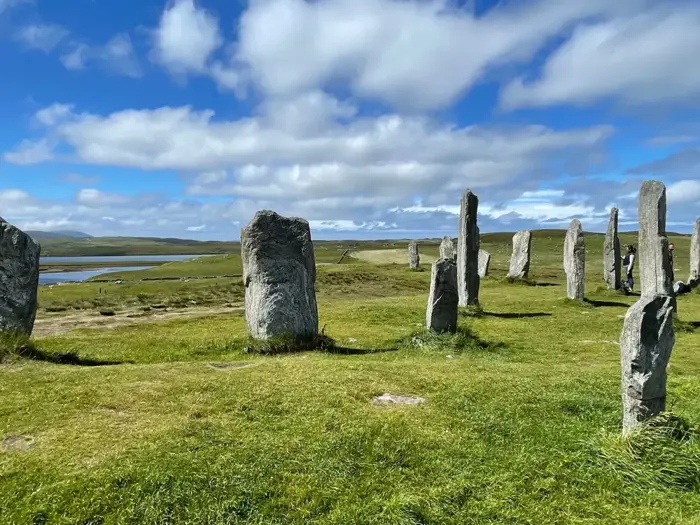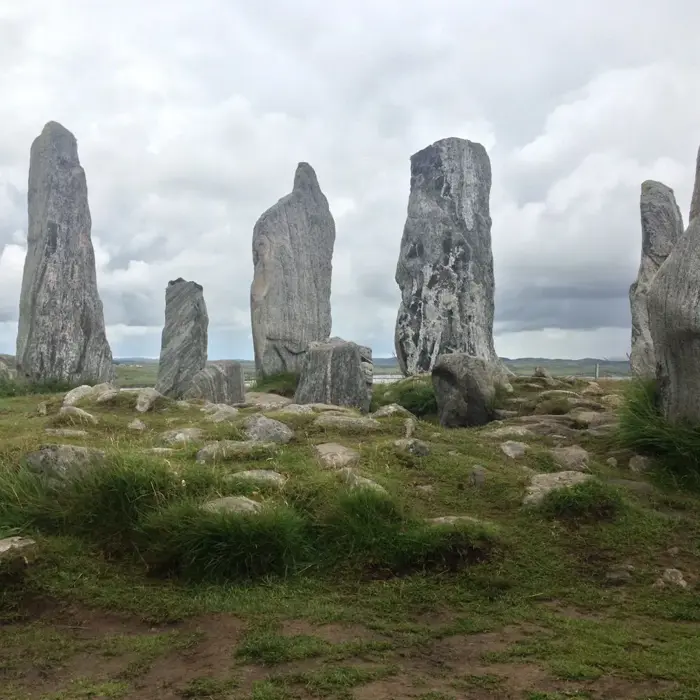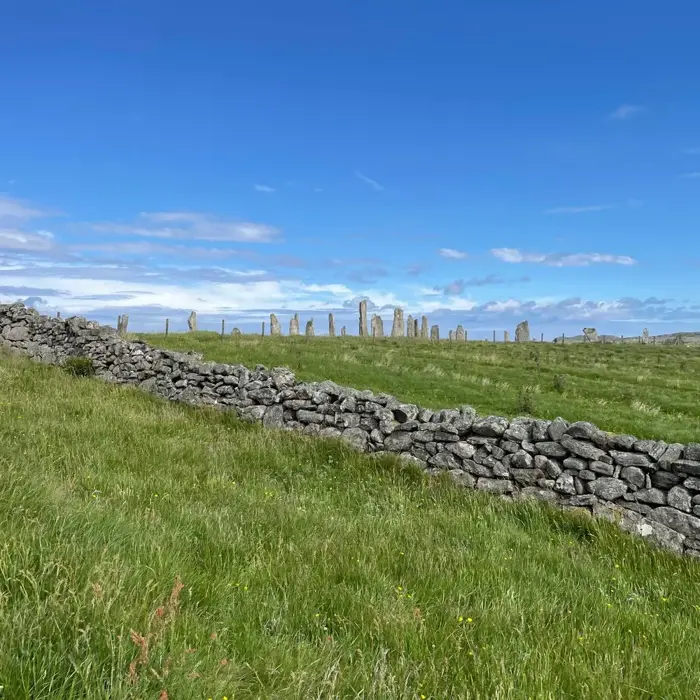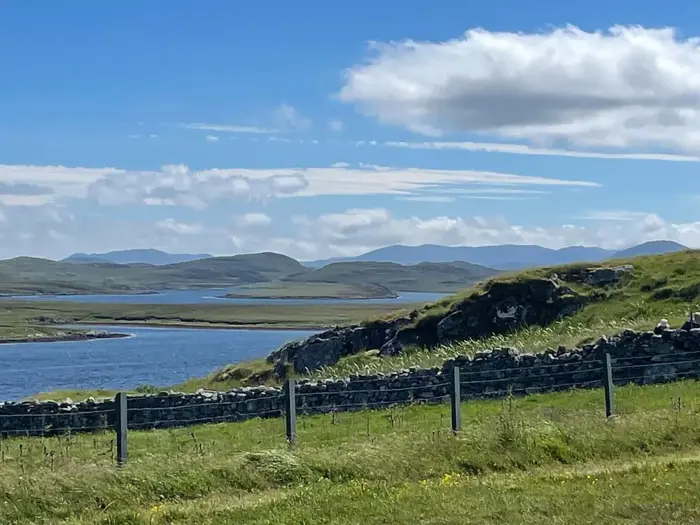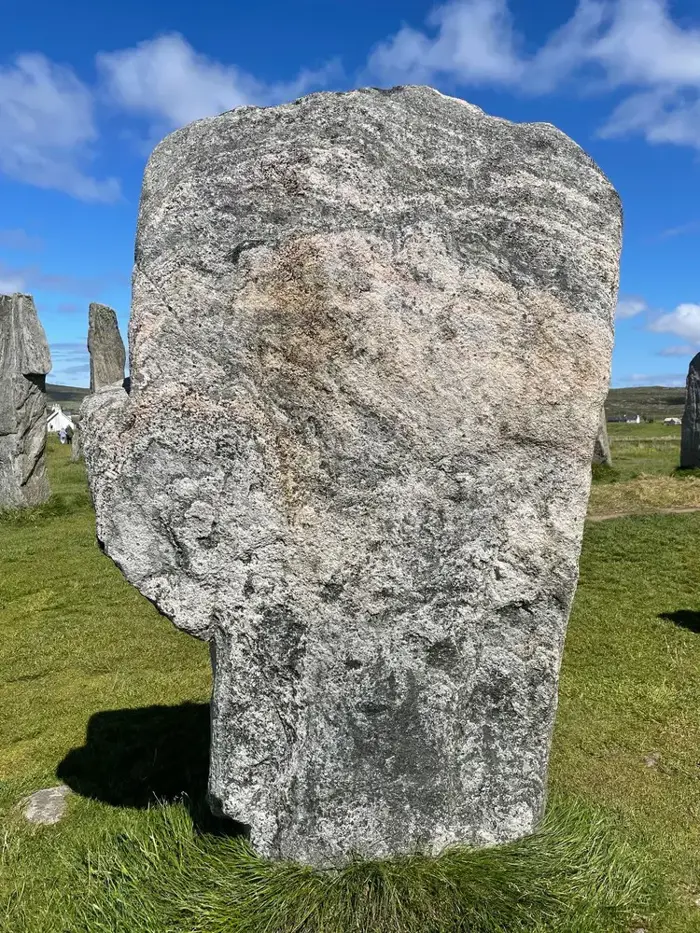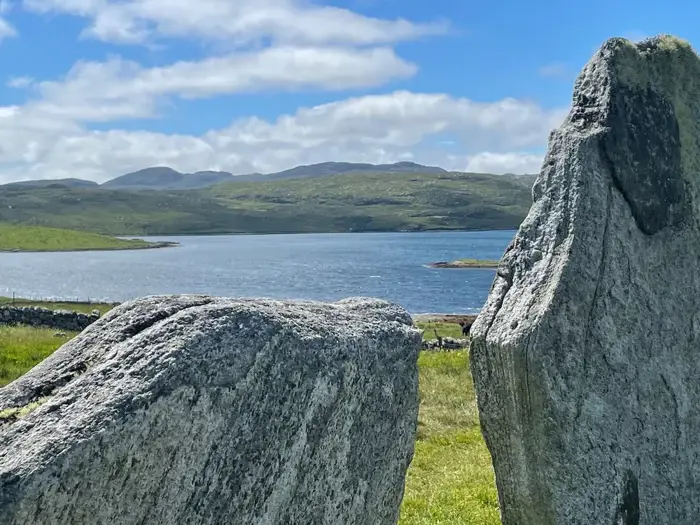




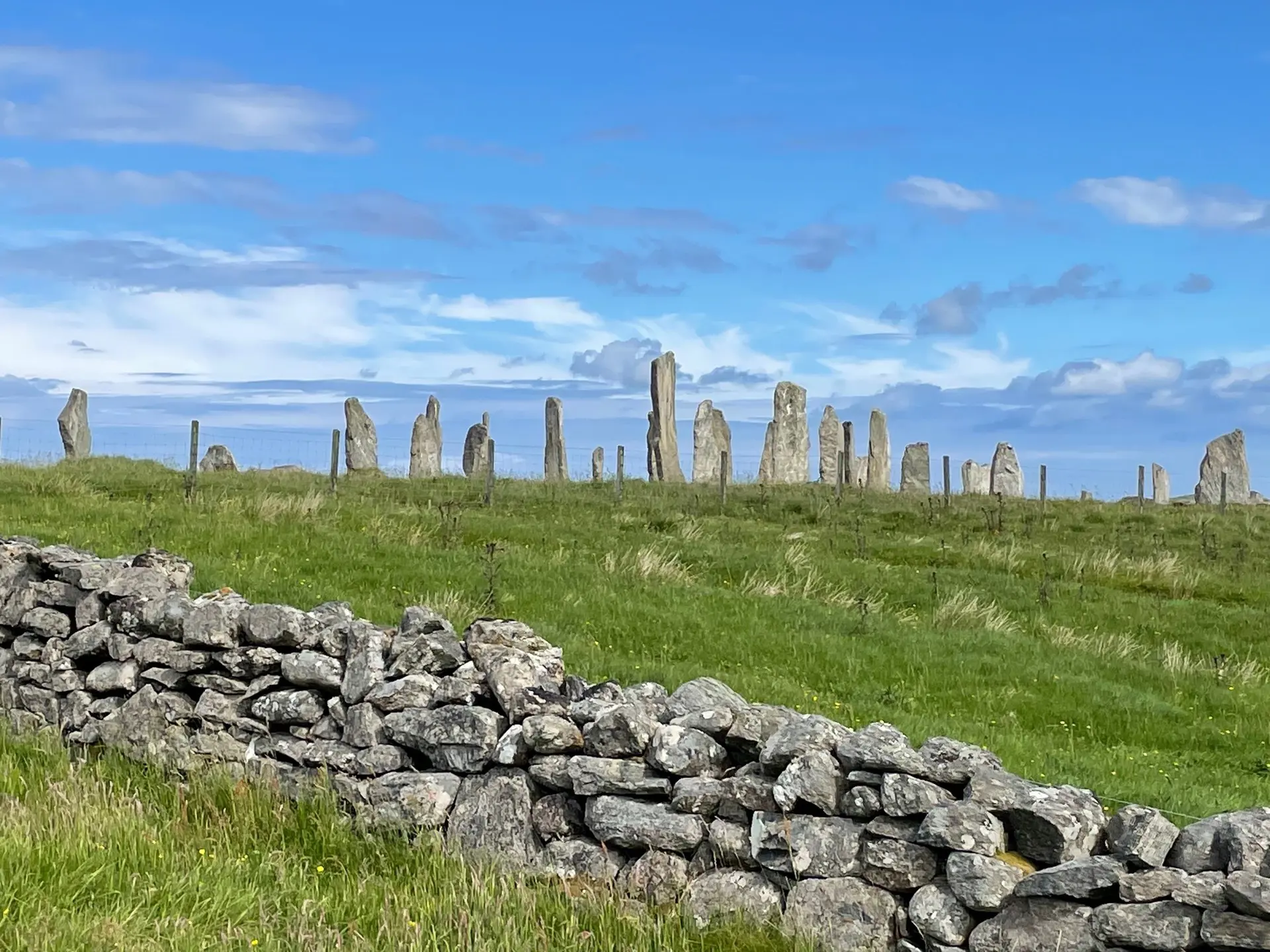








Located on a low ridge on the Isle of Lewis in Scotland’s Outer Hebrides, the Calanais Stones, comprise over 40 stones fashioned from Lewisian gneiss. They form a distinctive cross-shaped layout, with a central circle surrounded by four extending arms. The tallest stone, standing approximately 4.8 meters high, is positioned at the center of the arrangement. The open landscape, bordered by rolling hills and the peaceful waters of Loch Roag, enhance the monument’s timeless atmosphere. The area also contains smaller stone circles and rows that add to the overall significance of the site.
Archaeological and Historical Findings
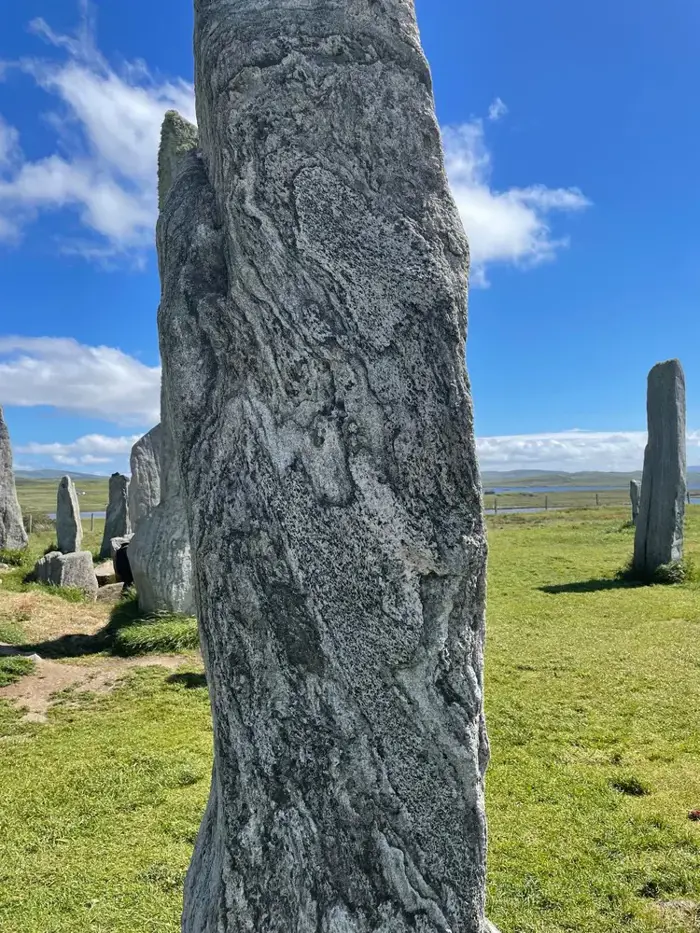
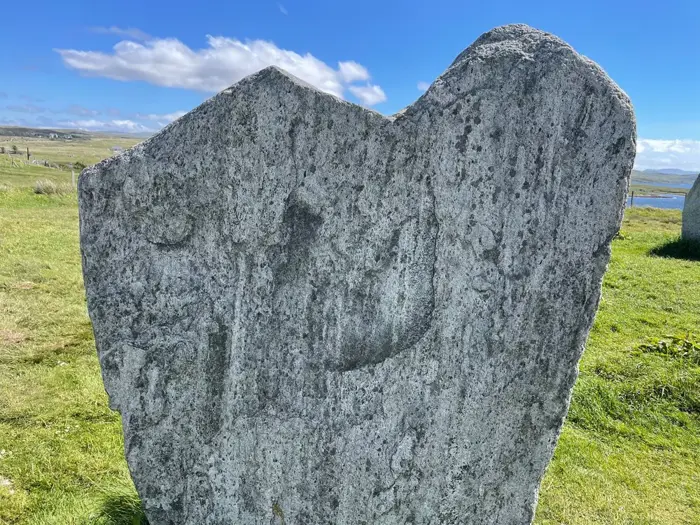
Research places the construction of this stone arrangement in the late Neolithic era, around 2900 to 2600 BCE. The stones, made from locally sourced Lewisian gneiss, among the oldest types of rock found in Europe, have withstood the test of time. The site was actively used for roughly a millennium. Excavations have uncovered a chambered tomb added sometime after the initial stone circle, indicating that the site experienced multiple phases of ritual use. Archaeologists believe the location served as a center for ceremonial gatherings, supported by discoveries of postholes and pottery fragments. While the exact purpose remains unclear, aspects related to ritual practices, astronomical observations, and burials all seem to have been involved.
Archaeoastronomic Orientation
The layout of the Callanish Stones points to intentional alignments with celestial events. Certain stones appear positioned to track the movements of the sun and moon, particularly the notable lunar standstill cycle that happens every 18.6 years. Studies demonstrate the circle aligns with the southern moon-rise and moon-set during this event, creating an effect where the moon seems to glide just above the hilltops, often described as a striking celestial phenomenon. The main avenue of stones is oriented roughly west-southwest, reflecting a clear understanding of significant lunar and solar cycles. These features suggest the monument likely functioned as an ancient astronomical observatory.
Legends, Folklore and Myths
Local stories tell of the stones being giants who were turned to stone after refusing to embrace Christianity. Another legend speaks of “the Sleeping Beauty” or “Cailleach na Mointeach” (meaning “Old Woman of the Moors”), with her form said to be visible in the surrounding hills.
Accessibility and Visitor Information
The Standing Stones are situated in the village of Calanais on the Isle of Lewis. Normally, parking is available at the Visitor Centre; however, this facility is currently under redevelopment until spring 2026. As a result, only limited roadside parking is available. The site lies directly alongside the A859 and can be reached with a short, easy walk from the road. The trail has a gentle slope with some minor inclines and may become soft under wet conditions. There are no substantial steps along the way. While wheelchair access is challenging due to uneven terrain, especially when the ground is wet, the site remains open to all visitors. Entry is free of charge.