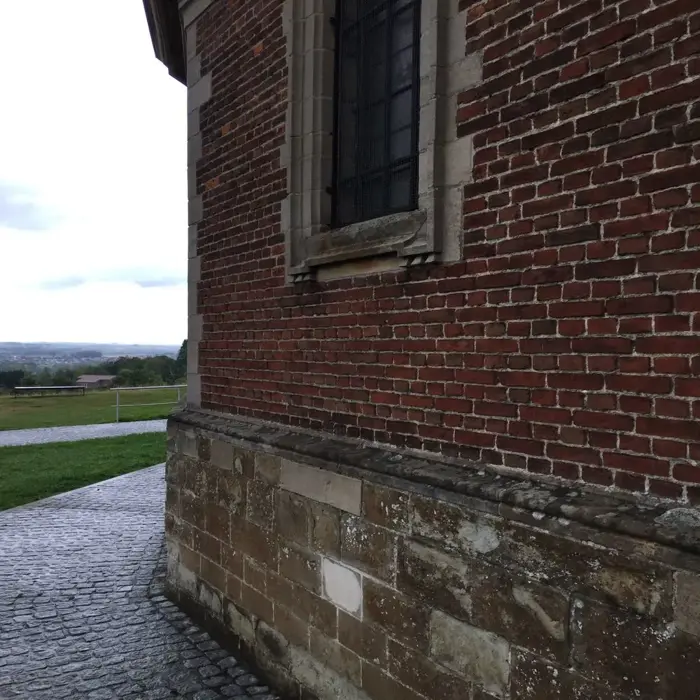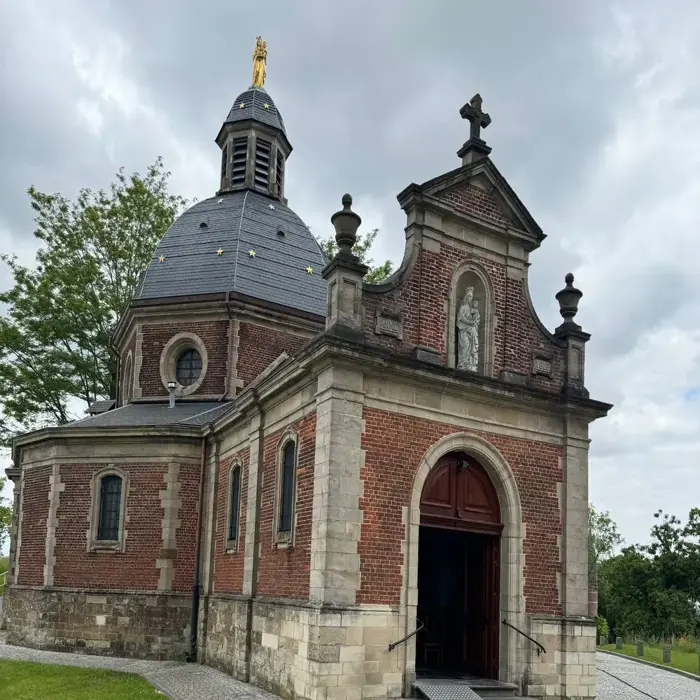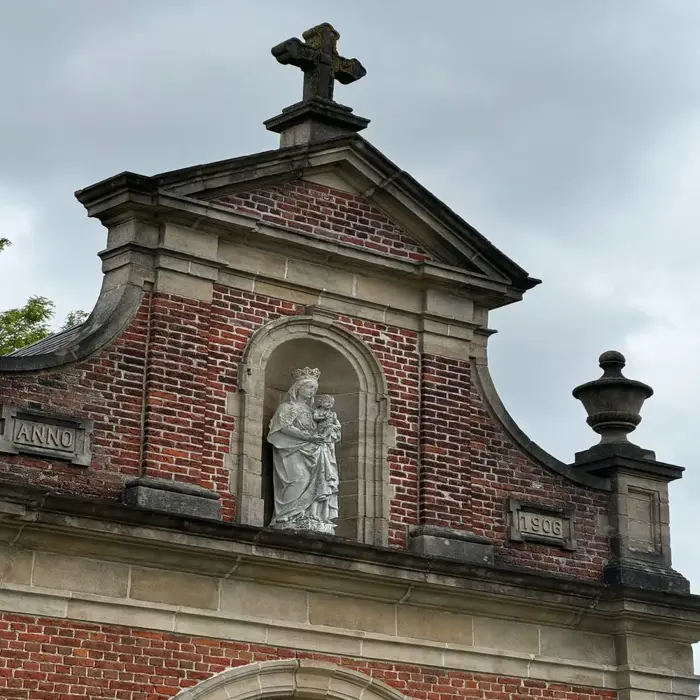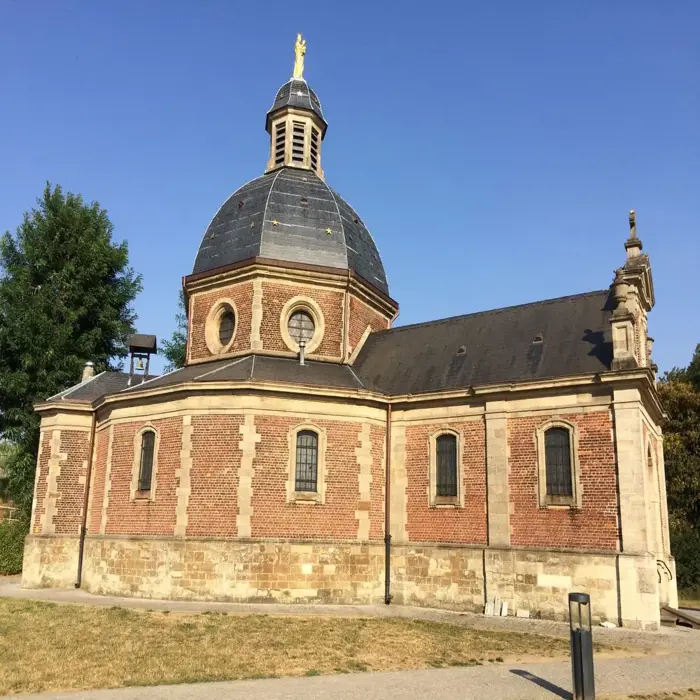




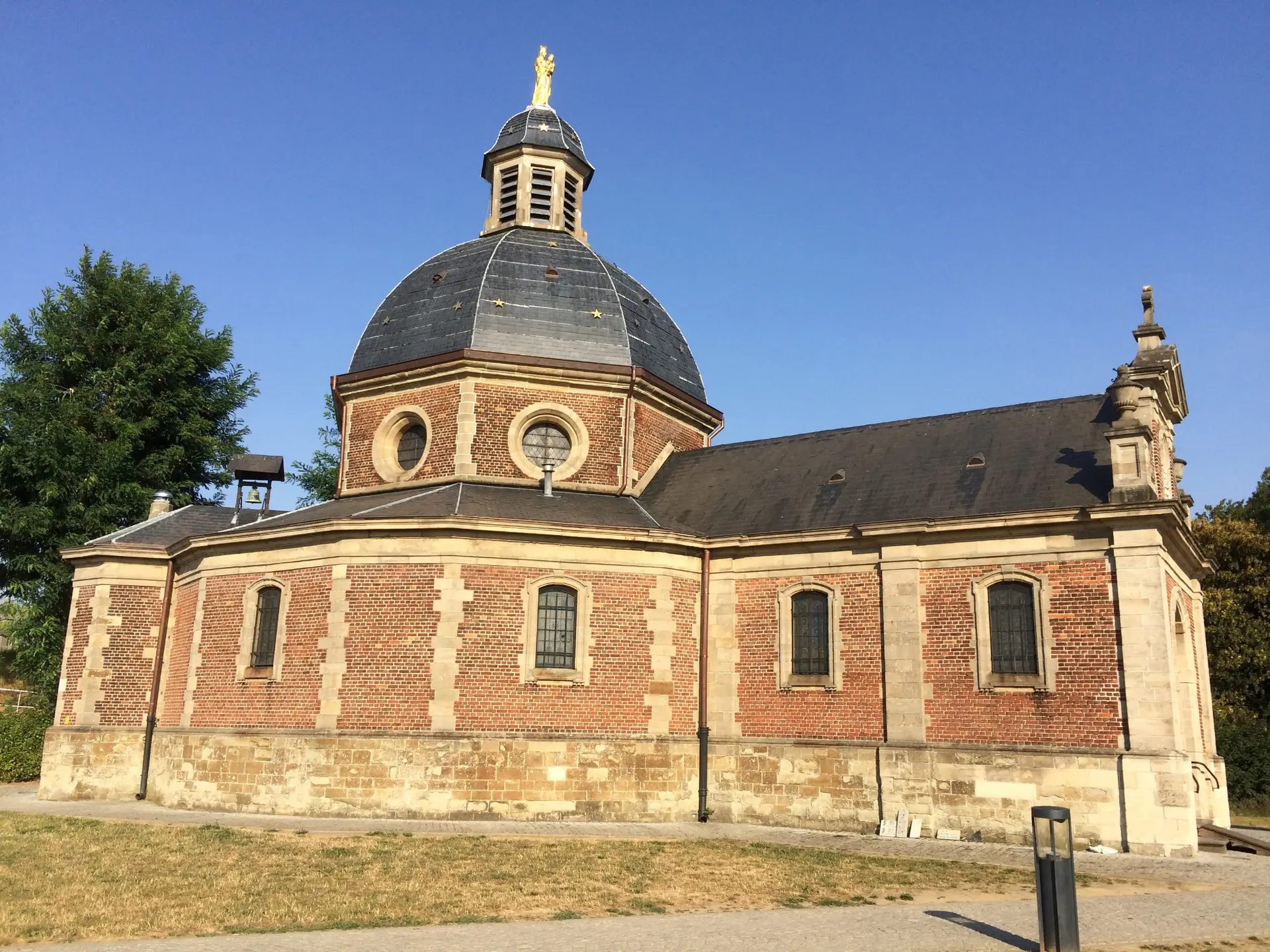








Situated 110 meters above sea level atop Oudenberg hill, the neobaroque Onze-Lieve-Vrouwkapel serves as a compact pilgrimage destination overlooking Geraardsbergen and the surrounding gentle hills and villages of the Flemish Ardennes. Constructed between 1905 and 1906 as a faithful reproduction of an earlier chapel, originally dating from the early 1600s and rebuilt in the early 18th century, it is distinguished by a gilded statue crowning its exterior, while inside, a wooden statue of Onze-Lieve-Vrouw van Altijddurende Bijstand is placed above the altar. Nearby, an 18th to 19th-century modest castle, now operating as a restaurant, and a 33-step staircase, built to accommodate King Willem I’s 1829 visit, complement the setting. An orientation table at the site provides sweeping views of local villages. The adjacent Muur van Geraardsbergen, a renowned cobbled climb, adds to the chapel’s attraction.
Archaeological and Historical Findings
The site is documented in 1294 in a deed mentioning Jan Tant and was associated with a hermit’s prayer place, with successive rebuilds culminating in the present neo‑Baroque chapel completed in 1906. Inside is a revered oak statue of the Virgin, carved from wood taken near Péruwelz in Wallonia and installed in 1648 by Martin Lebrun, then parish priest of Péruwelz and later abbot of Saint Adriaan Abbey in Geraardsbergen. During the French Revolution, locals hid the statue to protect it; it was returned to the chapel in 1807. The chapel itself, confiscated and sold as national property in the revolutionary era, was bought in 1807 by Ghislain Van Crombrugghe and later donated by his family to the Jozefieten to safeguard the Marian cult. Today the chapel, in neo‑Baroque style with a seven‑sided plan and Marian inscriptions, serves as a long‑standing pilgrimage site.
Accessibility and Visitor Information
Starting from the center of Geraardsbergen, visitors can climb the cobbled Muur incline along Oudenbergstraat, a protected monument since 1995, covering 700 meters of steep, uneven cobblestones. The uphill walk is relatively demanding yet rewarding for fit walkers and cyclists; however, it is unsuitable for wheelchairs or strollers. An alternative approach is the 33-step staircase beginning near the lower castle area. It’s even easier to just park on the other side... The hill itself received landscape protection status in 1940. Access to the chapel is free, open daily for self-guided visits. Visitors are asked to respect those attending worship and avoid disrupting services.