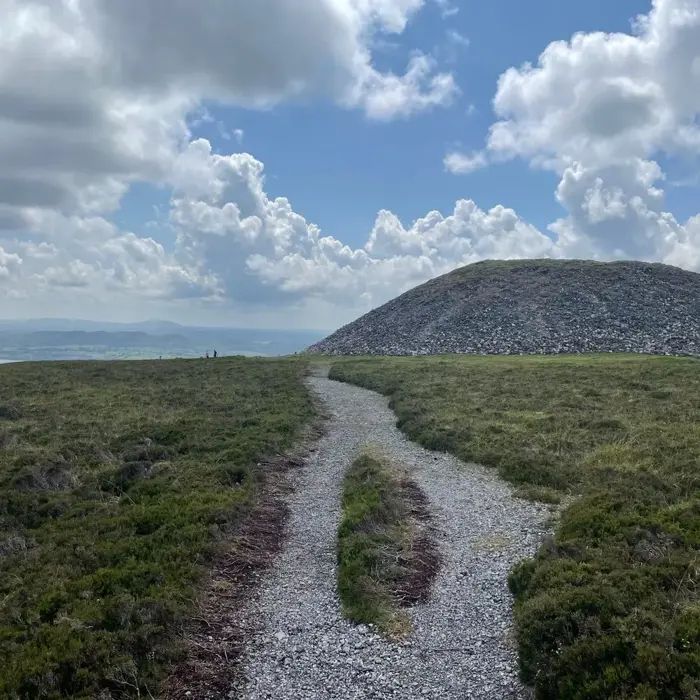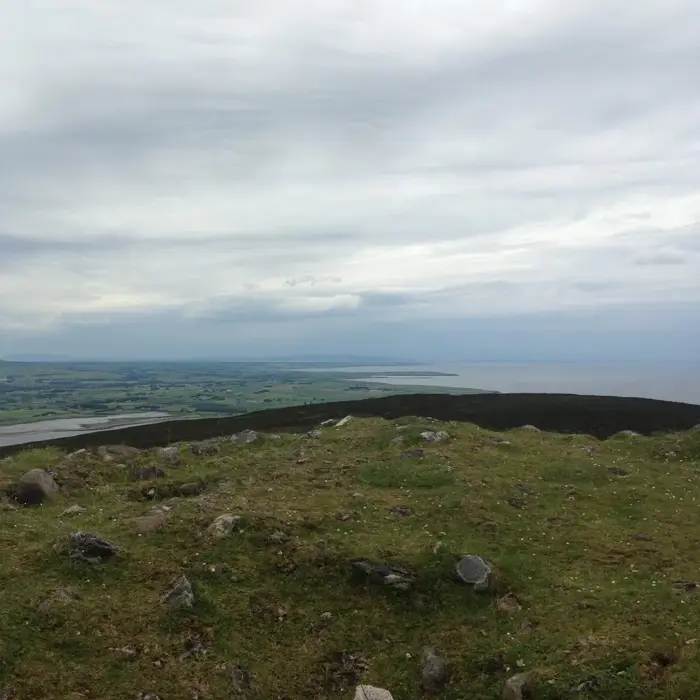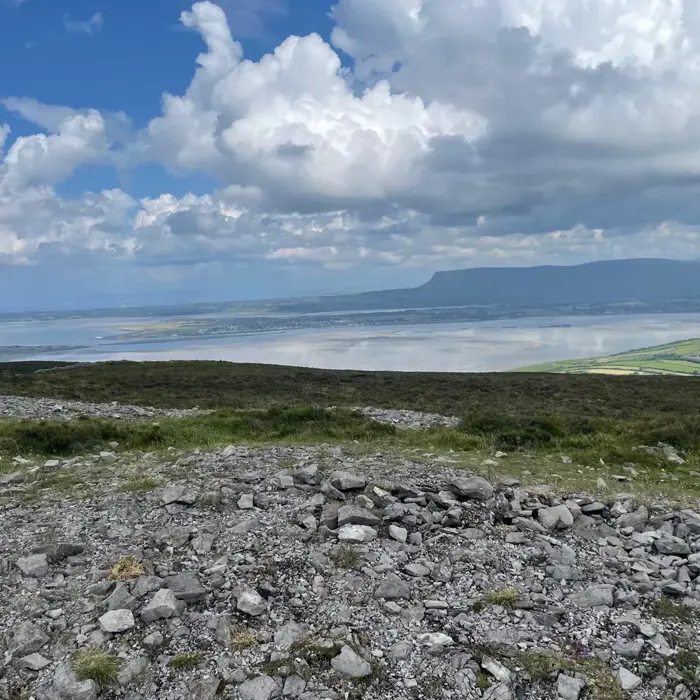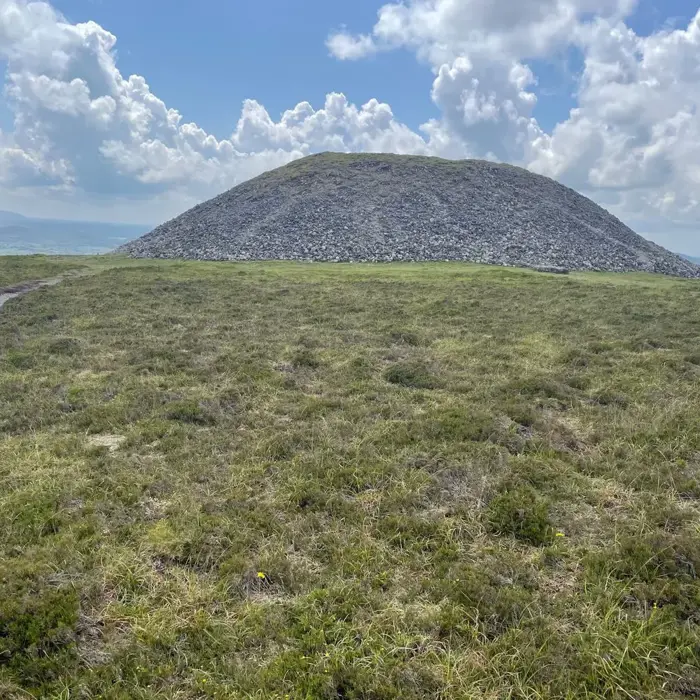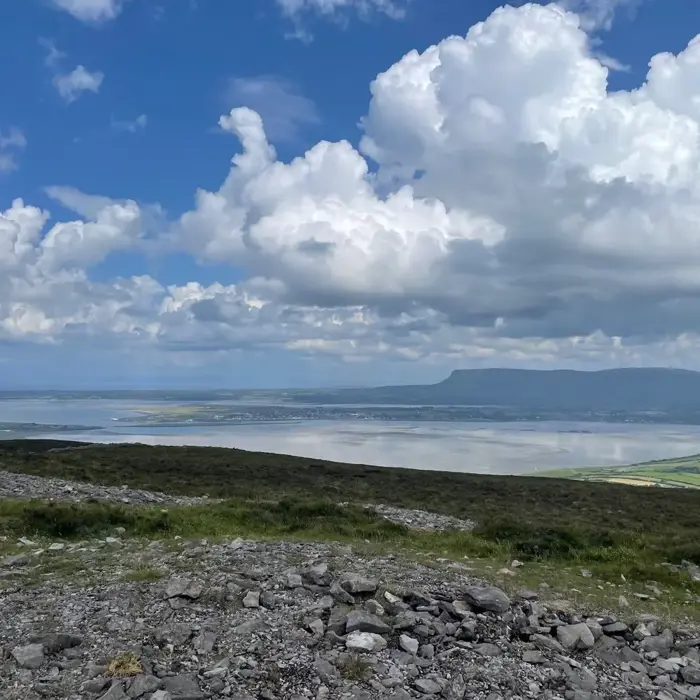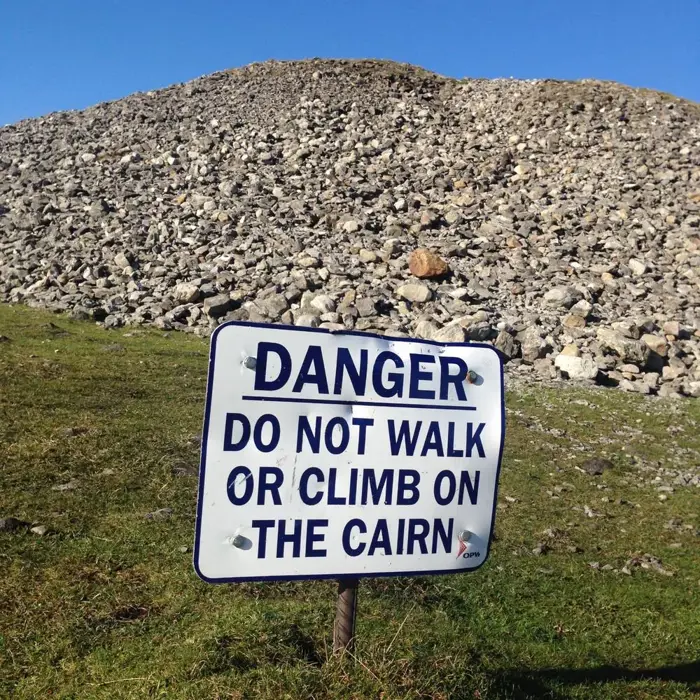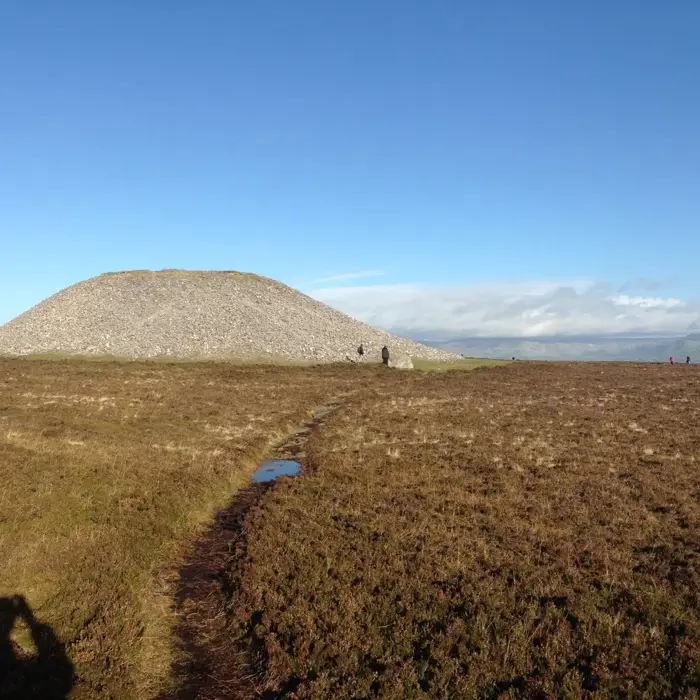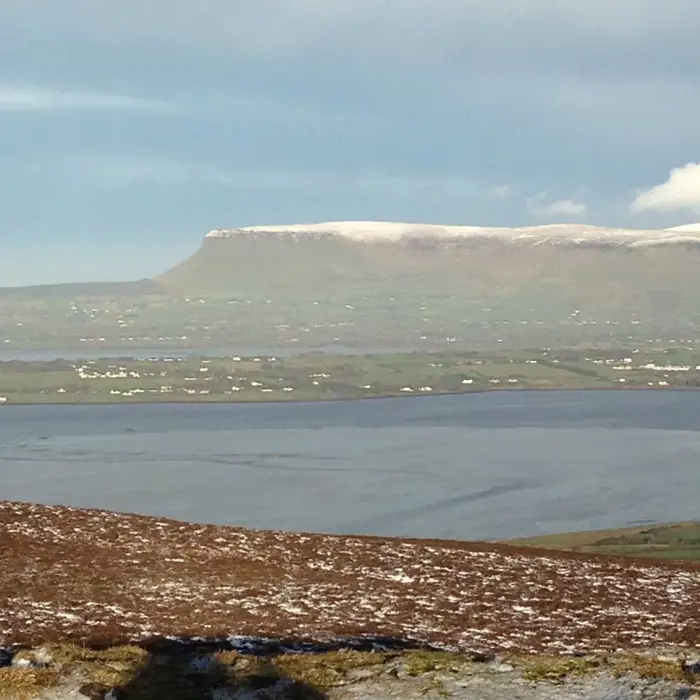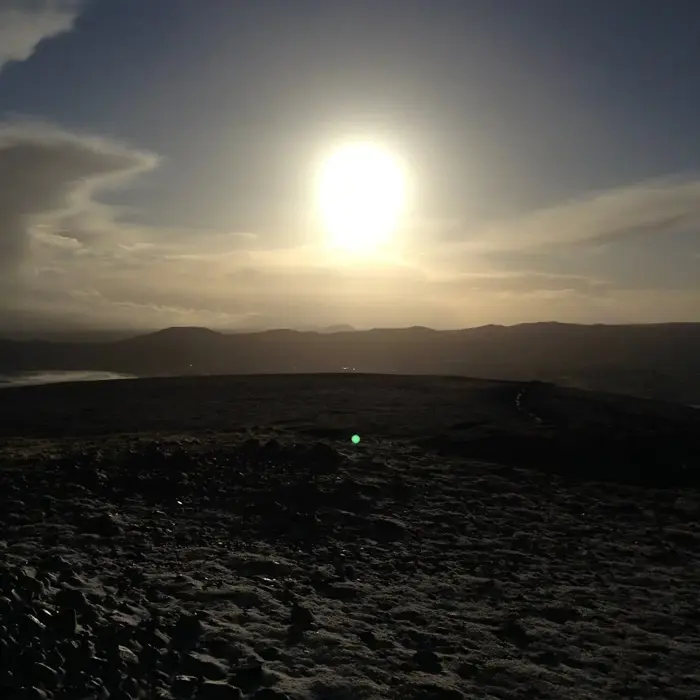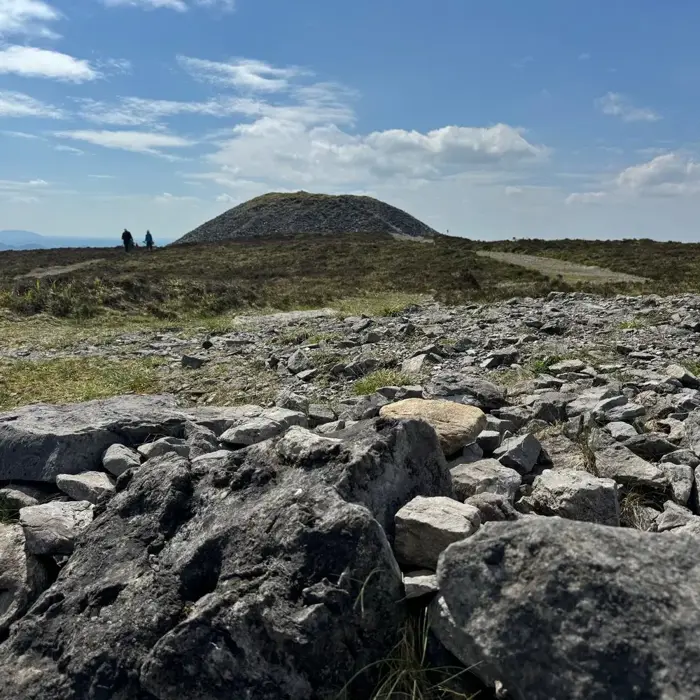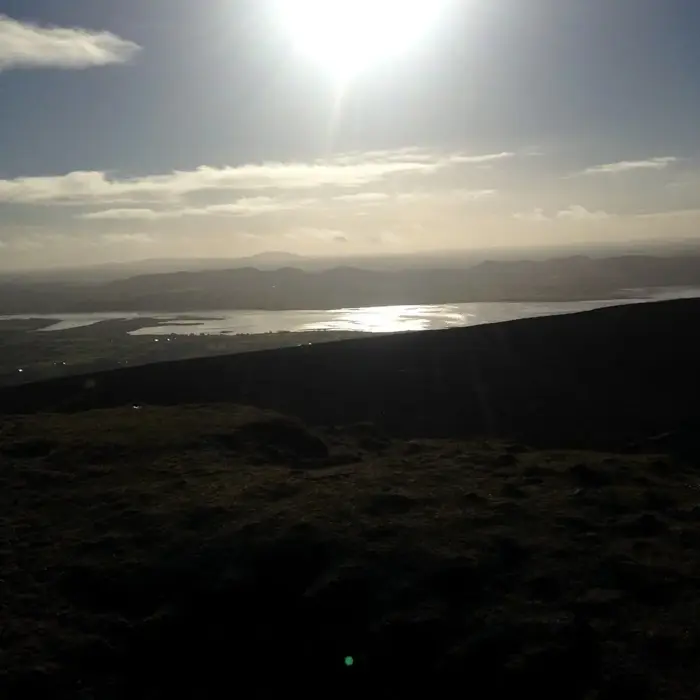




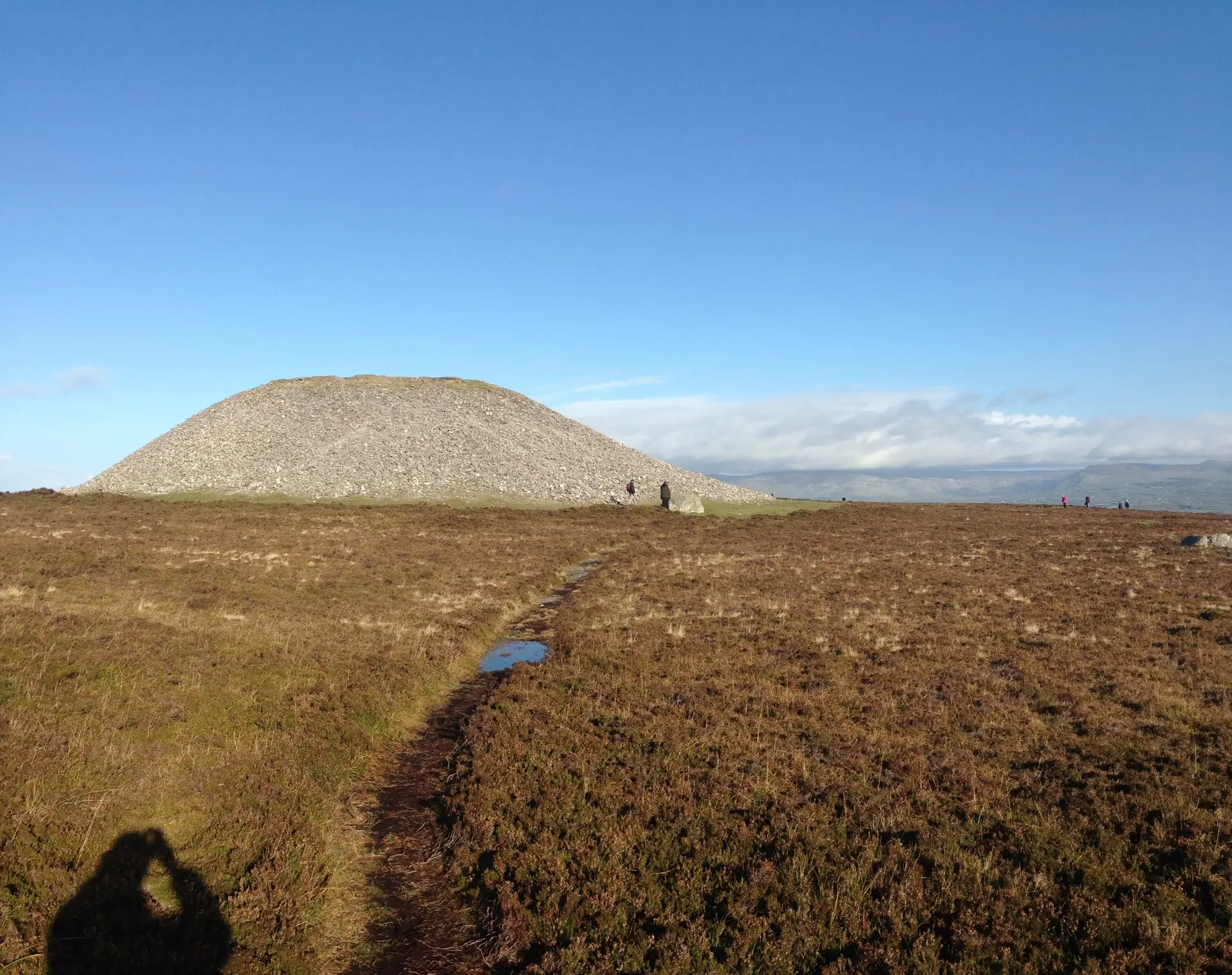








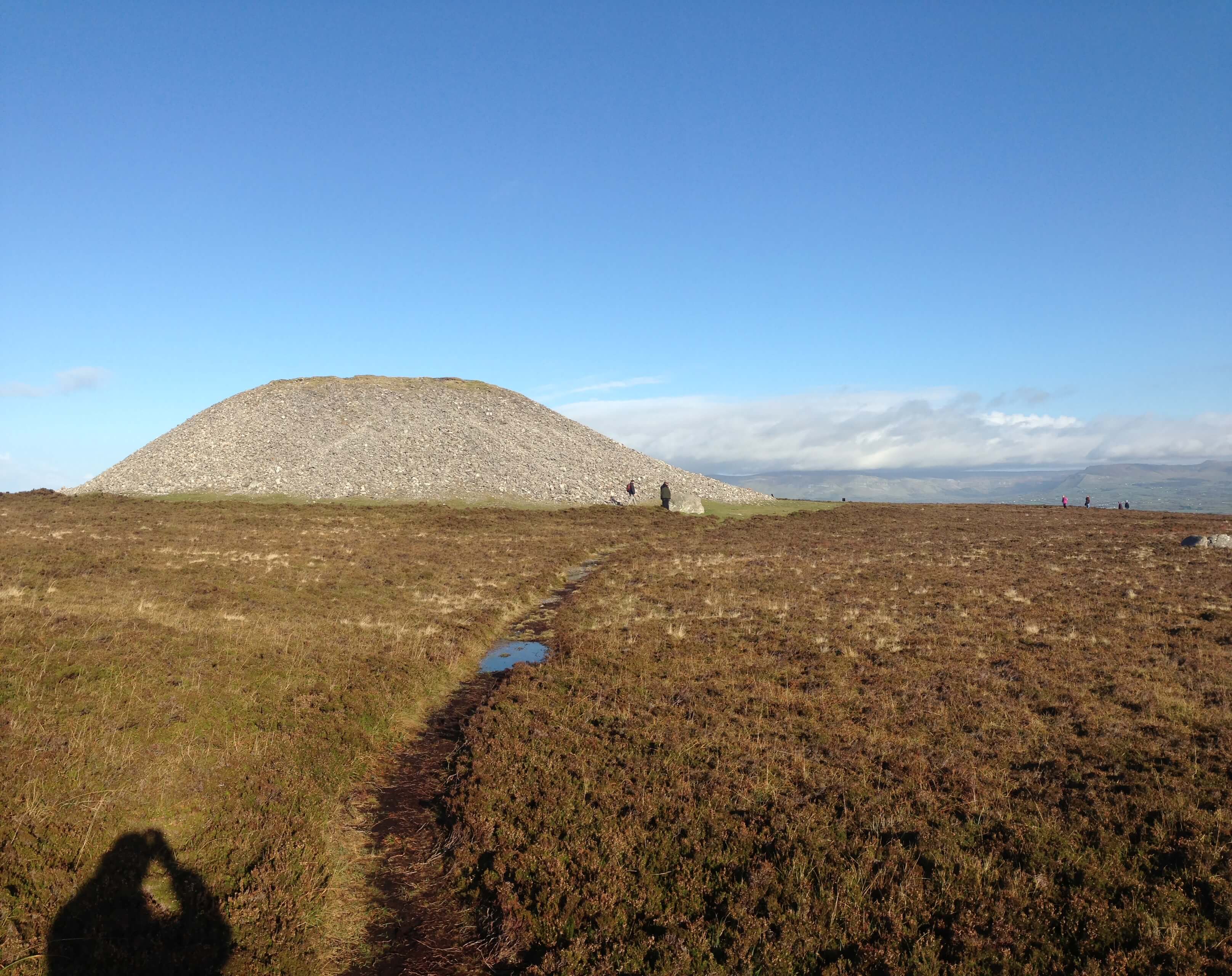
Known locally as Miosgán Meadhbha, Queen Maeve’s Tomb crowns Knocknarea Hill, which rises to 327 meters. This enormous stone cairn is among Ireland’s largest. The mountain offers expansive views of the Sligo shoreline and surrounding landscape. Visible from miles around, the cairn measures roughly 10 meters in height and between 55 and 60 meters across, surrounded by grassy inclines and limestone cliffs. This striking monument forms part of a broader Neolithic landscape that includes nearby passage tomb complexes like Carrowmore and Carrowkeel.
Archaeological and Historical Findings
Studies date this cairn to the Neolithic period, likely built between 3400 and 3200 BCE, making it approximately 5,000 years old. Constructed from thousands of tons of locally sourced stone, there is no direct evidence supporting any quartz exterior, which contrasts with some other Irish passage tombs. The cairn’s circular base and raised platform design are characteristic of Sligo-era passage tomb architecture. Despite its prominence, Queen Maeve’s Tomb remains unexcavated, so the interior layout and contents remain unknown. Surveys have identified features such as a low platform beneath the cairn and circular stone arrangements around its base, echoing styles seen in Carrowmore and Carrowkeel sites. Visitor foot traffic has caused some erosion, so careful respect for the site is advised.
Legends, Folklore and Myths
Queen Maeve’s Tomb is deeply woven into Irish mythology. According to local tradition, this cairn is the resting place of Maeve (Medb), the formidable warrior queen of Connacht featured in the Ulster Cycle, who is said to lie upright inside, facing her foes. Maeve is renowned for her role in the epic tale “Táin Bó Cúailnge,” and her association with Knocknarea turns the site into a pilgrimage destination for enthusiasts of Irish myth. Folklore also portrays Maeve as a fairy queen ruling over the burial mound, leading to the hill being nicknamed the “hill of the fairies.” The tomb is often described in legends as a gateway between worlds or a seat of ancient power, blending archaeological history with supernatural elements. Some stories depict Maeve buried fully armed, symbolically guarding the land.
Accessibility and Visitor Information
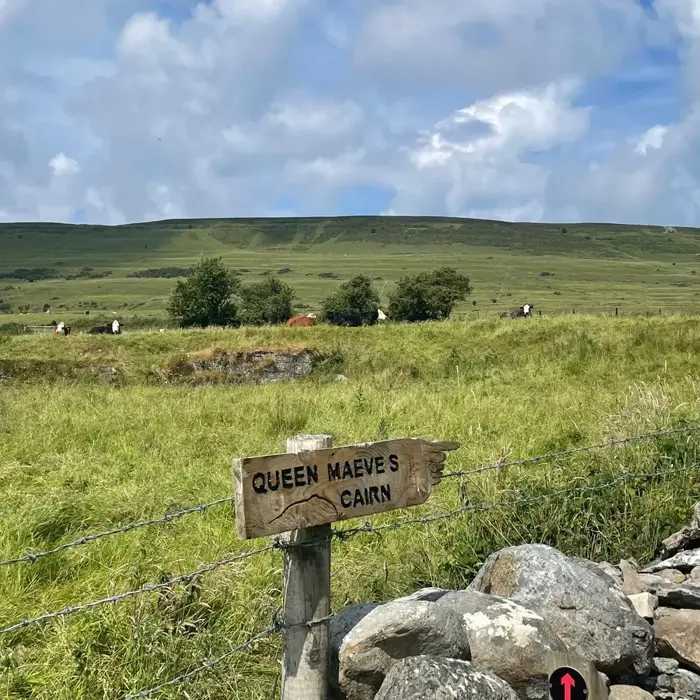
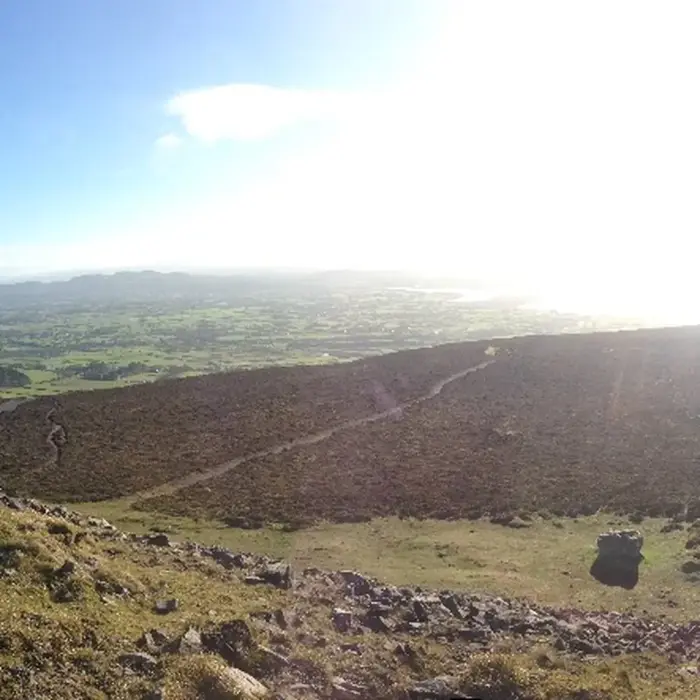
Most visitors start from the Knocknarea car park off the R292 near Strandhill. The main trail to the cairn is about 2.5 kilometers, winding over sloping fields and rocky terrain. The hike typically takes 45 to 60 minutes, featuring steep sections and uneven, occasionally muddy ground, so sturdy shoes are recommended. The path does not have steps but includes significant inclines. There are no guided tours or entrance fees, but visitors should follow safety and conservation guidelines carefully. Climbing on or disturbing the cairn is discouraged to protect this ancient monument.