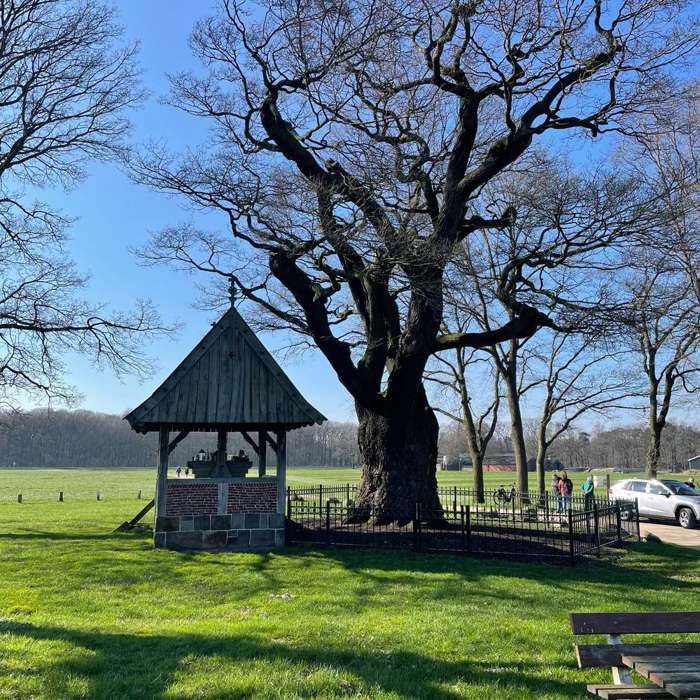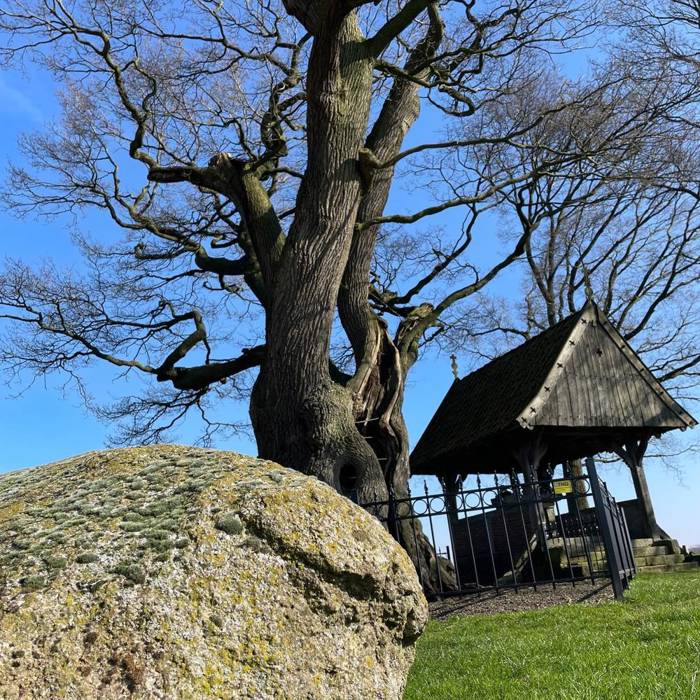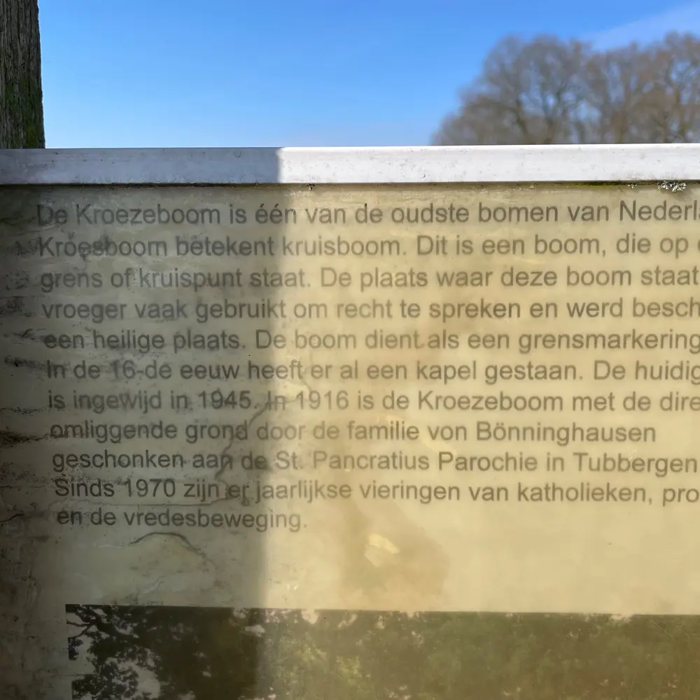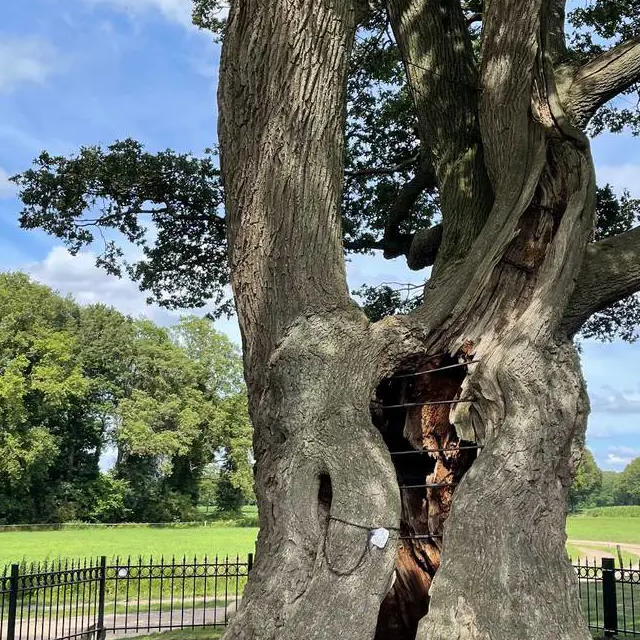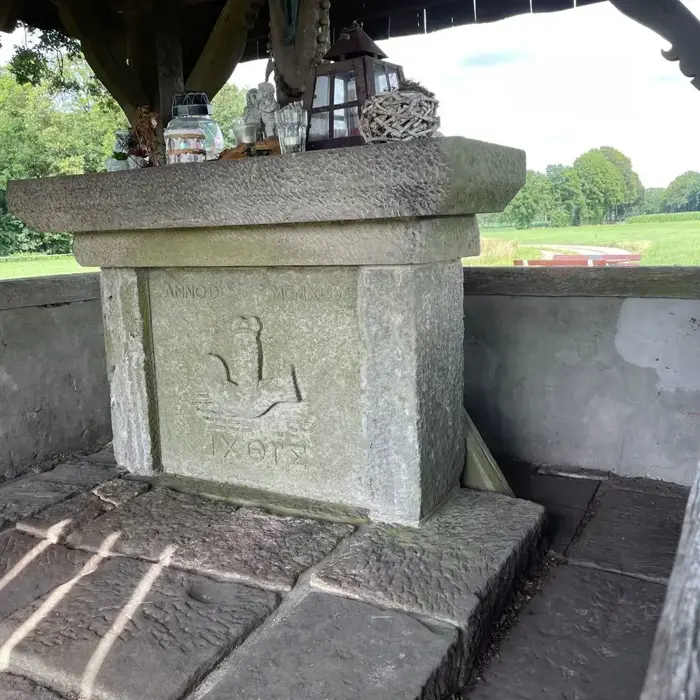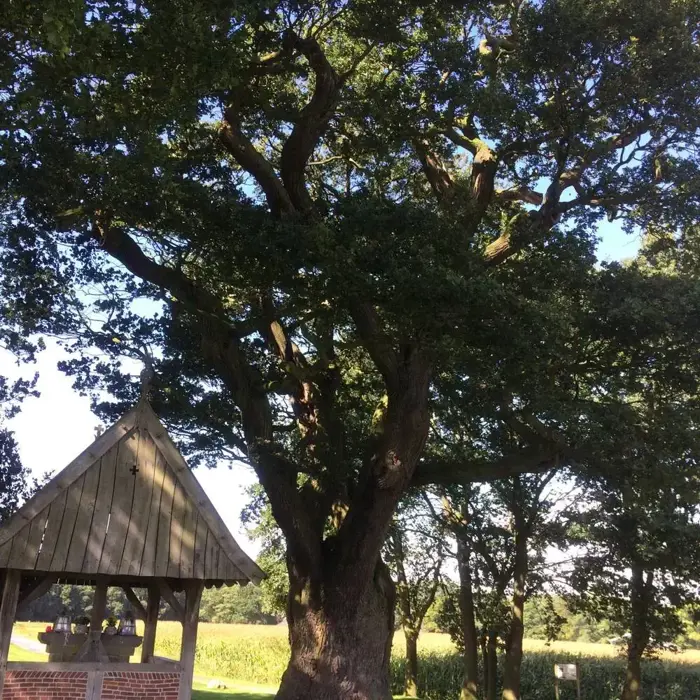




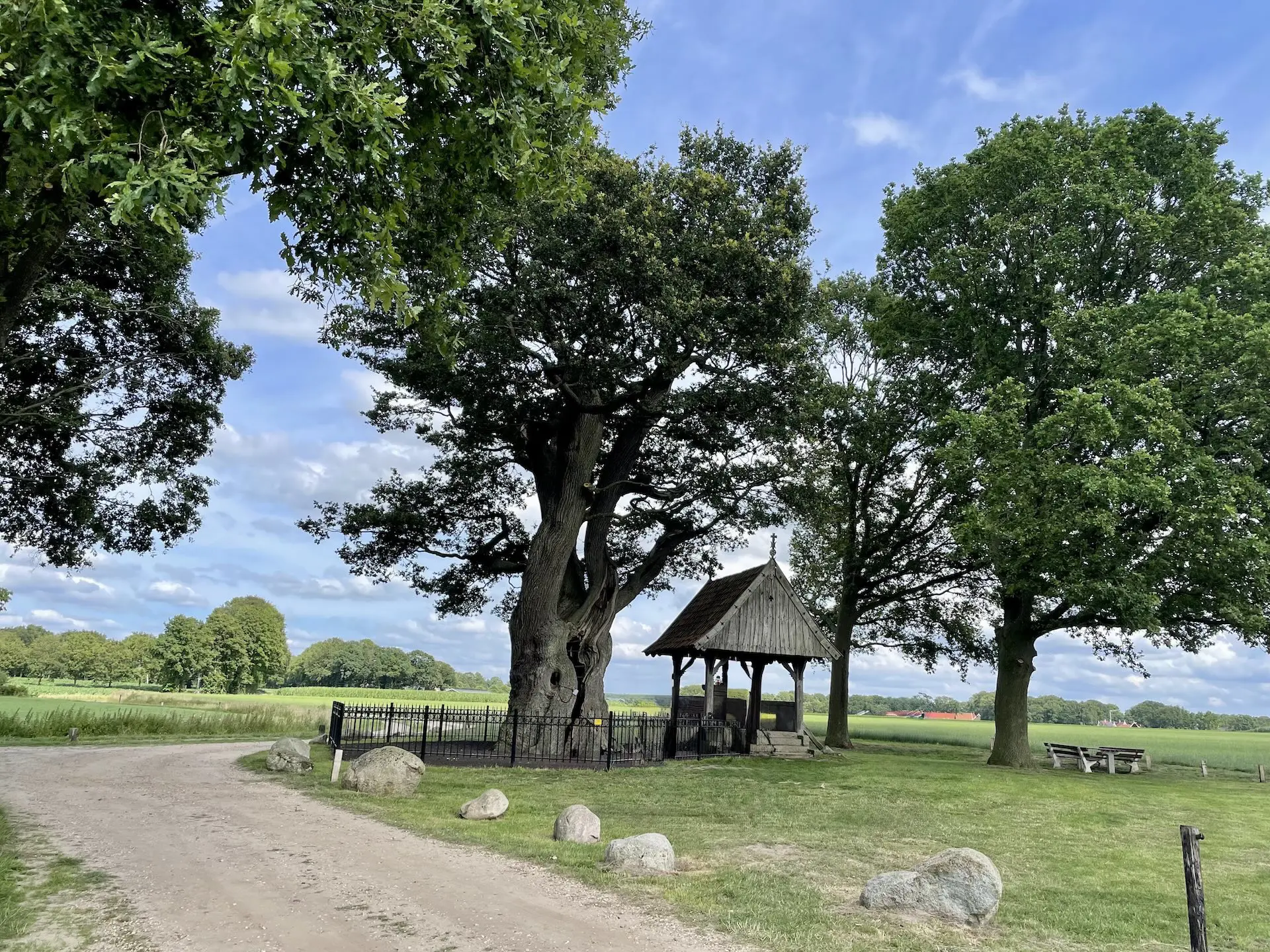








The Kroezeboom stands between the villages of Fleringen and Tubbergen. It is the oldest recorded English oak (Quercus robur) in the Netherlands. The tree is estimated to have been planted sometime between 1500 and 1600. It is supported by sturdy steel brackets to preserve its ageing branches. The tree’s exposed location, atop a sand ridge in agricultural land, on the edge of meadows and woodland, lends the spot a distinctive atmosphere. An information board on site provides details about the tree and its historical context. Next to the tree stands a small, open chapel.
Archaeological and historical findings
Research into both archaeological finds and historical documents suggests that De Kroezeboom served as a boundary marker and was probably planted between 1500 and 1600 to demarcate the property boundaries of the es. The term ‘kroezeboom’, meaning ‘cross tree’, indicates that the tree functioned as a landmark within the local land-division system. During the Reformation, the site acquired religious significance. This was particularly true for the Catholic community, which gathered secretly beneath the tree until around 1730. In 1909, a chapel was built next to the tree to practise local religious traditions and to honour the return of Catholic worship. This original chapel was replaced between 1944 and 1945 by the present building, dedicated to the Sacred Heart of Christ. The current site is home to both the old oak tree, supported by metal struts, and the small brick and timber chapel. Inside the chapel stands a statue of the Sacred Heart.
Accessibility and Visitor Information
The Kroezeboom is reachable by car via an unpaved path originating from a nearby country road. This approximately 100 meter route crosses flat grassy ground and is usually accessible, though it may become muddy after rainfall. Visiting the tree is free of charge.