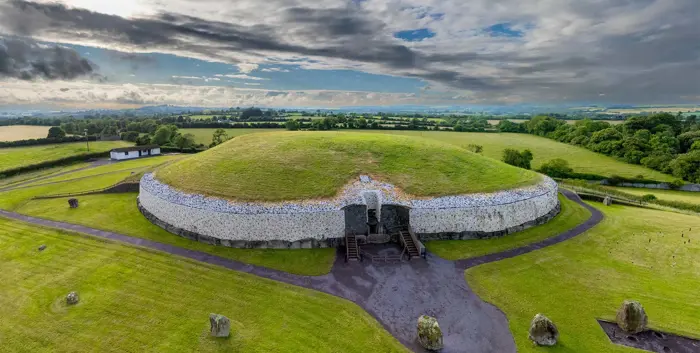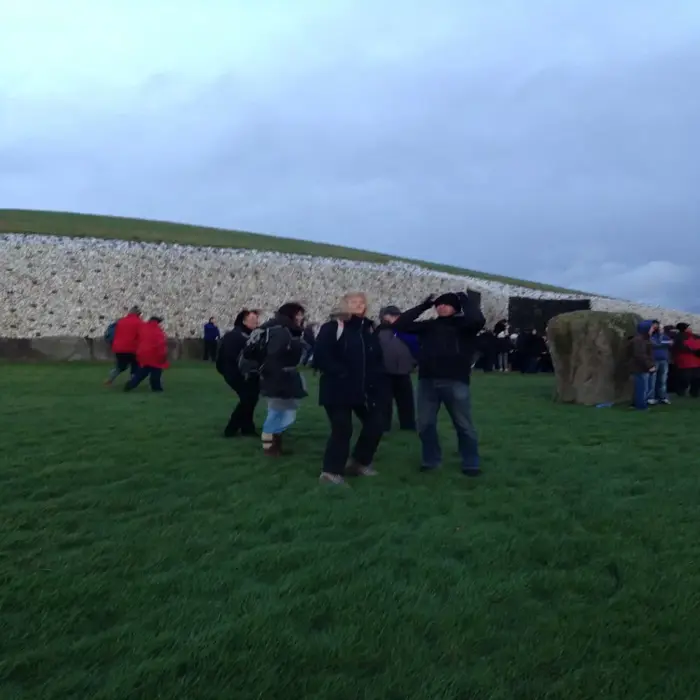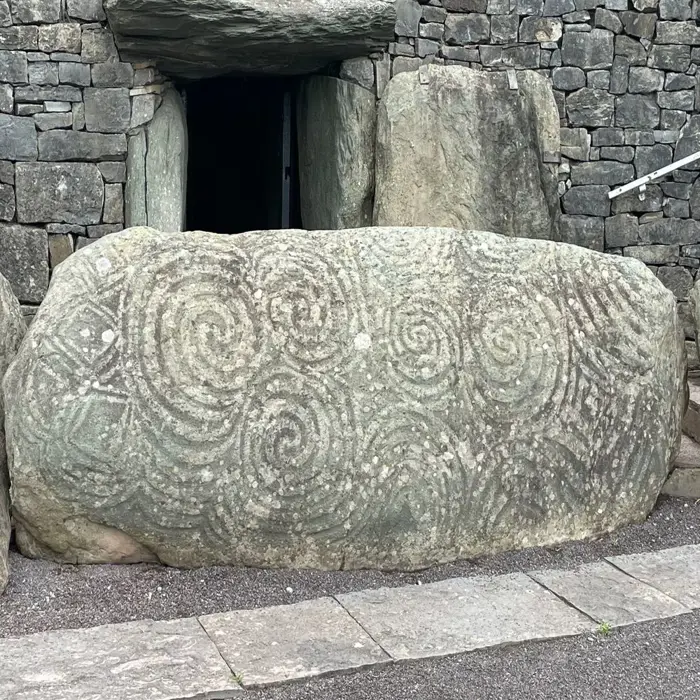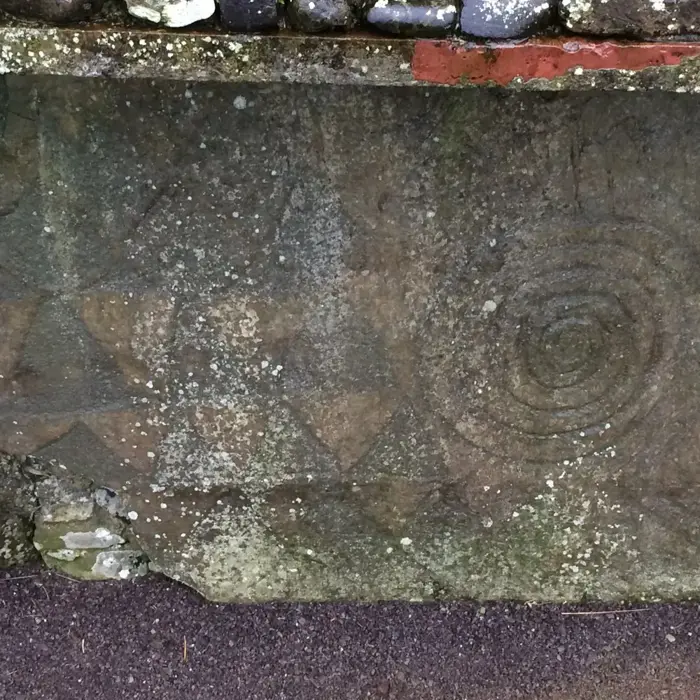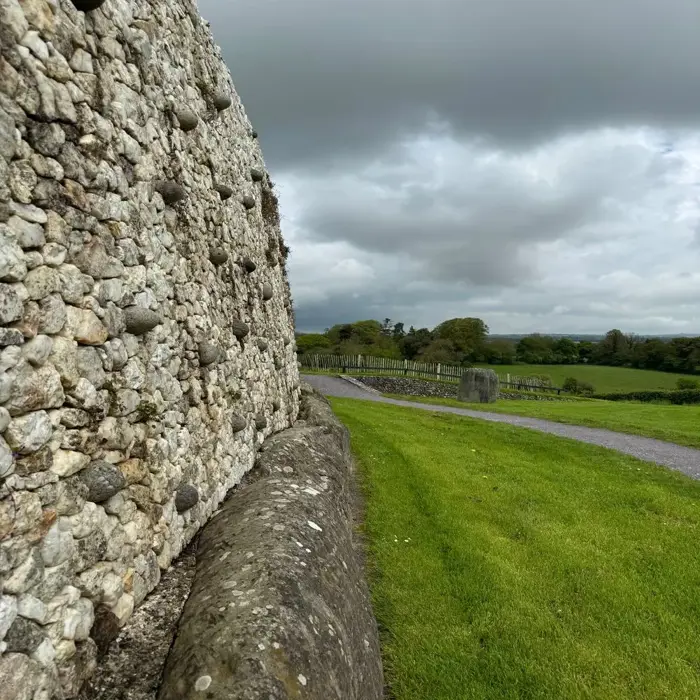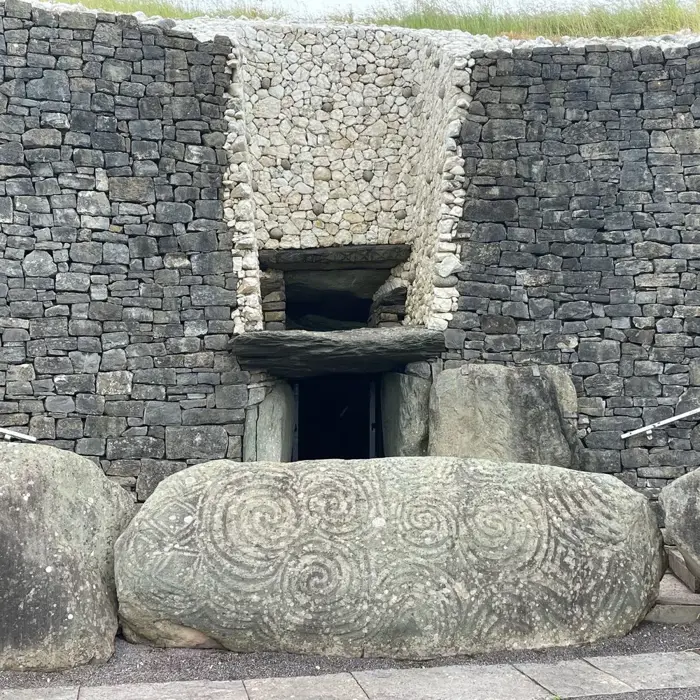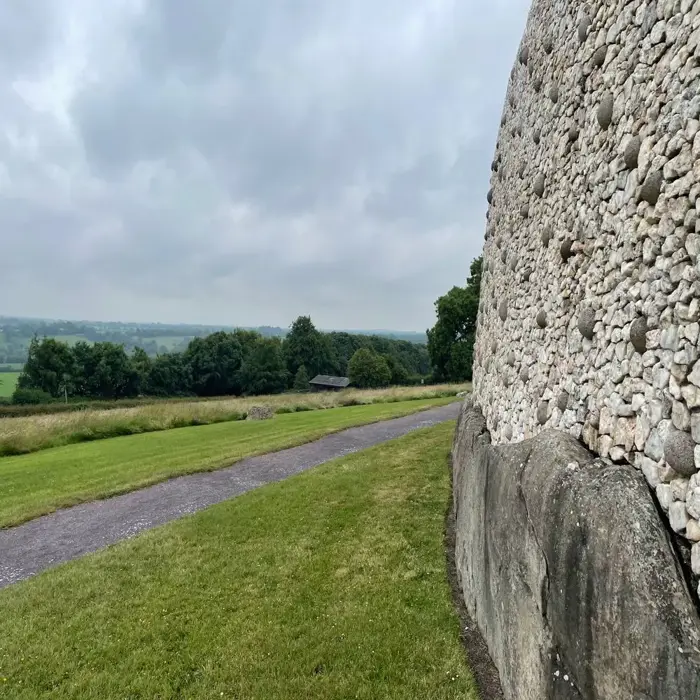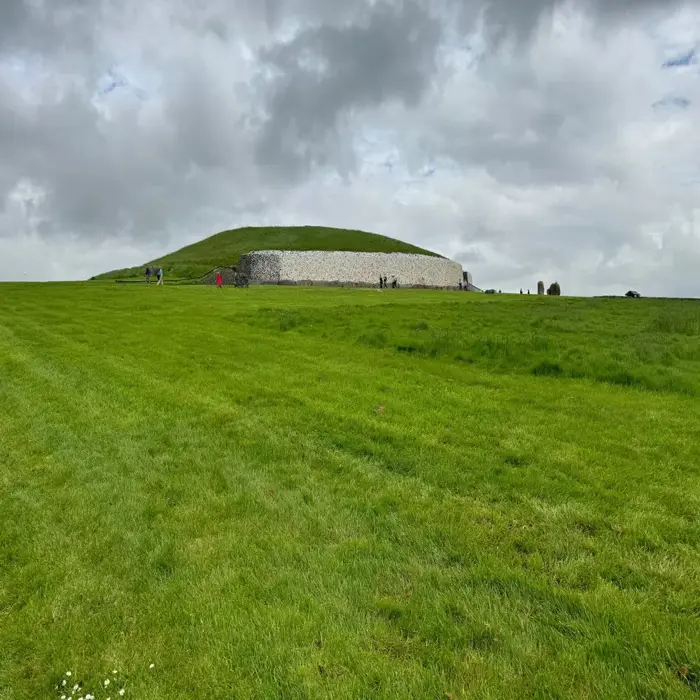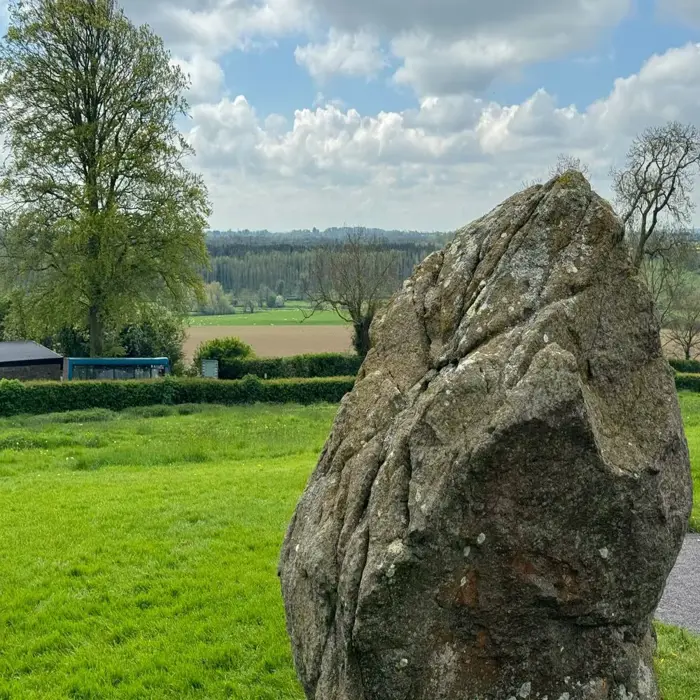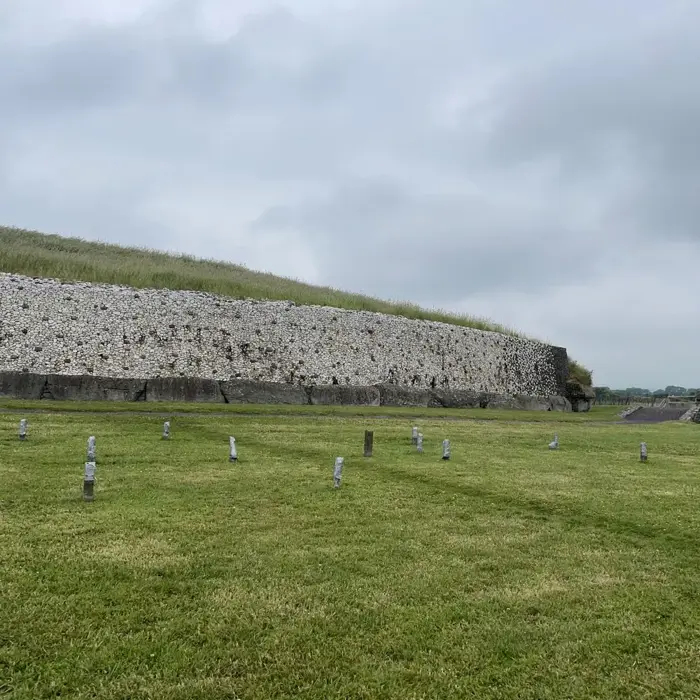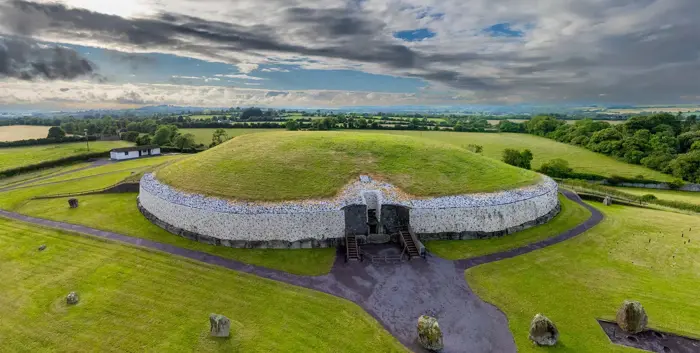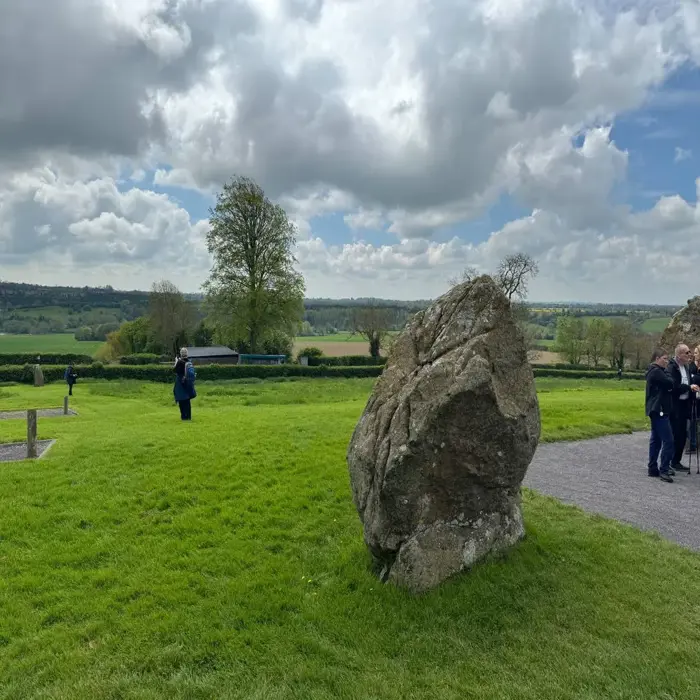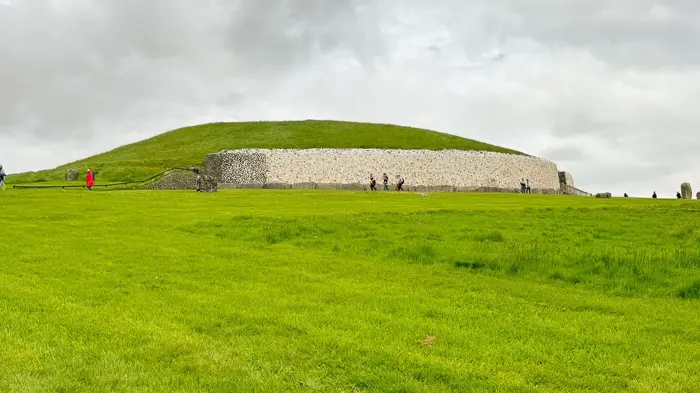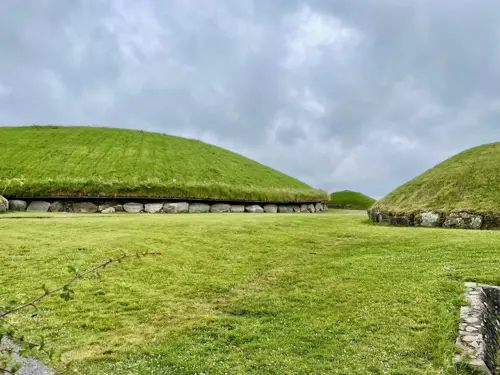




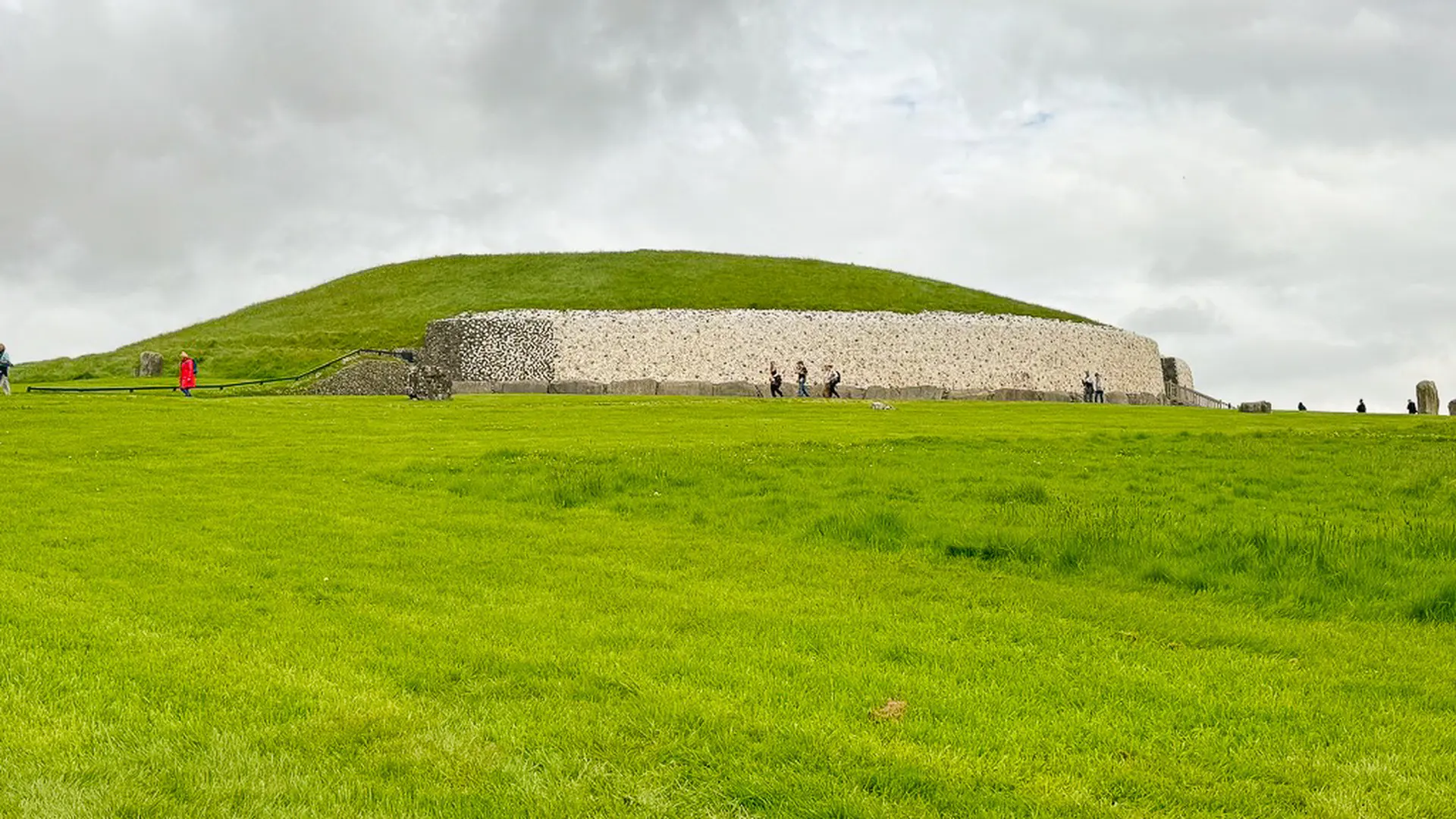








Situated atop a low ridge in the Boyne Valley, County Meath, Newgrange is a sizable passage tomb featuring a striking white quartz façade contrasted by dark basalt, set against surrounding green fields and the winding River Boyne. The circular mound measures roughly 85 meters across and rises about 13 meters high, encircled by 97 large kerbstones many of which bear intricate carved designs such as spirals and lozenges common to megalithic art. A single entrance on the southeast side leads to a long, narrow passage culminating in a cruciform chamber with a corbelled stone roof that has remained dry and intact for thousands of years. This site is part of the wider Brú na Bóinne complex, which includes other significant passage tombs at Knowth and Dowth, together forming one of Europe’s foremost Neolithic ceremonial landscapes.
Archaeological and Historical Findings
Constructed around 3200 BCE, Newgrange predates notable monuments like Stonehenge and the Egyptian pyramids. Archaeological examination reveals that the mound is primarily composed of greywacke and sandstone sourced locally, while white quartz and darker granite and basalt materials were transported from more distant locations to create the distinctive outer layer. The structure consists of an earthen and stone mound covering a carefully built stone passage approximately 19 meters long, which ends in a central chamber with three side recesses; the entire complex is enclosed by the kerbstone ring and was originally surrounded by standing stones. Excavations have uncovered human remains and various grave goods, indicating its use as a site for multiple burials and ceremonial deposits rather than a single internment. The precisely engineered corbelled roof, formed from overlapping stone slabs converging toward the top, has survived for millennia without any modern waterproofing, highlighting an advanced ancient understanding of dry-stone construction techniques. The broader Brú na Bóinne area, including Newgrange, is protected as a UNESCO World Heritage Site because of its rich collection of megalithic artwork and outstanding preservation of its prehistoric ritual environment.
Archaeoastronomic Orientation
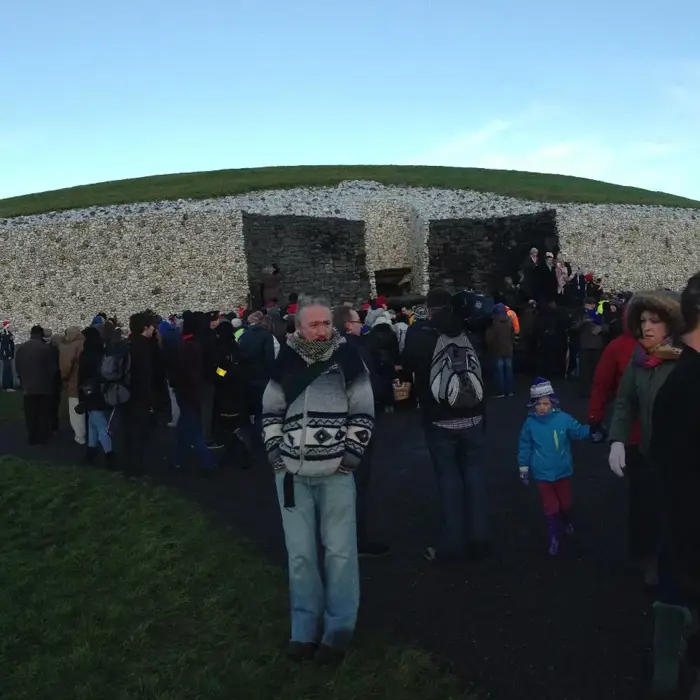
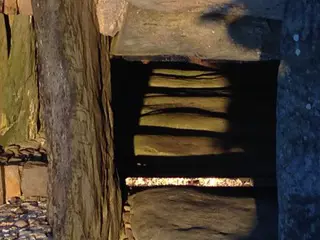
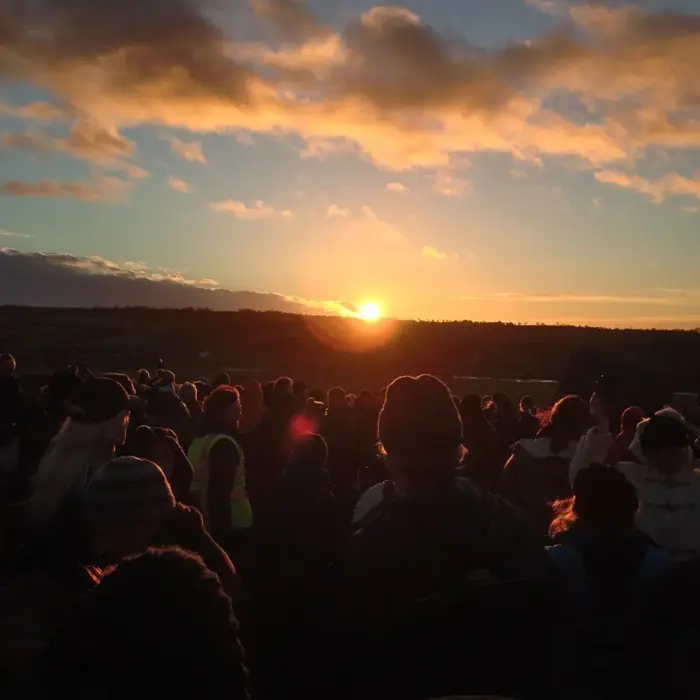
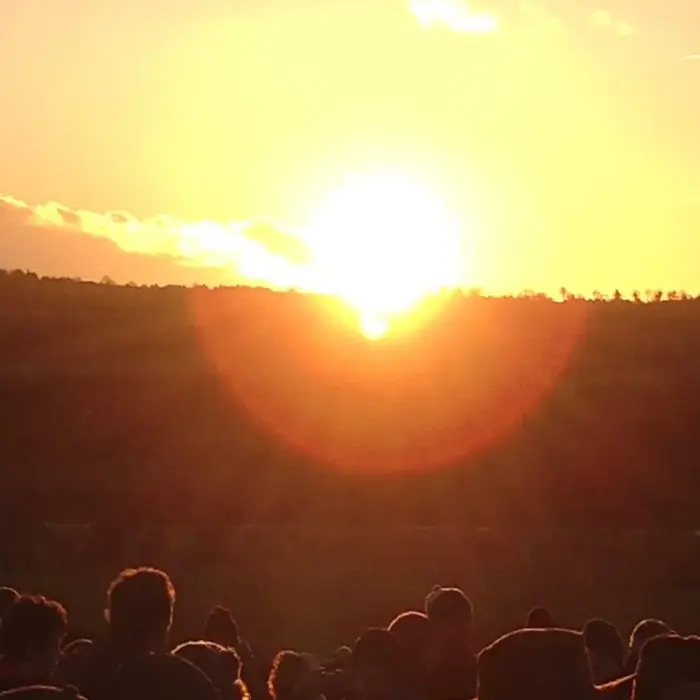
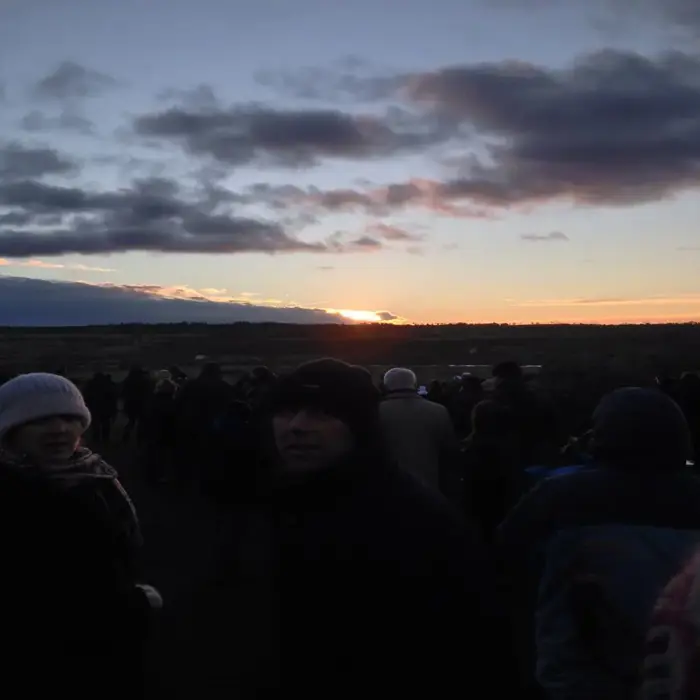
Newgrange is renowned worldwide for its exact alignment with the rising sun during the winter solstice. Above its main entrance, a small opening called the roof-box allows a beam of sunlight to penetrate the passage at sunrise near the solstice, slowly traveling along the floor into the inner chamber. On clear winter solstice mornings, this sunlight illuminates the chamber for about 17 minutes, symbolically linking the tomb’s interior with the solar cycle and marking the turning of the year. This alignment is widely recognized by archaeologists and archaeoastronomers as an intentional feature that required precise orientation and knowledge of the sun’s movements at the time of construction.
Local Legends, Folklore and Myths
In medieval Irish texts and later traditions, Newgrange is known as Síd in Broga or Brú na Bóinne, considered a supernatural dwelling and gateway to the Otherworld. The Dindshenchas (ancient place-lore poems) describe the site as the home of the Dagda, an important god of the Túatha Dé Danann, and his son Óengus mac ind Óc, who is said to have cleverly acquired the site from his father “for day and night,” thus securing permanent possession. Other stories link Brú na Bóinne with the river goddess Bóinn, from whom the River Boyne takes its name; legends tell how she approached a forbidden well of wisdom near the site, causing the waters to burst forth and transform into the Boyne, carrying her spirit past the monument. Across these myths, Newgrange is consistently portrayed as a sacred place intertwined with divine figures, poetry, and sovereignty, firmly rooting it within Ireland’s rich mythological tradition.
Accessibility and Visitor Informations
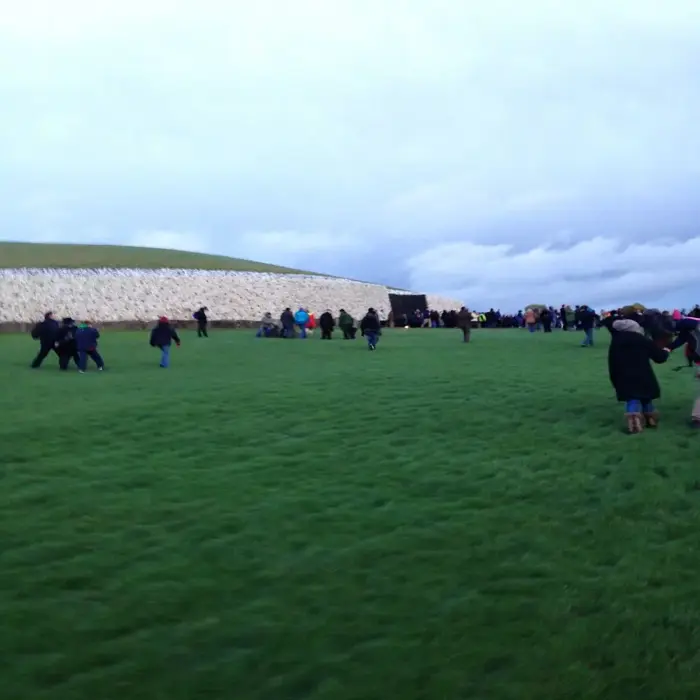
Visitors begin their experience at the Brú na Bóinne Visitor Centre in Donore, County Meath, as there is no direct public road access to the mound itself. From the centre, guests cross the River Boyne via a pedestrian bridge before taking an official shuttle bus to the Newgrange monument situated on the north side of the river. Upon arrival, visitors walk a short, gently inclined paved and gravel path to reach the base of the mound, then explore around the kerbstones. Those on a full guided tour may enter the low, narrow passage leading into the chamber, noting that the floor is uneven and requires stooping. Access to Newgrange and its passage tomb interior is strictly by guided tour arranged through the Visitor Centre, with a limited number of visitors permitted daily to protect the site’s conservation. Booking tickets in advance is strongly advised, especially during busy periods. Visitors requiring special assistance or wheelchair users are encouraged to contact the Visitor Centre beforehand, as while the external route is accessible, the internal passage’s confined and uneven nature presents significant challenges. Admission includes access to the Visitor Centre exhibition, shuttle transport, and the guided tour. Official opening hours, fees, and tour details are available through the Office of Public Works and the Brú na Bóinne official pages, with unaccompanied minors under 18 not permitted entry.