Log In

Cornwall and West-Devon


Why come here?

This is a region to lose yourself in. It is exceptionally rich in unique, inspiring places that ‘recharge’ your energy.
A number of volcanic granite areas, such as the barren hills of Dartmoor and Bodmin Moor, form the backbone of the long, narrow tip of Cornwall and Devon.

Surrounding this is a varied and rolling landscape. The region’s edges – the long, cliff-lined coastline – form spectacular coastlines. The region also boasts a rich (pre)history with countless megalithic ‘major’ power places. And then there are the many legends, such as that of King Arthur. Furthermore, the area is exceptionally atmospheric and offers everything one could possibly desire. For those seeking ease, trust and surrender, we recommend consciously immersing yourself in the underlying energy of the land.
 

Highlights

Places of Power


  • St Michael’s Mount: this is where major telluric energy currents converge. It is the ‘little brother’ of Skellig Michael in Ireland and Mont St Michel in France.
 
  • Whistman’s Wood: this woodland has been here for 7,000 years. Don’t forget to try the scones at the Two Bridges Hotel.
 
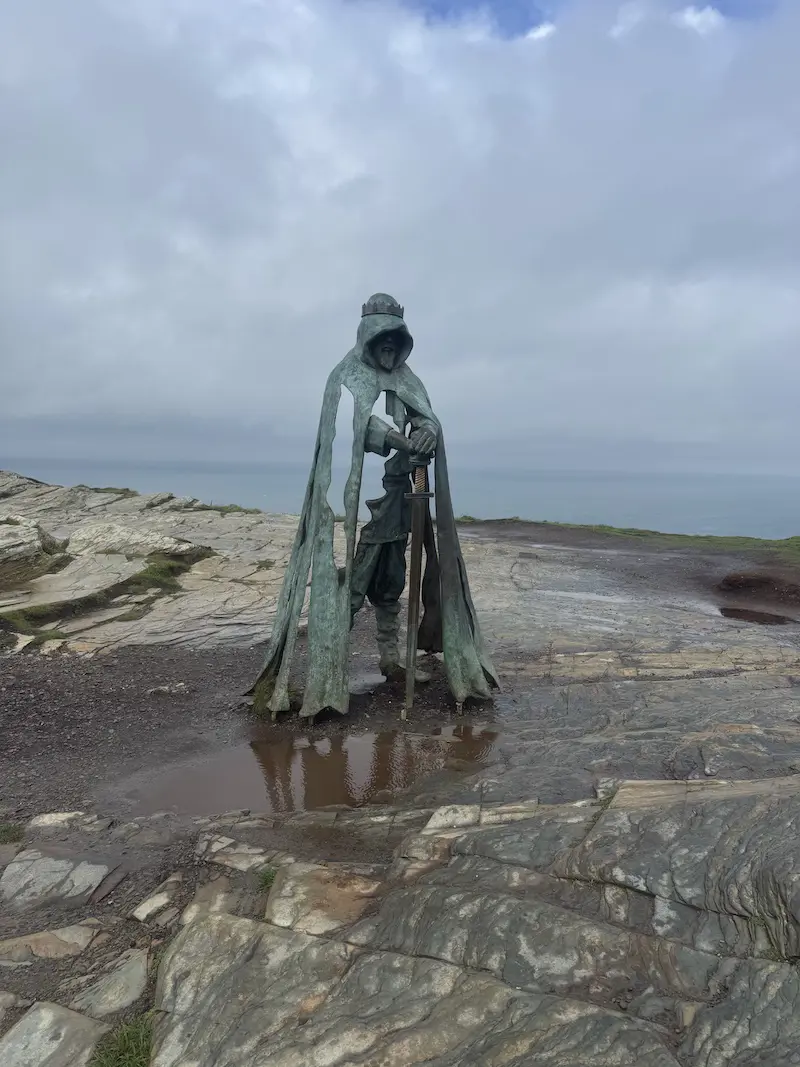
  • Tintagel: the supposed birthplace of King Arthur and Merlin’s Cave, situated below it.
 
  • Lydford Gorge: what a gorge!
 
  • The Hurlers and the Cheesewring: two gems, high up on Bodmin Moor.
 
  • Saint Nectan’s Kieve: an enchanting waterfall.
 
  • Men-an-Tol: a row of stones with a gap you can crawl through. A true place of healing.
 
  • Boscawen Un: this complete stone circle is literally in the ‘middle of nowhere’.
 
  • Merrivale Stonerows: was this a megalithic spa?
 

Note: there are many more places marked on the map. You might even find places there that appeal to you even more! You’ll also find places in the smaller regional guides. In short: have a browse through the map and plan your own route!


Other highlights


  • The spectacular coastline featuring the Salt Path, famous from the books of the same name. To the south lies the famous Jurassic Coast. Will you spot a dinosaur too?
 
  • Various pilgrimage routes: The Cornish Celtic Way, The Cornish Saints’ Way, The Mary and Michael’s Pilgrim’s Way
 
  • The Moors: Exmoor, Dartmoor, Bodmin Moor and the West Penwith Moor. Beautiful, distinctive granite massifs with charming villages, secluded spots and sweeping views. Do take care not to sink into the ground.
 
  • The Mary-Michael energy trail featuring remarkable (pre)historic sites.
 
  • The Arthurian legend and the places associated with it.
 
  • Charming towns. Just to name a few: St Ives, Fowey, Padstow, Penzance, Truro and Tavistock. And then, of course, there’s Plymouth, the largest city.
 
  • Charming villages: Mousehole, Port Isaac, Boscastle, Polperro, Mevagissey, Zennor and Lydford.
 
  • Beaches throughout this area, with surfing opportunities in many places. There are some real gems amongst them!
 
  • And whilst you’re there: Land’s End: not particularly spectacular, but it has the reputation.
 

We’ll be covering the following areas – which boast a high concentration of special places – in more detail in the near future: Dartmoor and the surrounding area, Bodmin Moor and Tintagel, and West Penwith.

bg-688

Geology, Landscape, and Nature

Mountain Formation
 
Cornwall and West Devon form a geologically fascinating region whose present landscape was shaped by the Hercynian (also known as Variscan) orogeny. This mountain-building event occurred around 280–290 million years ago during the late Carboniferous and early Permian periods, when the continents of Laurussia (including the predecessors of northern Europe) and Gondwana collided and together formed the supercontinent Pangaea.
The orogeny caused the uplift and folding of existing sedimentary layers of sandstone, limestone, and clay. Under immense pressure and heat, magma rose and solidified at great depth to form granite. This vast granite mass stretches for about 250 kilometres, from the Isles of Scilly to Dartmoor, with an estimated thickness of 10 kilometres.
mary-aligment

Granite Massifs

The granite masses form the backbone of southwest England: Dartmoor, Bodmin Moor, St. Austell, Carnmenellis, Land’s End, and the Isles of Scilly. Here you find the characteristic tors—stacked granite rock formations created through millions of years of weathering. The granite contains minerals such as tin, copper, lead, zinc, and tungsten, which led to extensive mining from the Bronze Age onward.

Sedimentary Areas

Outside the granite regions, sedimentary rocks such as limestone, sandstone, and slate dominate. These areas are characterised by green hills, lush pastures, and traditional Cornish hedgerows (lines of shrubs and trees).

The coastline displays remarkable geological diversity. The south coast of Devon, known as the Jurassic Coast, was granted UNESCO World Heritage status in 2001. This coast presents an almost unbroken sequence of Triassic, Jurassic, and Cretaceous rock formations that document 185 million years of Earth’s history. The coast is famous for its fossils.

Devon contains several important estuaries, such as the Exe, Dart, and Taw–Torridge. These areas serve as crucial breeding and feeding grounds for migratory birds and other wildlife.

Biodiversity and nature

The biodiversity of Cornwall and Devon is remarkably rich thanks to a unique combination of geological variation, a mild oceanic climate, and centuries of small-scale land use.
The mix of wet and dry, acidic and calcareous, open and enclosed landscapes creates an exceptional variety of habitats for plants and animals.
Elements such as hedgerows, grasslands, estuaries, and even abandoned mining areas each contribute in their own way to this ecological diversity.
 
 
The granite regions, such as those of Dartmoor and Bodmin Moor, have poor, acidic, and stony soils. Unique ecosystems have developed here, featuring rare heathland vegetation, mosses, and lichens. In these rugged areas, species have adapted to the open, windy, and humid climate, such as the Dartmoor pony and various unusual insect species. In Dartmoor, it is not uncommon to encounter ponies, sheep, and horses on the road.
 
 
Devon is home to some of the oldest woodlands in England. An example is Whistman’s Wood, an ancient forest that has existed almost continuously for about 7,000 years. The biodiversity in these old forests is rich, with a wealth of plants, insects, birds, and mammals.
 
 
Along the coast of Cornwall and Devon, the alternation of steep cliffs, sandy beaches, dunes, and tidal zones creates a dynamic ecosystem. Seabirds such as guillemots and razorbills nest on the cliffs, while rock pools and tidal pools provide shelter for countless marine creatures. The estuaries of rivers like the Dart and the Exe are of great importance as stopover sites for migratory birds and as wintering habitats for several species. Otters are also slowly returning here, thanks in part to cleaner waterways and the restoration of natural riverbanks.
 
 
In the wooded parts of Devon, various bat species live, including the rare grey long-eared bat. Hedgerows and flower-rich meadows provide shelter for hedgehogs, foxes, and polecats. These species are still common here due to the preservation of the traditional landscape.

Steencirkel van Boscawen Un

One of the best-preserved stone circles featuring a unique quartz stone.
grotebeer_tentagel

The sky has its feet on the earth: along the Great Bear

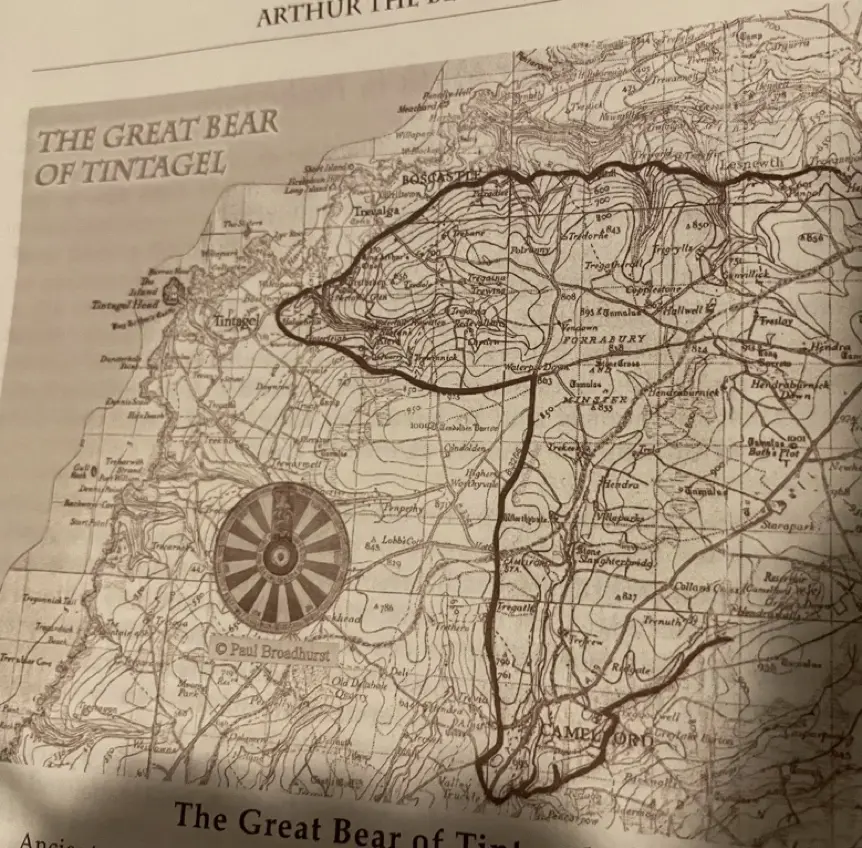
In the landscape of Cornwall, according to Paul Broadhurst (author of *The Secret Land*), there is said to be a remarkable correspondence between the earth and the starry sky. He describes how contours of animals can be seen throughout the landscape, often aligned with ancient paths and routes. These forms are thought to depict mythical creatures or refer to constellations and symbolism from the zodiac. The most striking example is a figure that is said to mirror the constellation of Ursa Major in the landscape around Tintagel (see figure). According to this interpretation, at the throat of this earthly “bear” lies the waterfall St. Nectan’s Kieve, a place also associated with the Arthurian legend. The crown of the figure is near the village of Boscastle, and the bear faces Tintagel, the supposed birthplace of King Arthur.

The Human History (1)

Megalithic Period (Neolithic and Bronze Age)
 
Cornwall and Devon are rich in megalithic monuments from the Neolithic and Bronze Age. Dartmoor and Bodmin Moor are literally scattered with stone circles, stone rows, dolmens, and burial mounds. *Mega* means large, and *lithic* comes from the Greek *lithos*: stone. These were therefore peoples who built with “large stones.” Standing stones, stone rows, stone circles, and dolmens are well-known forms found throughout the landscape.
 
In general, this period in Europe lasted from about 7,000 to about 3,500 years ago. Dating has increasingly shifted to earlier timeframes as research advances. More and more remains of this vast culture are being found worldwide even as far away as India.
 
Recent research has shown that King Arthur’s Hall on Bodmin Moor, previously thought to be medieval, actually dates from the Neolithic (3500–3000 BCE), making it 4,000 years older than previously assumed.
 
These monuments were almost always oriented toward astronomical events such as solstices. Often, specific stars or planets were focal points as well. Orion, the Moon, and Venus were among the favorites. The choice of stone types was deliberate—people sometimes transported stones over long distances because of their magnetic and conductive properties.
 
 
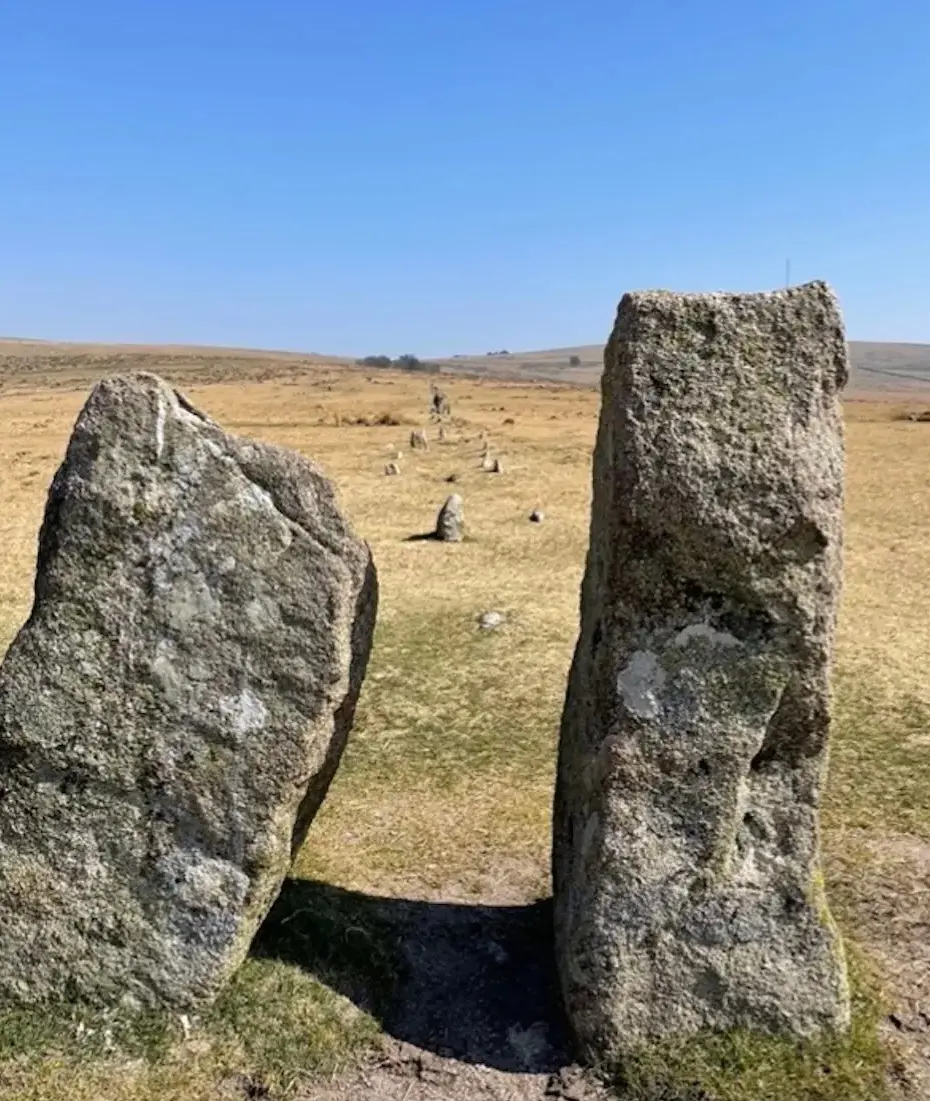
Merrivale Stone Row on Dartmoor.
This is part of a large megalithic complex that includes another stone row, a standing stone, a stone circle, and many stones buried in the peat.
Cornwall_west_devon2
bg-693

The Human History (2)

Bronze Age and Mining
 
 
Mining in Cornwall and Devon began in the early Bronze Age, around 2300 BCE, with the extraction of cassiterite (tin ore). Recent research has shown that British tin played a crucial role in international Bronze Age trade, with tin alloys reaching the Mediterranean and even as far as Israel. St. Michael’s Mount likely served as an ancient trading hub for tin.
 
 
Iron Age and Roman Period
 
 
During the Iron Age (from around 800 BCE), hillforts such as Castle Dore and Chun Castle were constructed. Cornwall was never fully conquered by the Romans; their presence remained limited to trade routes and a few military outposts.
 
 
Post-Roman Period: The Kingdom of Dumnonia
 
 
After the Romans left (around the year 410), the kingdom of Dumnonia emerged, stretching across present-day Cornwall, Devon, and parts of West Somerset. The capital, Isca Dumnoniorum (Exeter), was abandoned in the 5th century, after which the capital was likely moved westward. Most of Devon fell to Wessex around 650–670, while Cornwall remained independent until 825–829.
 
 
Celtic Culture and Christianity
 
 
During this period, Cornish-Celtic culture and language flourished. St. Piran is traditionally regarded as the patron saint who brought Christianity to Cornwall in the 5th–6th century. He is also associated with the rediscovery of tin in Cornwall after Roman mining techniques had been forgotten.
 
 
Middle Ages and Modern Era
The Norman conquest of 1066 brought castles and the feudal system to the region. The Cornish Rebellion of 1497 was a response to high taxes and the cessation of tin mining by Henry VII. The rebellion was suppressed, but eleven years later Cornwall regained autonomy over its tin production.
The Cornish language began to decline from the 13th century onward due to the increasing influence of English. John Davey of Zennor (1812–1891) is considered one of the last speakers with traditional knowledge of Cornish, though his proficiency was likely limited to words and short phrases. In 2009, UNESCO reclassified the language from “extinct” to “critically endangered” due to successful revival efforts.


19th–20th Century: The Great Emigration
 
 
The 19th century was marked by mass emigration from Cornwall. Between 1840 and 1900, more than 240,000 Cornish people emigrated abroad, especially to mining regions. This exodus was driven by the decline of tin mining and economic hardship.

The Arthurian Story

The Arthurian Story

The story of King Arthur is a central part of the cultural identity of Cornwall and Devon, although its historical foundations remain disputed.

The Story

The tale of King Arthur continues to live on in England’s cultural memory and is deeply rooted in the landscapes of Cornwall and Devon. It is an archetypal story about a king who embodied justice, unity, and wisdom. According to many versions, the story begins with Merlin, the mysterious wizard who was both seer and magician. He foresaw the chaos in Britain and predicted that a king was needed to restore peace. Thus, he magically brought Uther Pendragon to Igraine, from whose enchanted union Arthur was born.

Read more>>

beeld-koning-arthur

The Michael-Mary Alignment

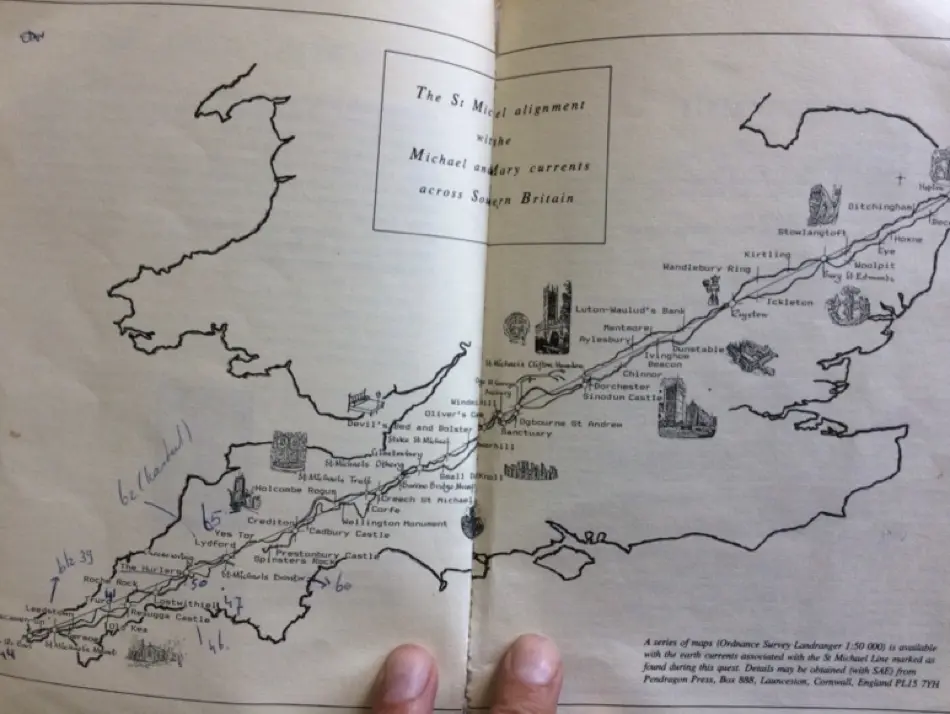
In the 1960s, geomancer and author John Michell discovered that a strikingly straight line crosses the English landscape from Land’s End in Cornwall to the northeast of England. This line, later known as the Michael–Mary alignment, connects a large number of significant sites across the landscape. It is aligned with the sunrise around the first week of May the time of the Celtic Beltane festival, which marks the beginning of summer. This moment falls halfway between the spring equinox (21 March) and the summer solstice (21 June).
The word *Beltane* is of ancient Celtic (Gaelic) origin and possibly means “bright fire” or “fire of Bel/Baal.” According to tradition, fires were lit on hilltops on this date, including some locations on or near this alignment. However, this practice was widespread and not limited to the alignment itself.
 
kaartenbijlage
bg-688

Practical tips for your trip

Driving on the left: just like in Ireland, traffic in England drives on the left-hand side of the road. Devon and Cornwall are also known for their narrow country lanes flanked by tall hedges, with the occasional passing place.


Currency: England uses the British pound (£) and is not part of the eurozone. So you’ll need to exchange money or pay contactless using an international card.


Staying in a B&B: In England, the bed and breakfast is an officially recognised form of accommodation, with its own quality mark from VisitEngland. In Devon and Cornwall, these are often private homes where the host or hostess lives on the premises and serves a fresh breakfast. Campsites and ‘holiday cottages’ are at least as popular as hotels.


ETA: The United Kingdom is no longer part of the EA. You will need an ETA certificate. Apply for this online and in good time. Also check the current requirements regarding the required validity period of your passport.


Weather and clothing: South-West England has a mild, windy and changeable maritime climate, with an average of 900 to 1,000 millimetres of rainfall per year on the coast and up to 2,000 millimetres on the higher moors of Dartmoor, Bodmin Moor and Exmoor. December and January are the wettest months, but a raincoat is a must-have in your luggage whatever the season.


Language: English is the official language, but Cornwall has its own language, Kernewek (Cornish), which has been protected under the European Charter for Regional or Minority Languages since 2002 and, in early 2026, was granted the same protection status as Welsh and Irish.


Electrical sockets: make sure you have an adapter for your electrical equipment. The sockets here are different.


The South West Coast Path: if you enjoy walking, you can follow the coastline of Cornwall and Devon along the South West Coast Path, which, at 1,014 kilometres, is the longest of Britain’s classic National Trails. It follows the spectacular south-west coast from Minehead in Somerset to Poole Harbour in Dorset.