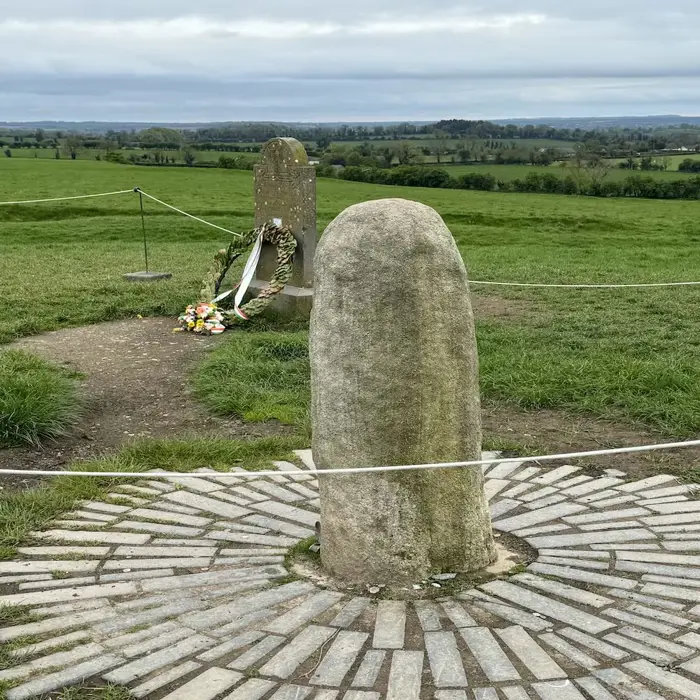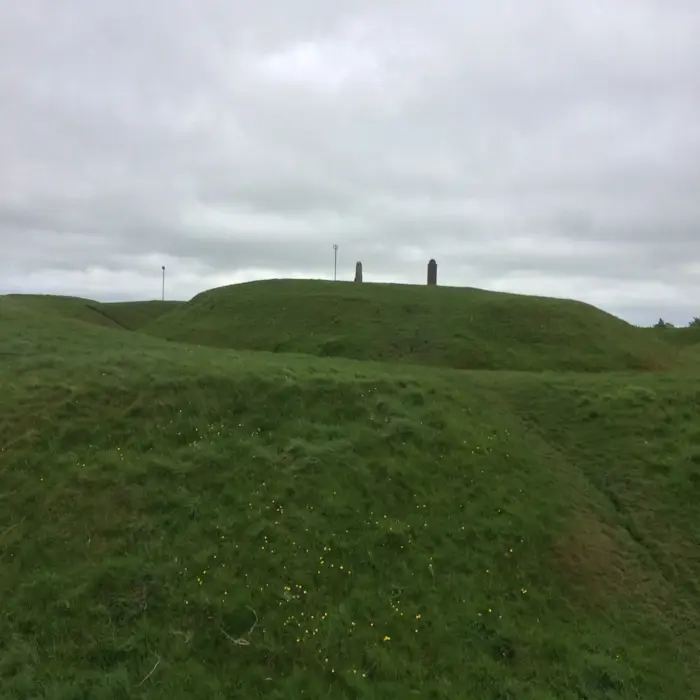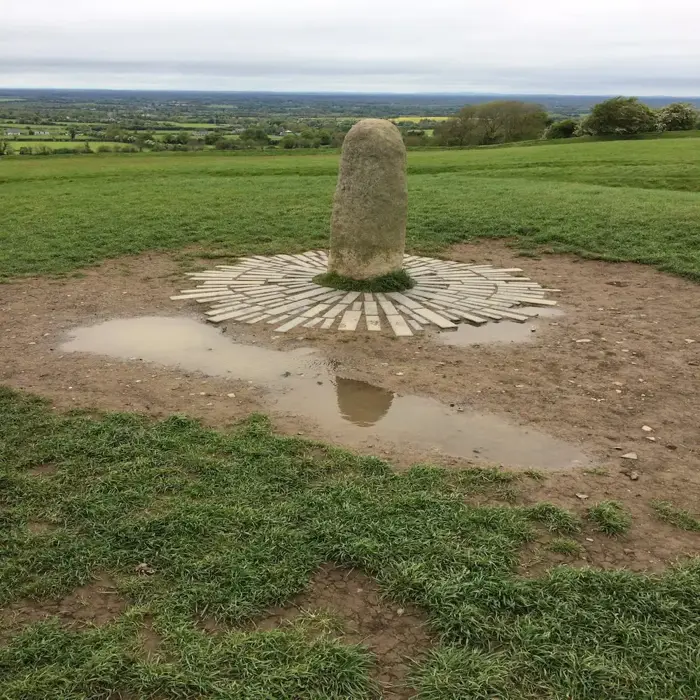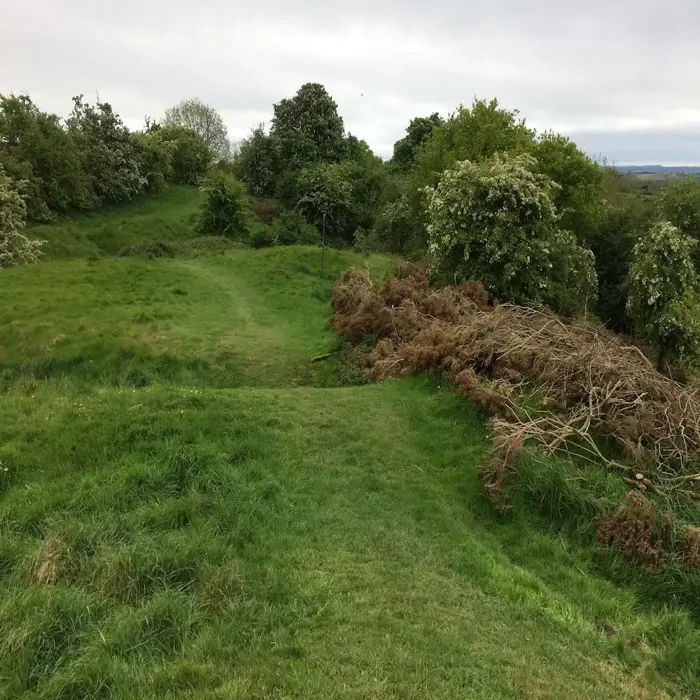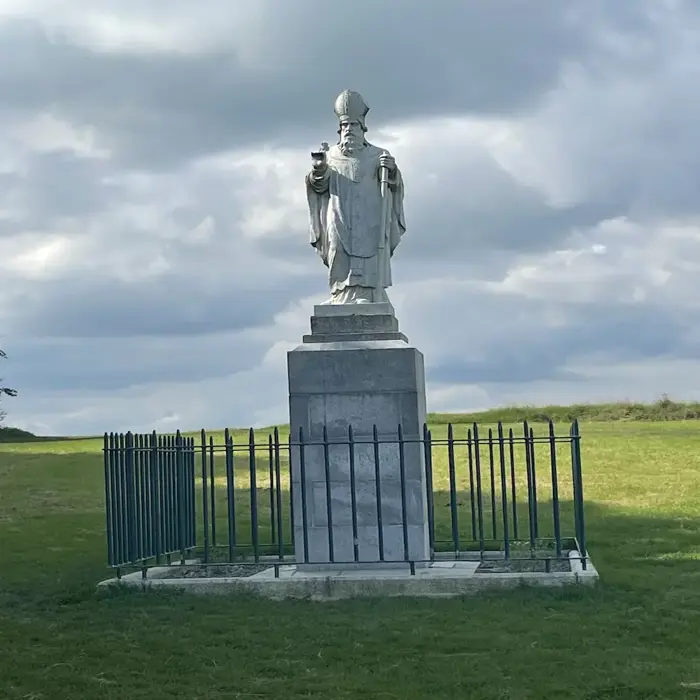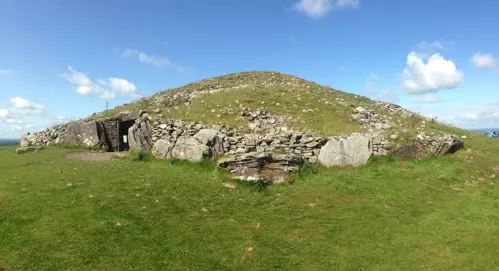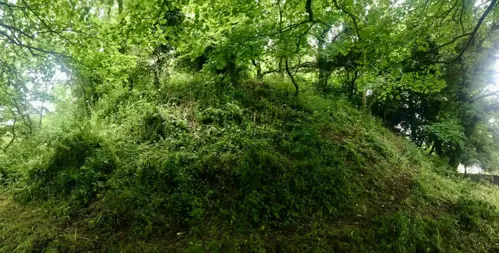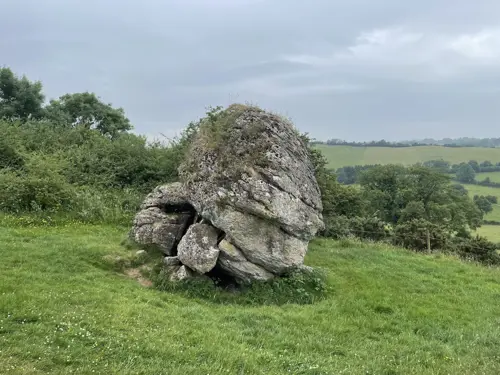




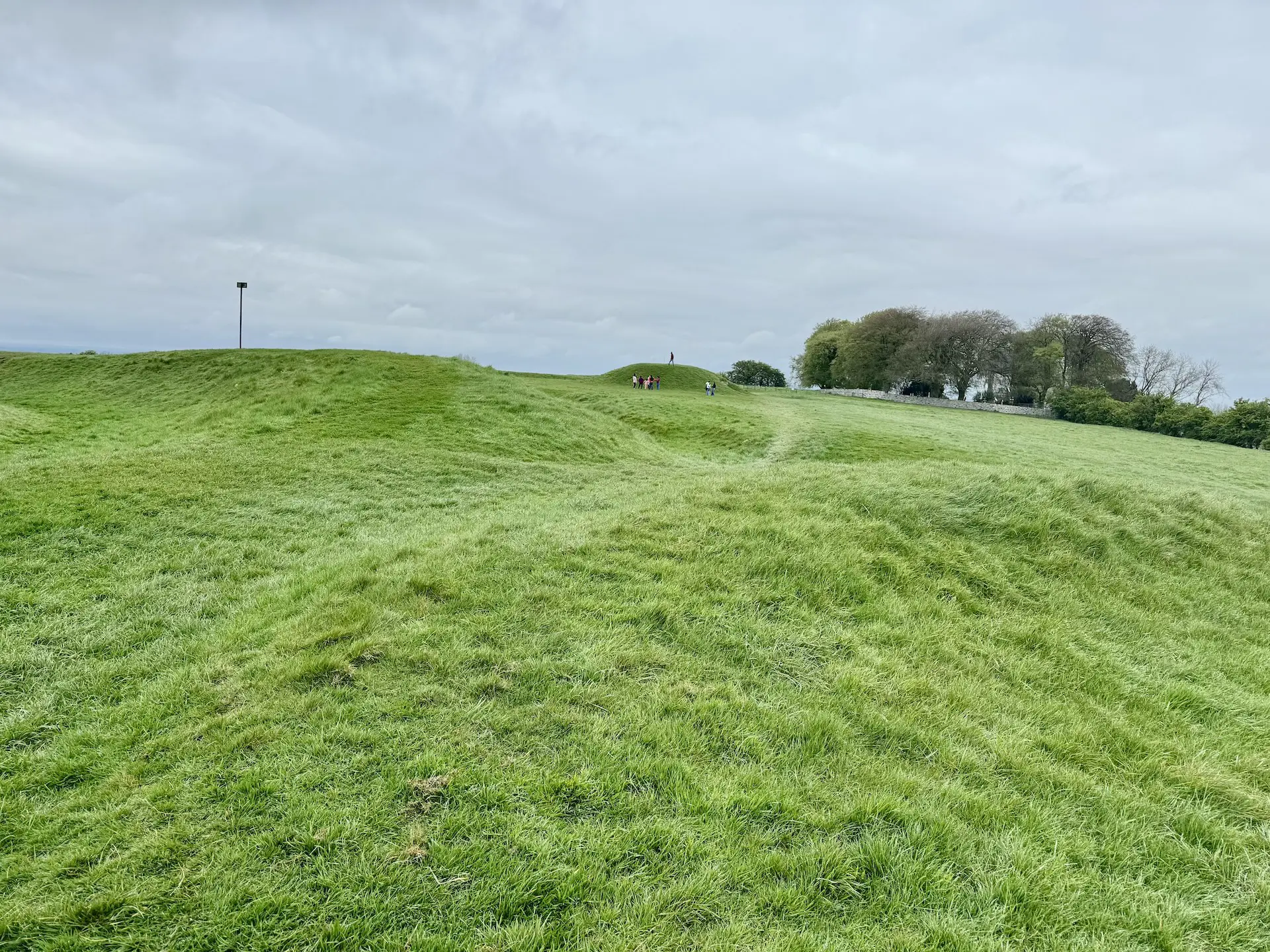








The Hill of Tara rises gently from the countryside of County Meath, forming a broad limestone ridge that dominates the surrounding landscape. Today, it appears as a series of grassy banks, ditches, and low mounds spread across open fields, but this understated surface hides a dense concentration of archaeological features. Several dozen visible monuments are scattered across the hill, including large circular enclosures, burial mounds, and linear earthworks. From the summit, the views extend across the Boyne Valley, linking Tara visually with other significant sites such as Loughcrew and the Hill of Slane, reinforcing its central role in Ireland’s ancient ritual landscape.
Archaeological and Historical Findings
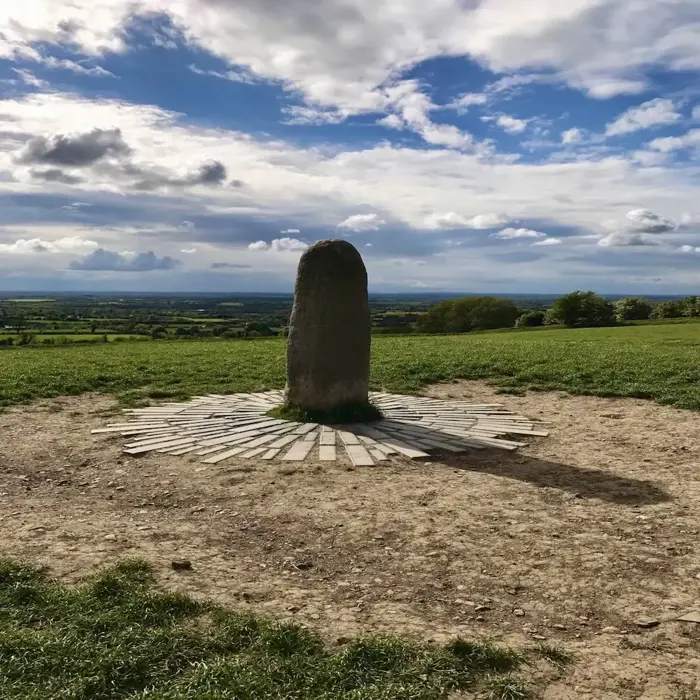
Archaeological evidence shows that the Hill of Tara has been in use since the Neolithic period, with the earliest major monument, the Mound of the Hostages (Duma na nGiall), dating to around 3500 BCE, and its use as a passage tomb continuing into the Bronze Age. The site continued to serve ritual and funerary purposes through the Bronze and Iron Ages, reaching particular prominence in the Iron Age when large ceremonial enclosures such as Ráith na Rí (the “Fort of the Kings”) were constructed, enclosing key monuments within a symbolic boundary of roughly 1 kilometre in circumference. Tara later became known as the traditional seat and inauguration site of the high kings of Ireland, functioning as both a political and ceremonial centre into the early medieval period. Features such as the Lia Fáil, or Stone of Destiny, are associated with royal inauguration rituals, and most of the major structures were originally built from earth and timber, which explains the predominantly earthen appearance of the site today.
Archaeoastronomic Orientation
The Mound of the Hostages is aligned toward the rising sun during key seasonal moments, including around the times later associated with Samhain and Imbolc, allowing sunlight to enter the passage at specific times of the year.
Legends, folklore and myths
The Hill of Tara features prominently in early Irish literature, particularly in the Dindshenchas Éireann (Lore of Place Names) compiled in the early medieval period, which associates many of the site’s monuments with legendary kings, heroes and events. One of the most enduring traditions concerns the Lia Fáil, the Stone of Destiny, which was said to cry out when touched by the rightful high king of Ireland. Another well‑known story links Tara to the kingship rituals described in medieval texts, where the hill served as the symbolic centre of sovereignty. A further legend tells of the tragic tale of Gráinne, daughter of King Cormac, who fled from her arranged marriage with the warrior Fionn MacCumhaill after falling in love with Diarmuid; this story is associated with monuments on the hill, including Ráith Gráinne.
Accessibility and Visitor Information
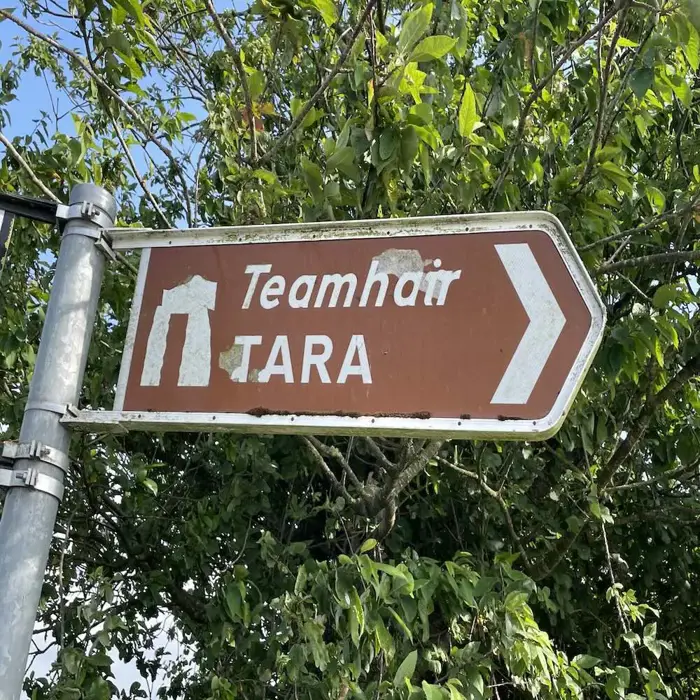
The Hill of Tara is located near the village of Tara, approximately 40 kilometres northwest of Dublin, and can be reached via the M3 motorway, exiting at Junction 7 and following the R147 and local signage toward the site. A parking area and visitor centre are available near the entrance, from which a short walk leads onto the hill. The terrain consists of open grassland with uneven surfaces, low mounds, and shallow ditches, requiring sturdy footwear, especially in wet conditions. There are no paved paths across most of the site, and accessibility for visitors with reduced mobility is limited, with some areas difficult to navigate by wheelchair or stroller. The site is open year‑round with free access to the hill itself, while guided tours and the visitor centre operate seasonally.