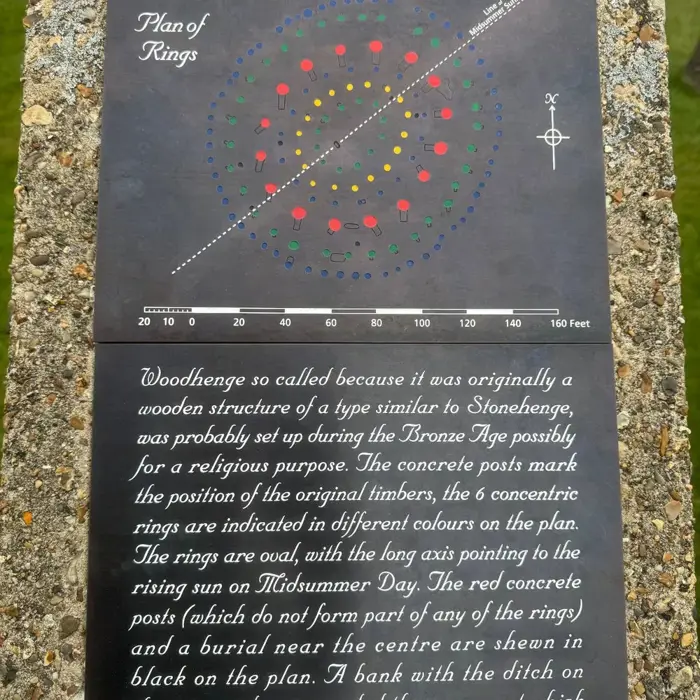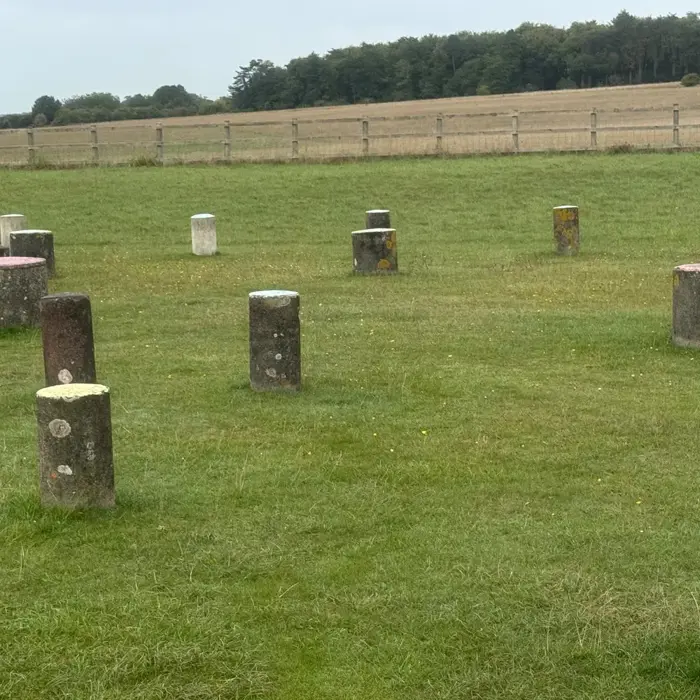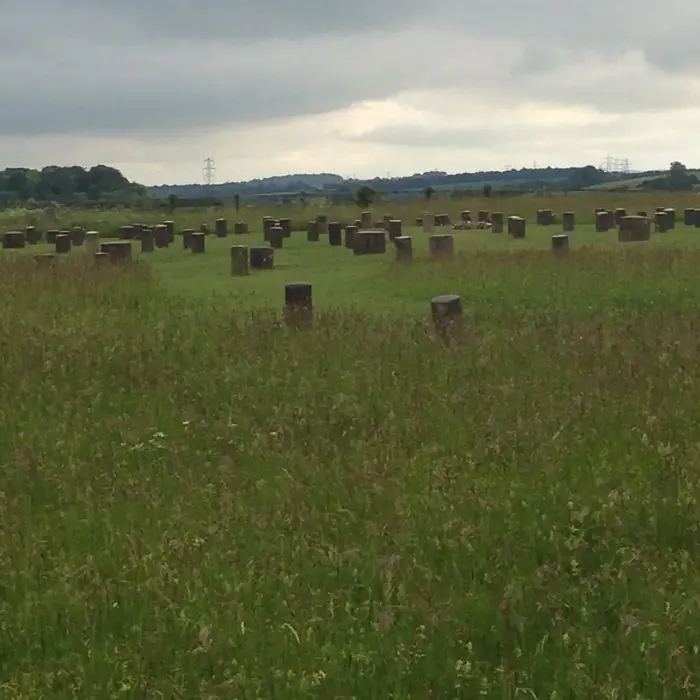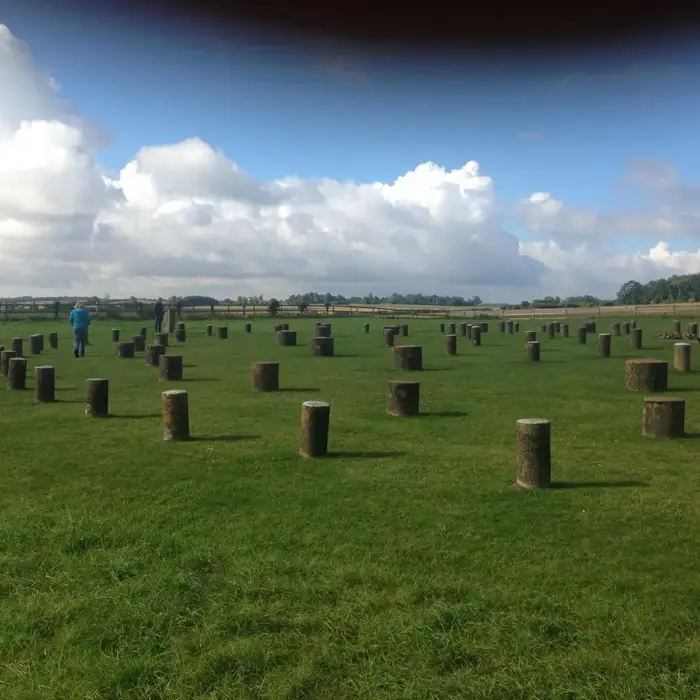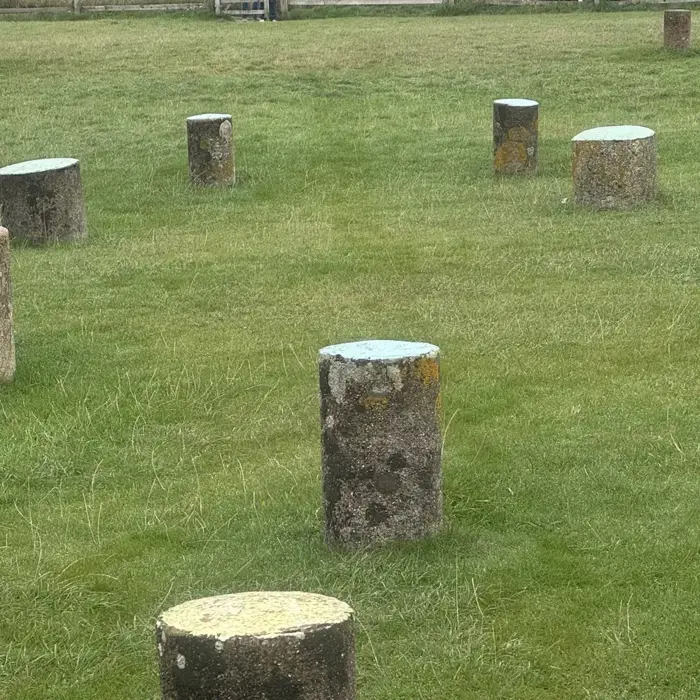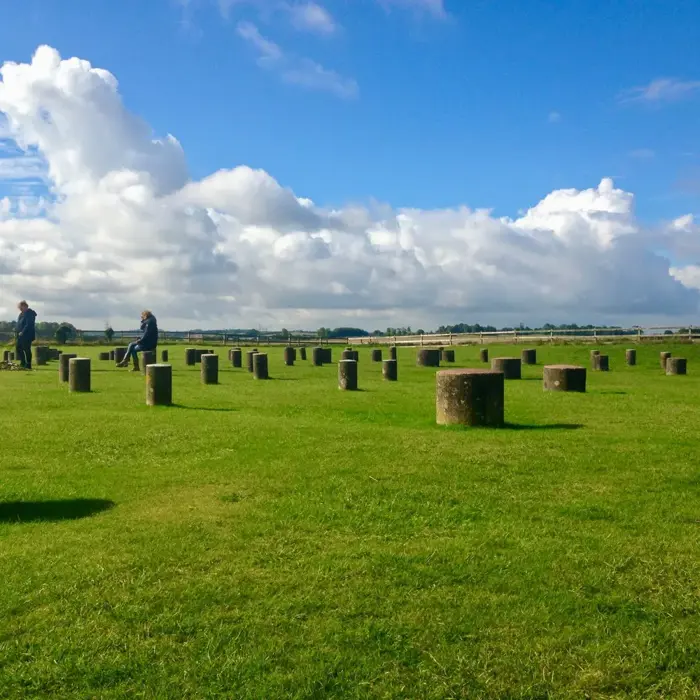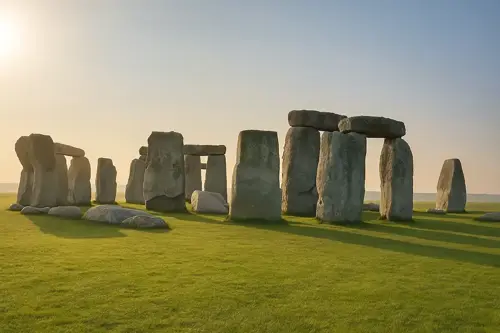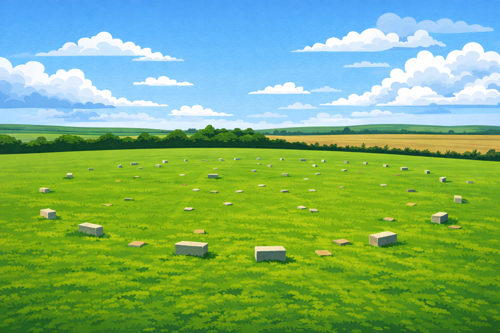




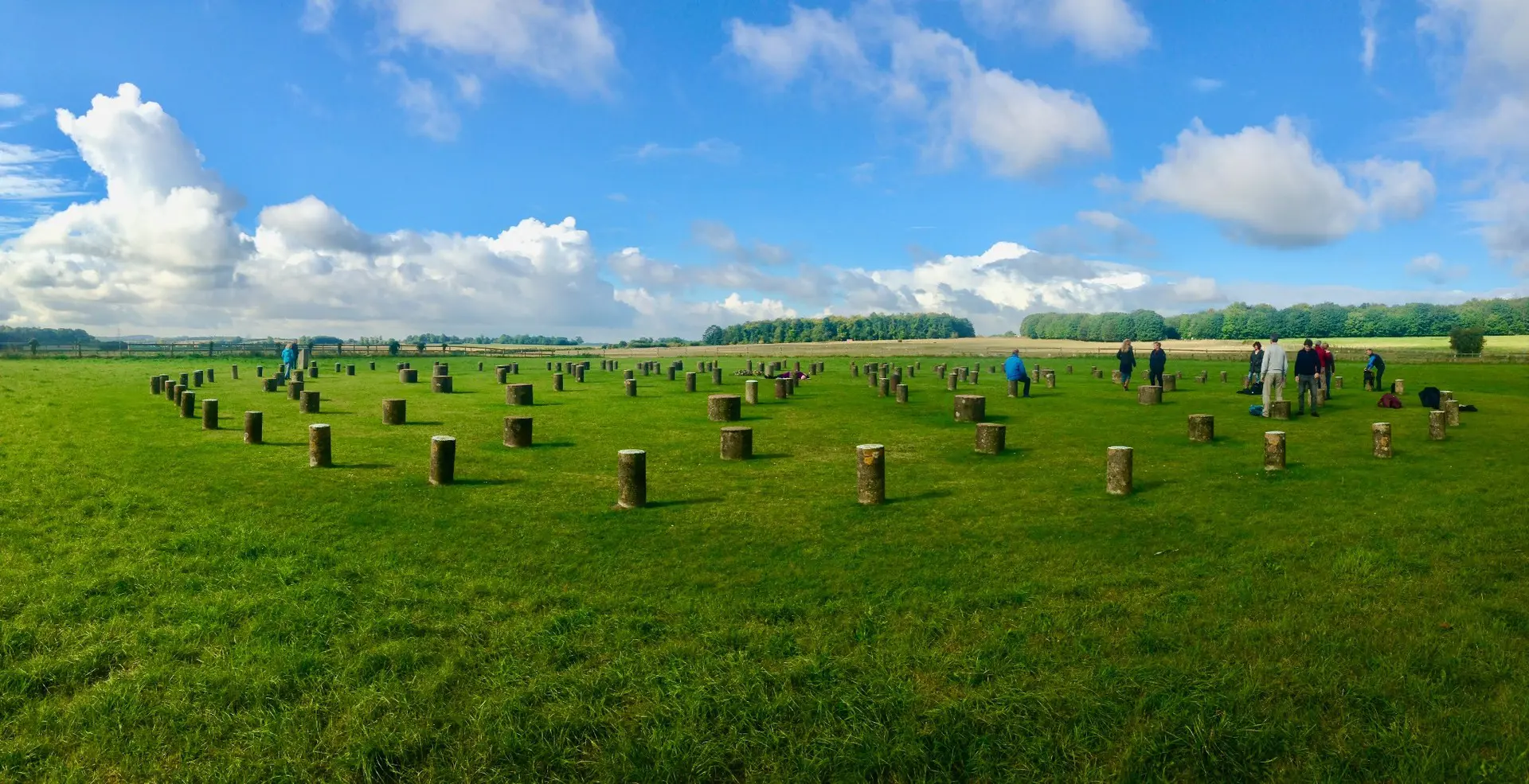








Woodhenge consists of six concentric ovals made up of low concrete posts situated in a grassy clearing, marking the former positions of massive wooden uprights. These rings are enclosed by a subtle earth bank and ditch that remain partially visible. The site lies just northeast of Amesbury, approximately three kilometers from Stonehenge, and is part of the Stonehenge and Avebury World Heritage landscape. The surrounding environment is rural and open, bordered by fields of Wiltshire, with wide views of the countryside. Nearby stands Durrington Walls, another prominent Neolithic monument.
Archaeological and Historical Findings
Excavations carried out by Maud and Ben Cunnington between 1926 and 1929 suggest that Woodhenge dates back to about 2500 BCE. Their findings indicated six rings of closely placed timber posts arranged within a circular bank and ditch. The entire monument spans roughly 90 meters in diameter, with the timber posts themselves forming rings that reach up to around 37 meters across. Today, the original wooden posts are indicated by concrete markers. A central burial was uncovered, containing the remains of a young child. Additional discoveries of pottery, flint tools, animal bones, and antler implements point to the site’s importance for ritualistic or ceremonial purposes. The original wooden components have since decayed over millennia.
Archaeoastronomic Orientation
Research has revealed that Woodhenge was intentionally aligned with the rising sun on the summer solstice. This positioning underscores the shared understanding of celestial events among the Neolithic builders and hints at a ceremonial connection between Woodhenge and Stonehenge, which is similarly associated with solstice orientations.
Accessibility and Visitor Information
Access to Woodhenge is through a gate adjacent to a small free parking area on Countess Road. Visitors face a short, flat walk of about 50 meters across open grassland to reach the main circle. The terrain is generally accessible, with low earthworks and no steps or steep inclines. Paths may become uneven when wet, but the open field setting makes the area largely suitable for wheelchair and pushchair users under most conditions. Visiting the site is free of charge.