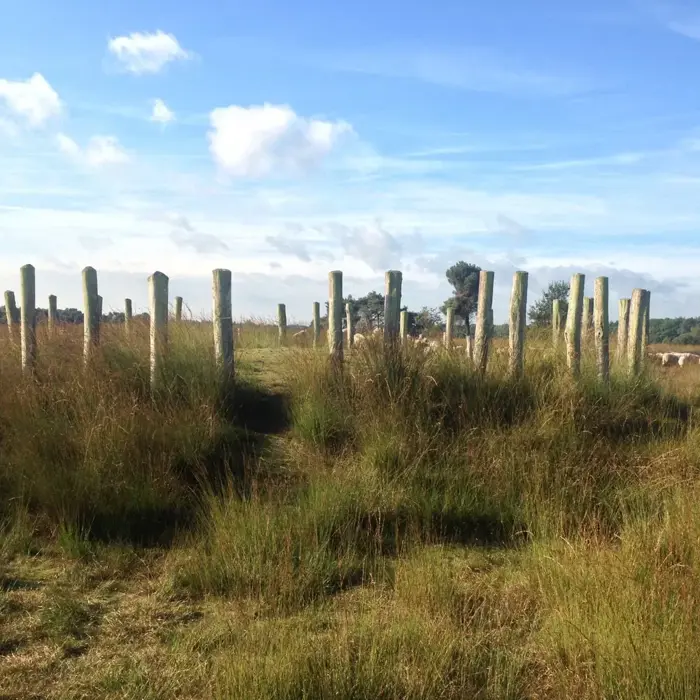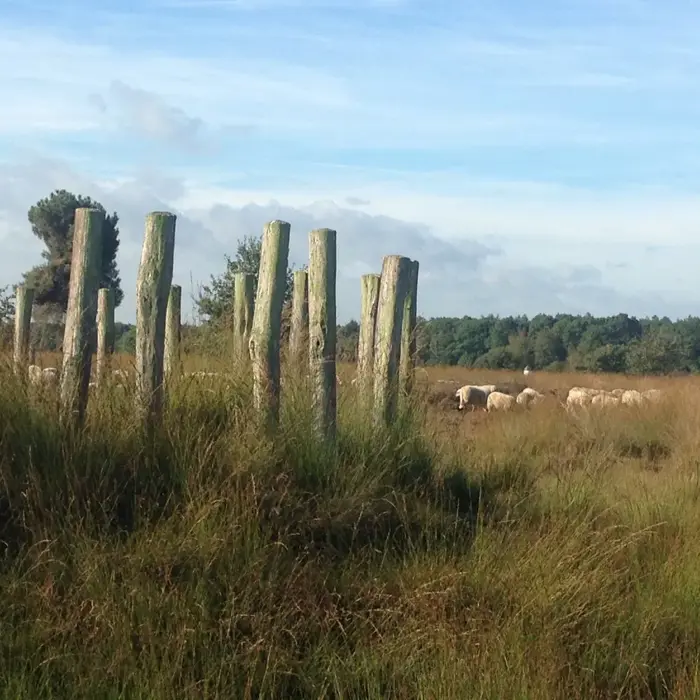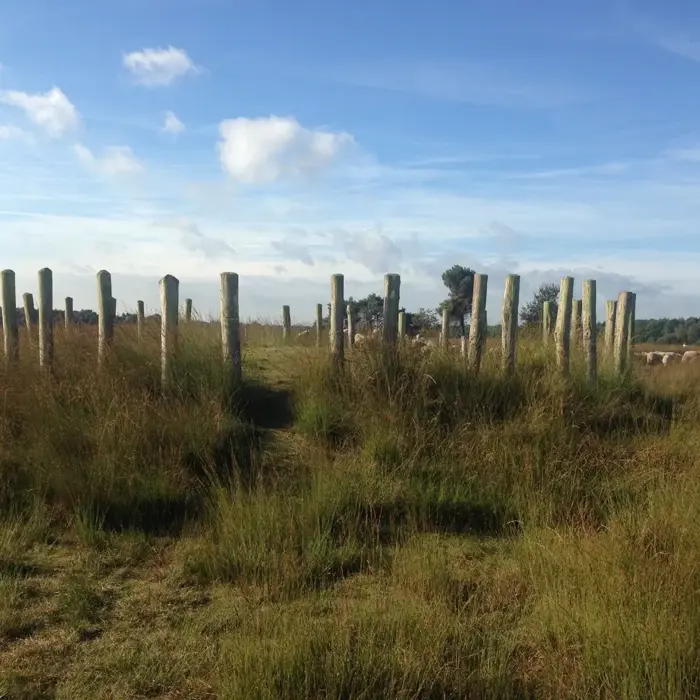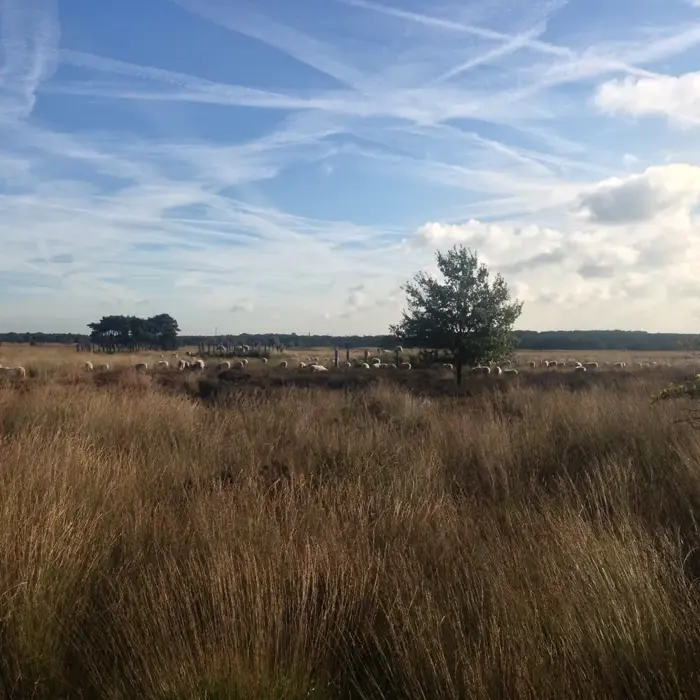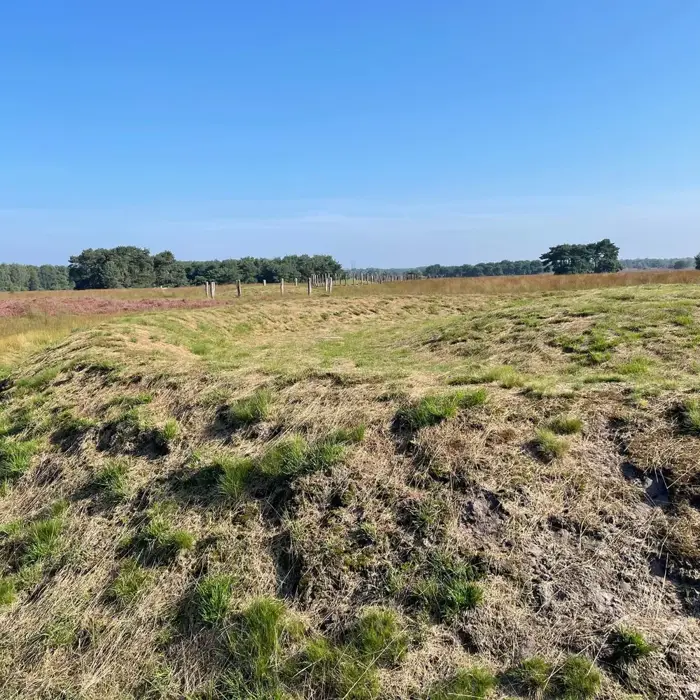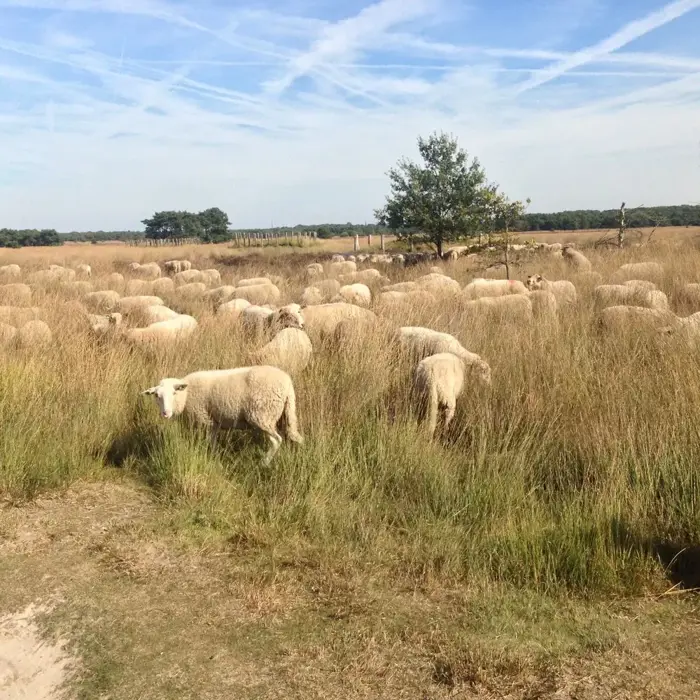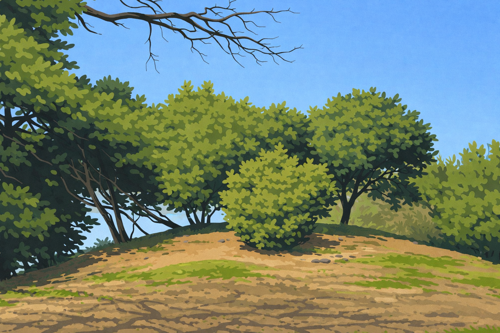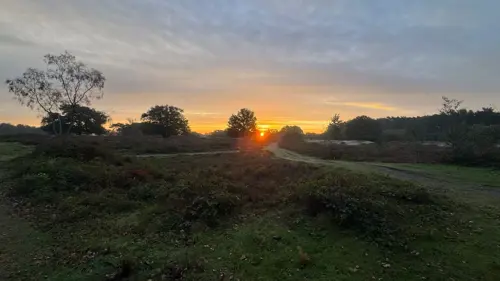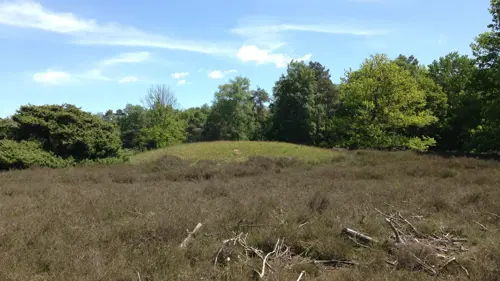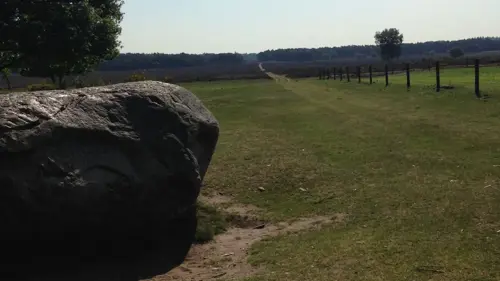




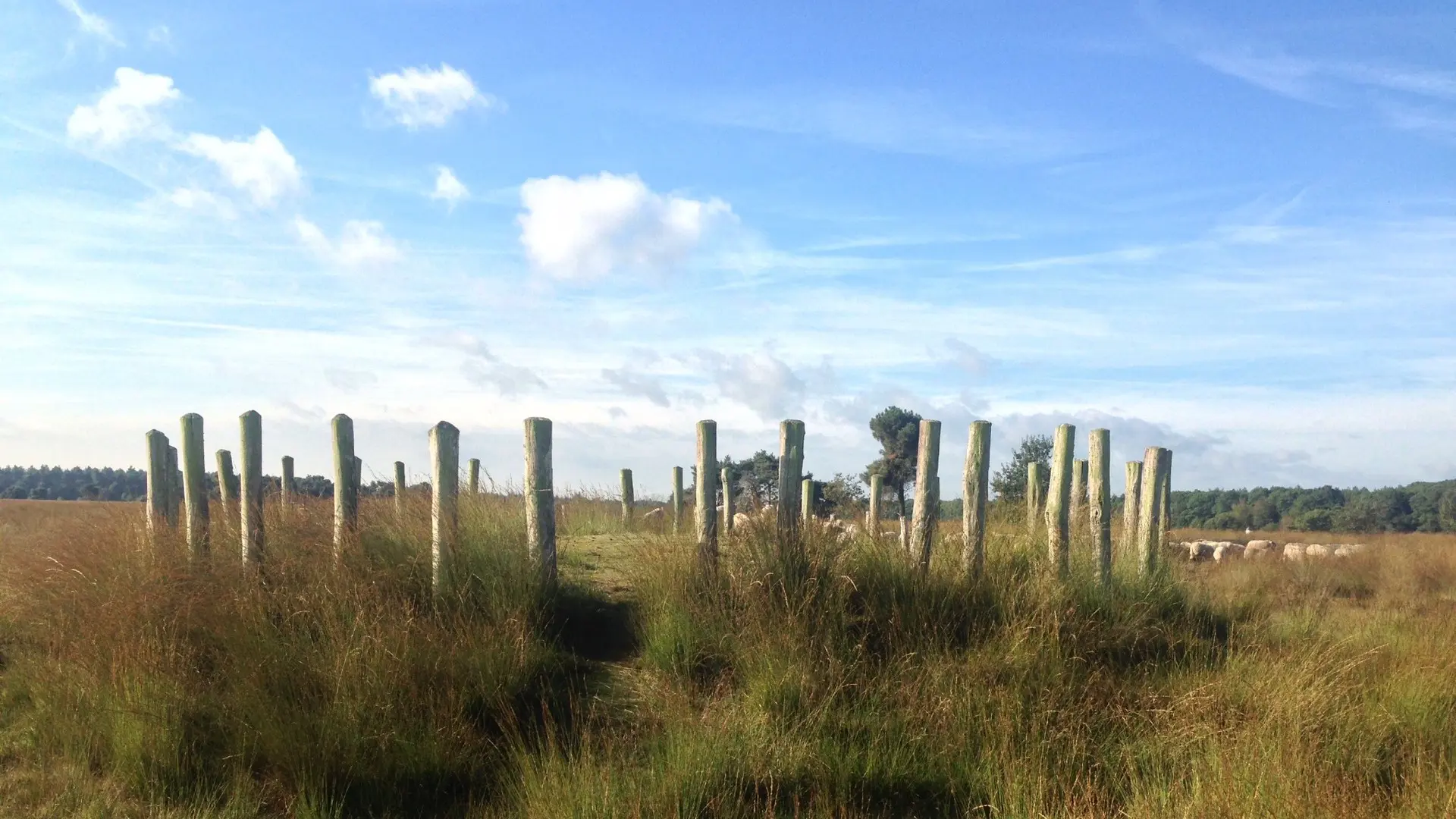








Located among rolling sand dunes and heathlands south of Goirle, the burial mounds, known locally as "Grafheuvels", at De Regte Heide are some of the region’s most notable archaeological sites. At least seven burial mounds remain visible, with several surrounded by reconstructed wooden post circles, lending a unique character to these ancient earthworks within the local landscape. This area is part of a broader nature reserve that features dry and wet heath, small moorlands, forest patches, and sandy hills. Walking trails meander through these varied habitats, passing by burial sites, wetland areas, and serene woods.
Archaeological and Historical Findings
Studies have dated these burial mounds to the Bronze Age, around 1750 BCE. The largest mound includes a surrounding earthen ring accompanied by a dry ditch, and some mounds feature restored wooden post circles based on archaeological discovery. These features are believed to have served both as burial sites and locations for ceremonial activities. Excavations conducted in 1935, followed by restoration work, revealed that the mounds not only functioned as graves but also as spaces for ritual practices potentially related to ancestor honoring. Construction materials included sand and turf, with deposits containing cremated remains along with grave goods.
Accessibility and Visitor Information
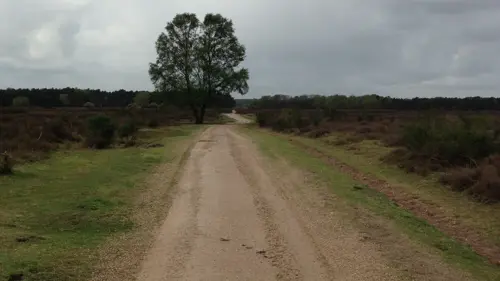
From the main entrance or nearby parking area bordering De Regte Heide, the most prominent burial mounds are accessible within approximately a 10 to 15-minute walk along broad, mostly flat sand trails. While the terrain is generally level, uneven sections caused by roots or loose sand may present challenges. The paths are suitable for walkers, though wheelchair or stroller access may be limited in certain narrow or sandy stretches. Access to De Regte Heide and its burial mounds is free.