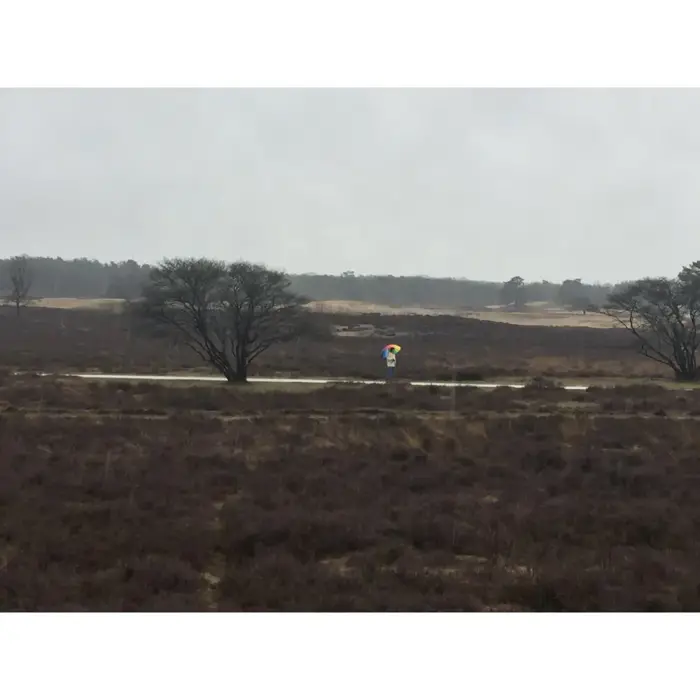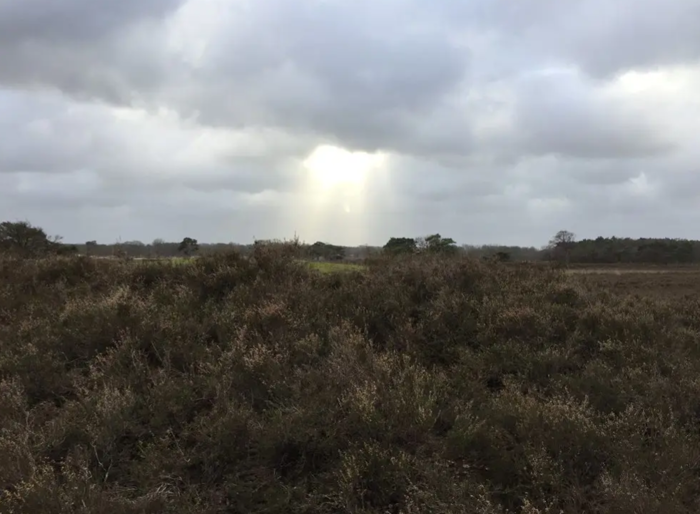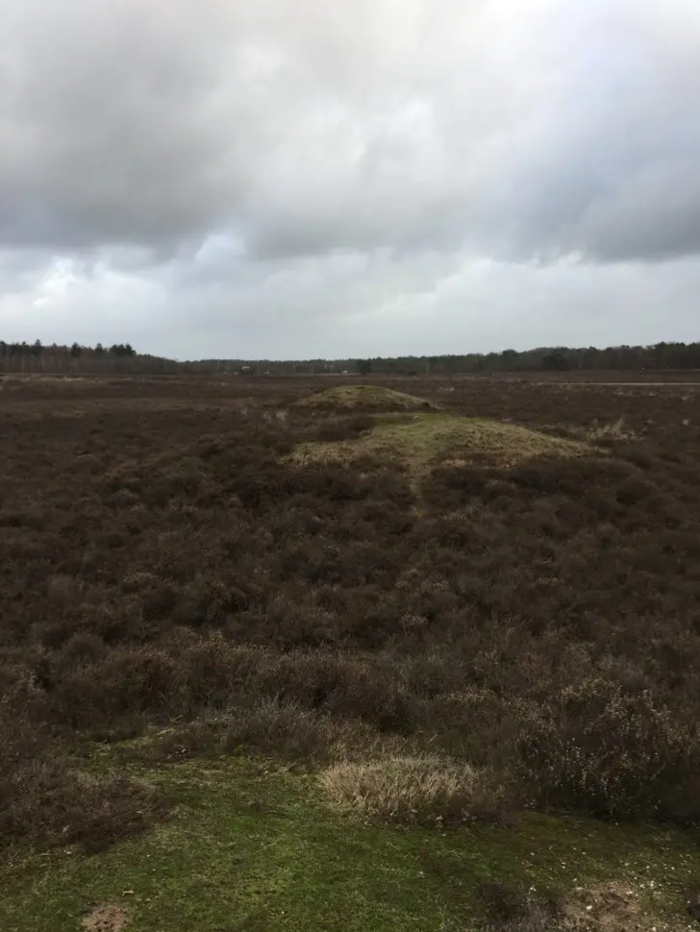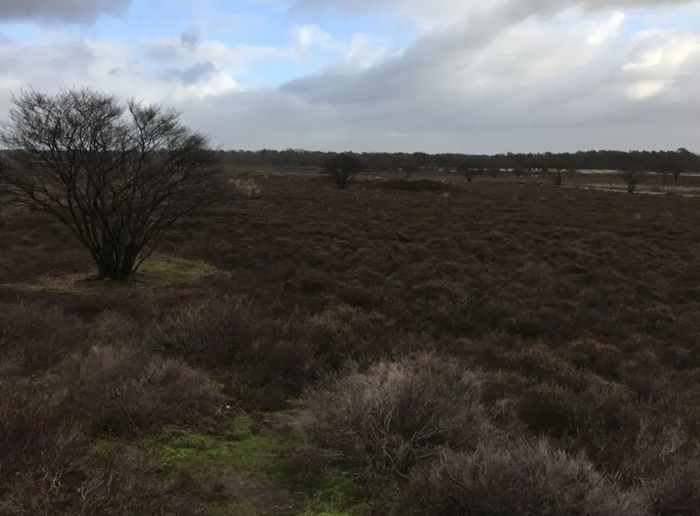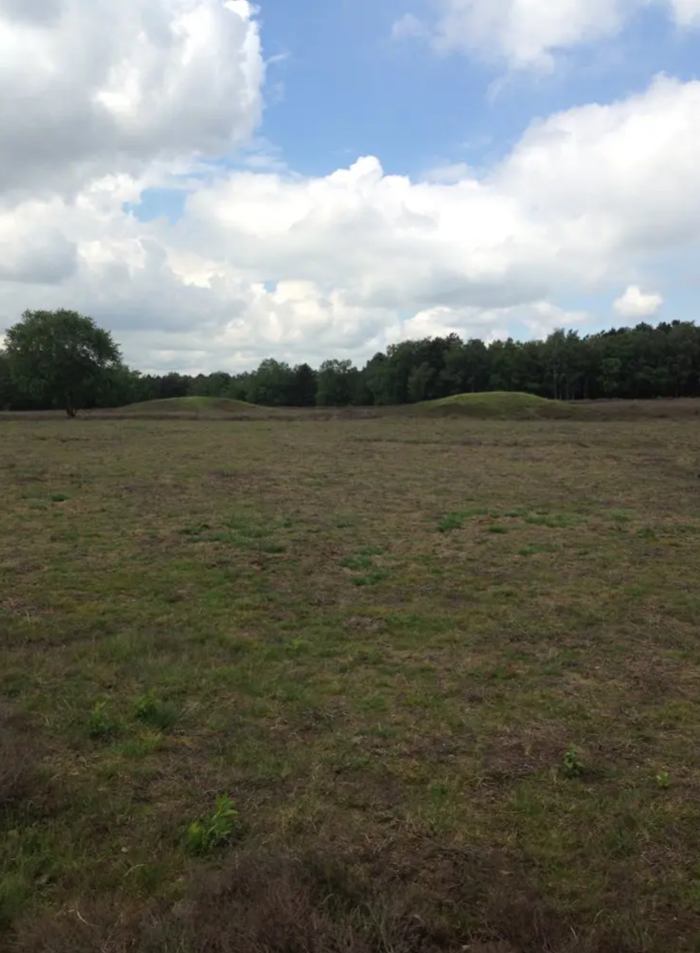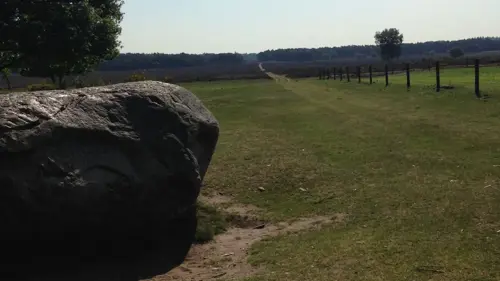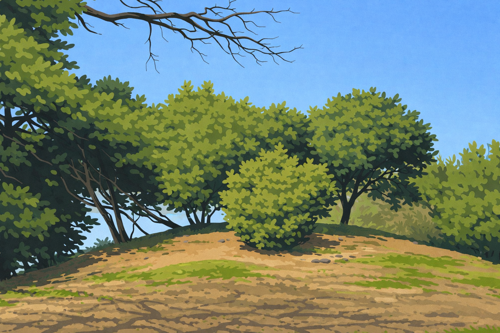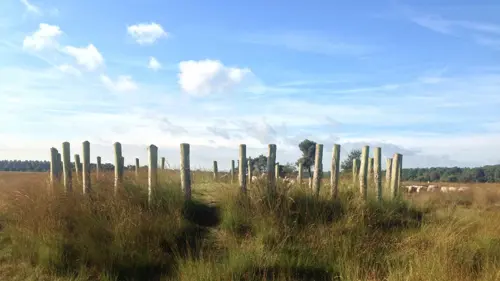




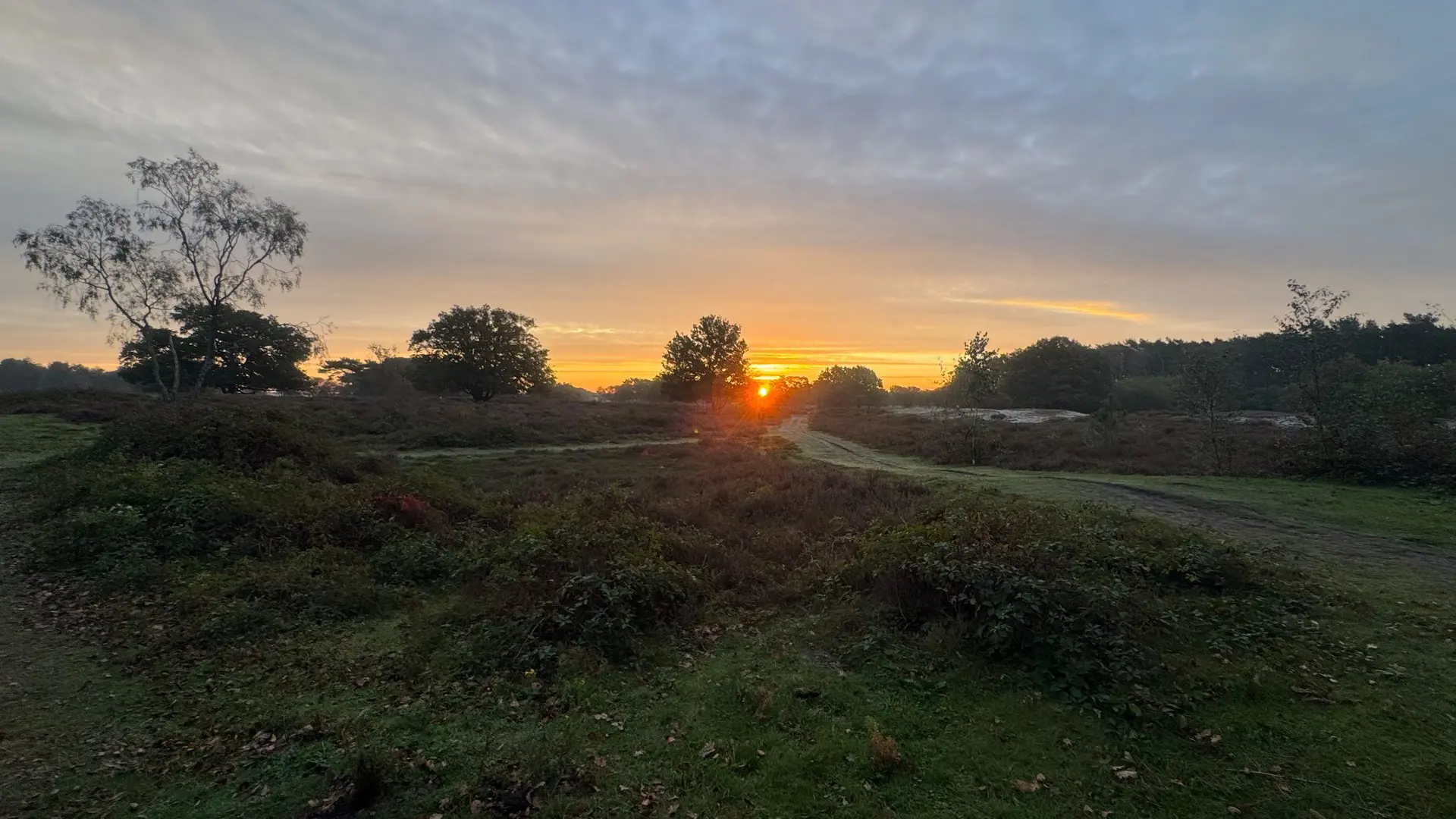







Situated within the broad expanse of Zuiderheide, the Grafheuvels consist of low, grass-covered earthen mounds rising subtly above the open heath. The landscape is dominated by extensive stretches of heather interspersed with small clusters of trees, providing expansive views across the reserve. These gently shaped burial mounds stand out as distinct features in the relatively flat terrain. The nature reserve is managed carefully and lies near other well-preserved prehistoric sites, including burial mounds and earthworks found between Laren and Hilversum.
Archaeological and Historical Findings
Archaeological investigations carried out by Dutch heritage authorities have established that the "De Zeven Bergjes" burial mounds belong to the Late Neolithic or Bronze Age period. These structures served as funerary sites, designed for the interment of one or multiple individuals from local communities. Excavations have uncovered cremation remains, alongside fragments of pottery and grave goods characteristic of the era. The mounds are mainly composed of earth, occasionally encircled by shallow ditches or embankments, indicating a combination of practical and ritual functions. Their preservation is significant for understanding prehistoric burial practices in the region, highlighting the role open heathlands like Zuiderheide played as communal and ceremonial spaces across millennia.
Accessibility and Visitor Information
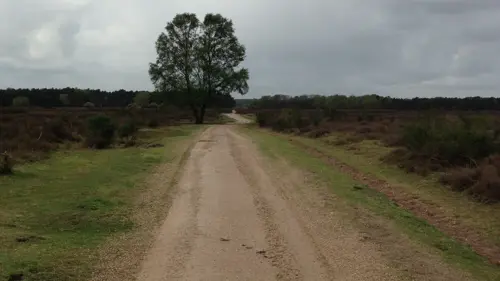
The site is accessible on foot via marked trails within the Zuiderheide nature reserve. The main burial mounds are located roughly 500 to 800 metres from the closest parking areas at official entry points. Visitors follow well-maintained paths made of compacted sand and heath, across terrain that is mostly level with gentle rises and falls. While generally accessible to most, visitors should note that during wet weather some sections may become soft or uneven, as there are no paved walkways. The access to the Zuiderheide and the burial mounds is free.