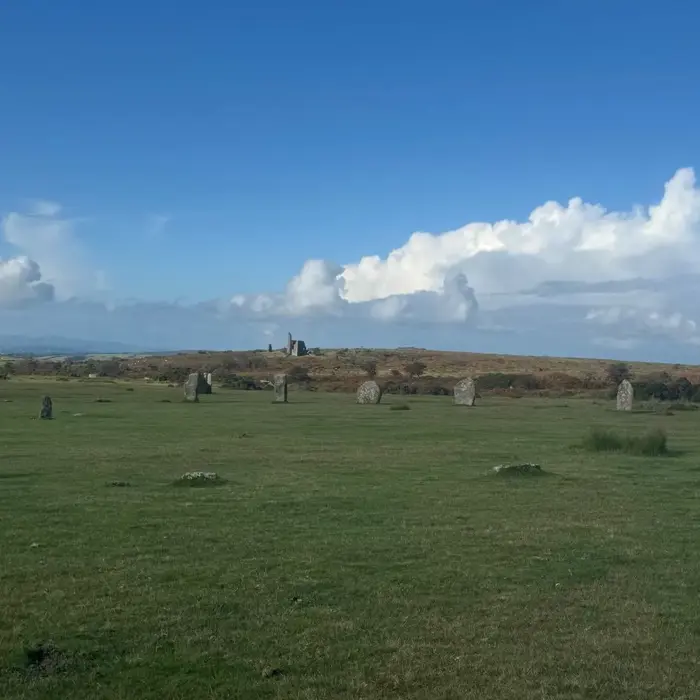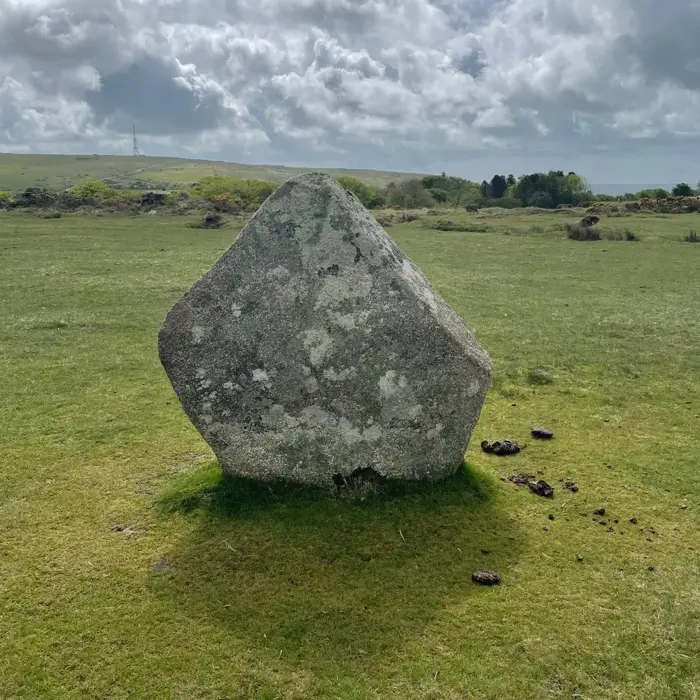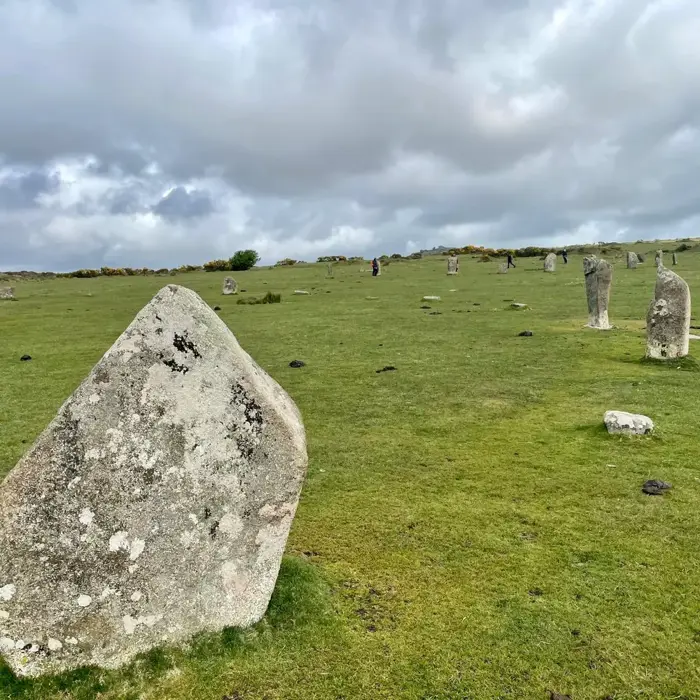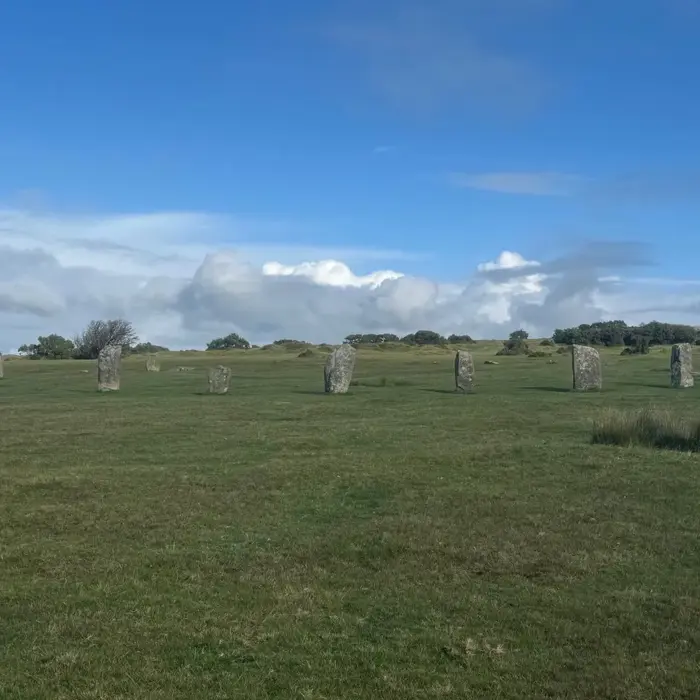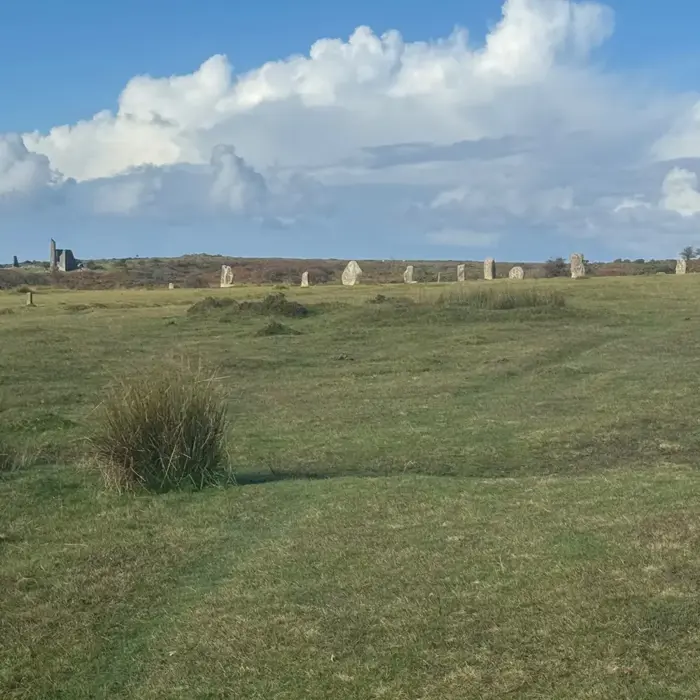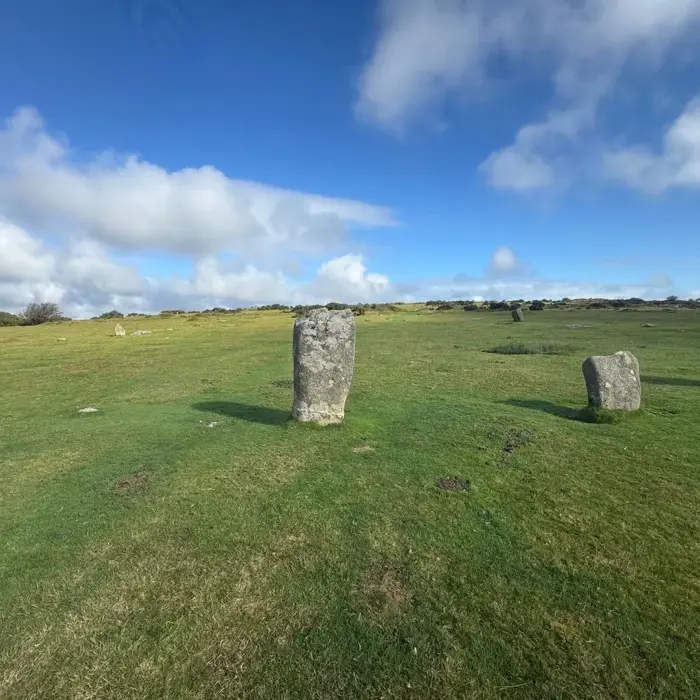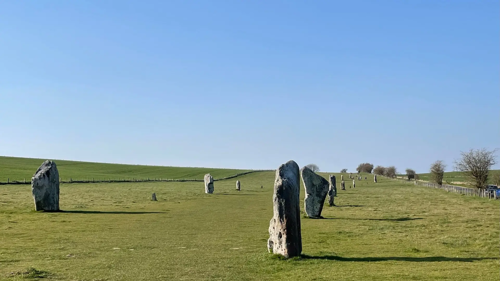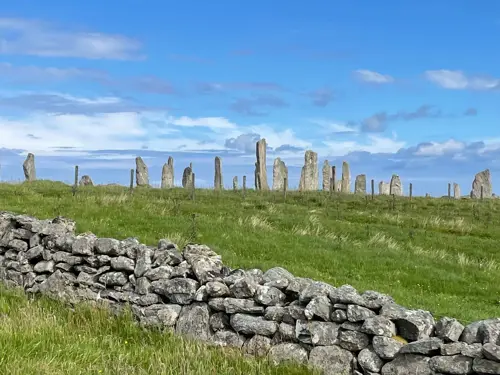




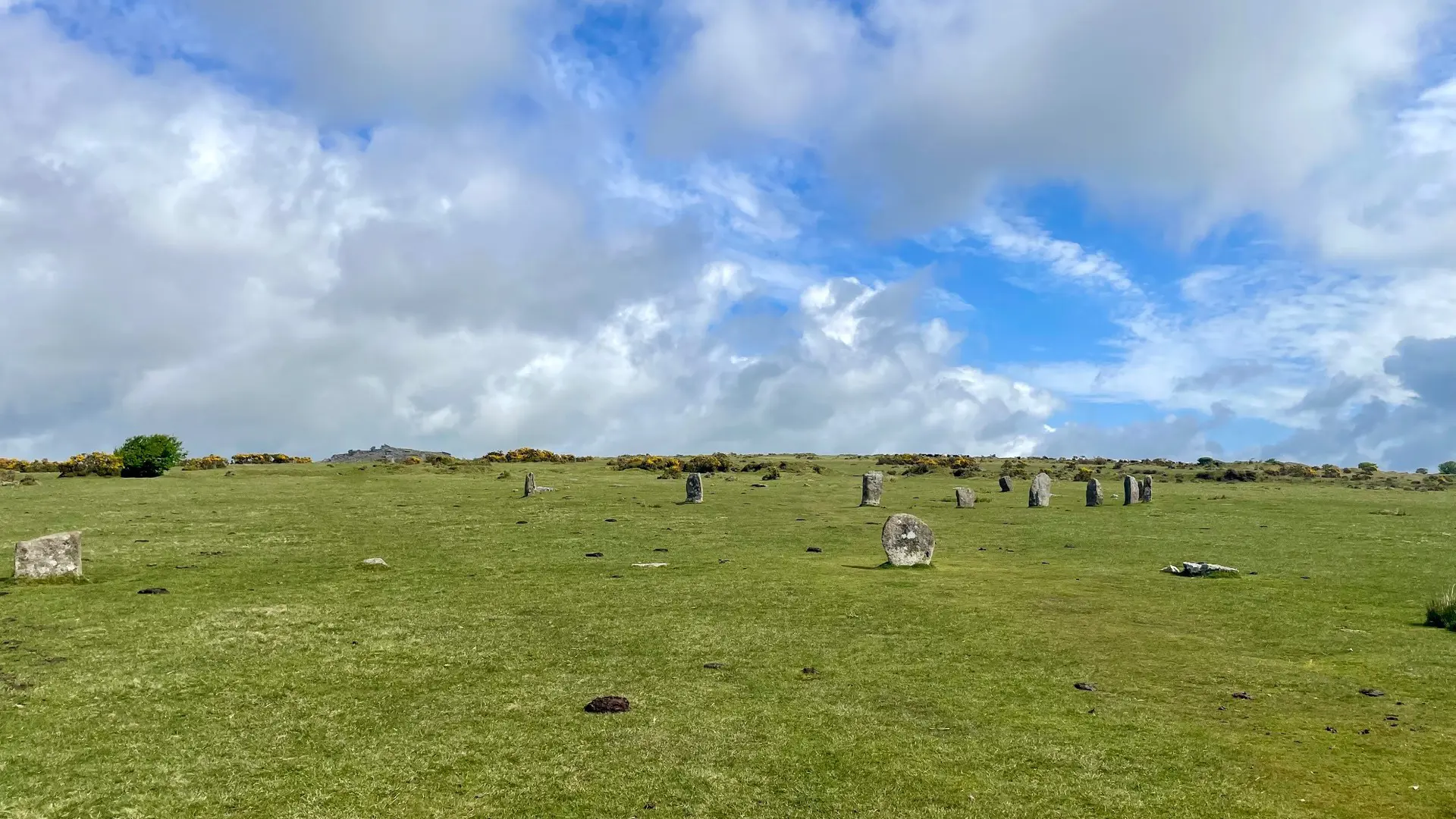








The Hurler Stone Circles consist of three large, late Neolithic or early Bronze Age stone circles arranged in a north-northeast to south-southwest line. Each circle is constructed from roughly dressed granite stones, with the northern circle originally containing around 30 stones, the central circle 28, and the southern circle 9, though not all remain upright today. Situated in a moorland corridor flanked by Stowe’s Hill, the circles are part of a broader prehistoric landscape that includes the Pipers stones to the west and Rillaton Barrow to the northeast. The open, grassy terrain and the proximity to other ancient monuments make this one of the most significant ceremonial landscapes in Cornwall.
Archaeological and Historical Findings
Archaeological investigations, including excavations in the 1930s, have revealed that the Hurler Stone Circles were constructed from local granite, with the stones hammered smooth and chippings deposited nearby. This trio of closely positioned circles forms a distinctive arrangement not commonly found elsewhere in England. A strip of granite paving once connected the northern and central circles, suggesting processional or ritual use. The circles have suffered some damage from stone robbing and livestock, and the southern circle is the least well preserved. Evidence of post-medieval tin mining is visible in the form of small pits and banks within the circles. The site forms part of a wider ceremonial complex on Bodmin Moor, with direct alignments to nearby burial mounds and other prehistoric structures. In addition, a connection with the Cheesewring atop Stowes Hill seems highly probable.
Archaeoastronomic Orientation
The Hurler Stone Circles display notable alignments with other prehistoric monuments in the area. The axis through the centers of the two northern circles points directly towards Rillaton Barrow on the skyline to the north-east, while the southern circles align with a prehistoric cairn to the south-west. Another alignment at right angles through the central circle includes a stone row and an embanked avenue. These orientations suggest the circles were deliberately positioned in relation to significant landscape features, but there is no confirmed evidence of alignment with solar or lunar events.
Legends, Folklore and Myths
According to local legend, the stones represent men transformed into stone as punishment for playing hurling on sunday. The two outlying stones known as the Pipers are said to represent musicians who suffered the same fate for playing tunes on sunday. Another tradition claims it is impossible to count the exact number of stones in the circles, as attempts to do so always fail. These stories are widely referenced in Cornish folklore and have been recorded in historical accounts since at least the early seventeenth century.
Accessibility and Visitor Information
The Hurler Stone Circles are easily accessible from a parking area in the village of Minions. The site is reached by a level walk of approximately 300 meters over grassy moorland. The terrain is generally flat but can be uneven and muddy after rain. There are no steps or formal paths, and accessibility may be limited for visitors with reduced mobility. The site is open and free to access and does not require guided tours or a ticket.