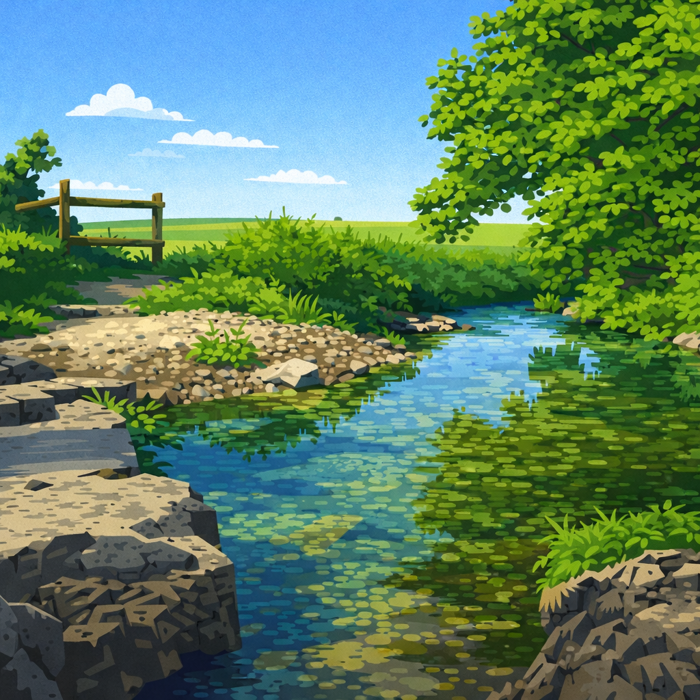




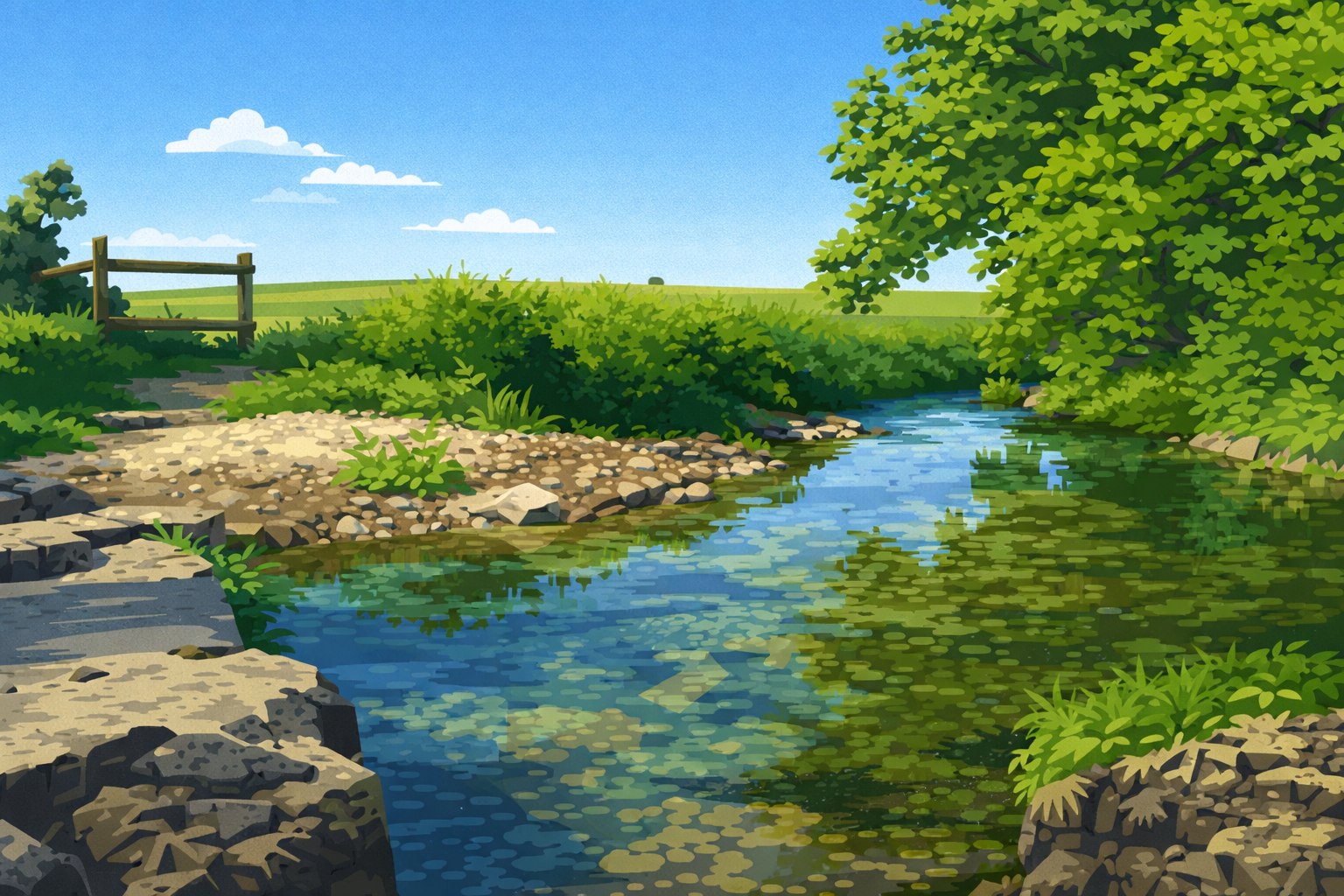







The spring emerges as a softly bubbling water source beneath a canopy of trees, near the origin of the River Kennet and a short distance from notable sites such as Silbury Hill and Avebury henge. Its secluded setting contrasts with the expansive views offered by nearby monuments. The surrounding natural features, reeds, mosses, and filtered sunlight, help create a timeless ambience, encouraging quiet contemplation. Swallow Head Spring is situated within a landscape rich in Neolithic and Bronze Age monuments, including the massive chalk mound of Silbury Hill and the West Kennet Long Barrow.
Archaeological and Historical Findings
Swallow Head Spring is recognized by archaeologists and historians as one of the sources contributing to the River Kennet. Although the spring was never developed through stone or timber construction, its steady flow likely held significance in prehistoric times, both as a practical water source and a gathering place. Some scholars speculate the spring may have featured in Neolithic ceremonial activities related to Silbury Hill, considering their close proximity and the continued seasonal rituals noted in medieval and early modern periods. However, definitive archaeological evidence connecting Neolithic practices directly to the spring remains scarce. Historical records, including observations from 18th-century antiquarian William Stukeley, describe the spring as once more prominent and central to local celebrations, particularly during Palm Sunday.
Legends, Folklore and Myths
Accounts from the 19th and 20th centuries document that Swallow Head Spring was a focal point for local festivities, especially on Palm Sunday. Communities from Avebury and surrounding villages would gather on Silbury Hill to celebrate with traditional foods and water drawn from the spring. Although there are no specific legends linking the spring to saints or reputed healing powers, these practices illustrate a blend of local custom and Christian festival traditions. William Stukeley also recorded these annual gatherings and poetically remarked on how nearby digging activities disturbed the "sacred nymphs," reflecting an imaginative connection to the spring’s spirit.
Accessibility and Visitor Information
The spring is accessible via a footpath from Avebury or Silbury Hill. From the Silbury Hill car park, the walk is about 500 meters, following the edge of a field over occasionally damp or muddy ground. The path is generally flat, though the terrain near the spring may be uneven and slippery after rain. There are no constructed steps or major slopes, but visitors with mobility challenges might find the natural, unmaintained ground difficult. Entry to Swallow Head Spring is free of charge.