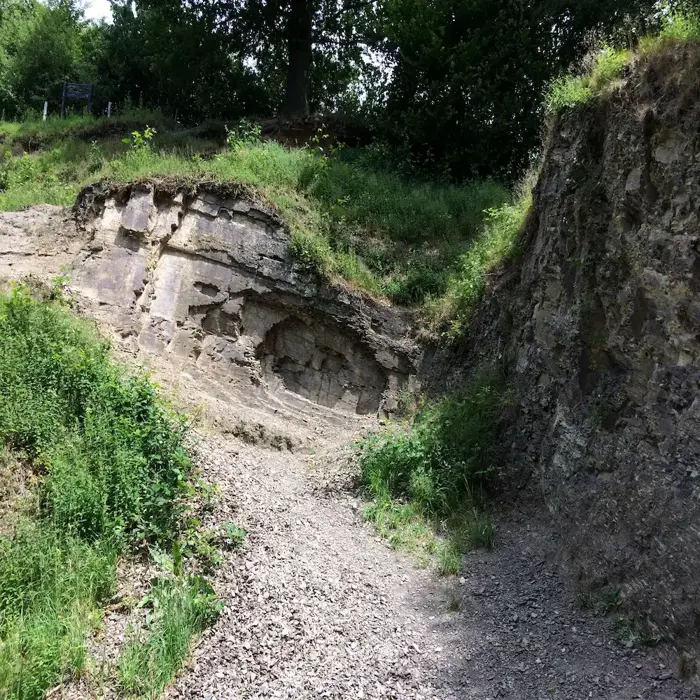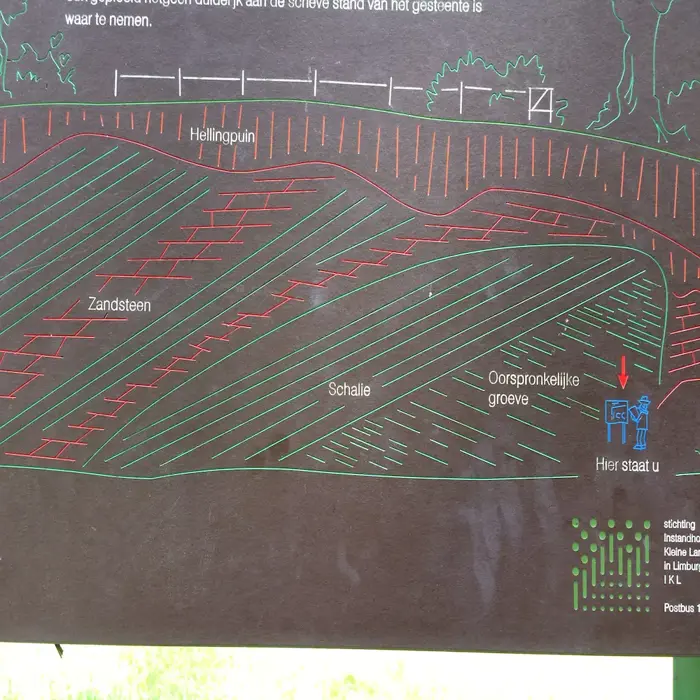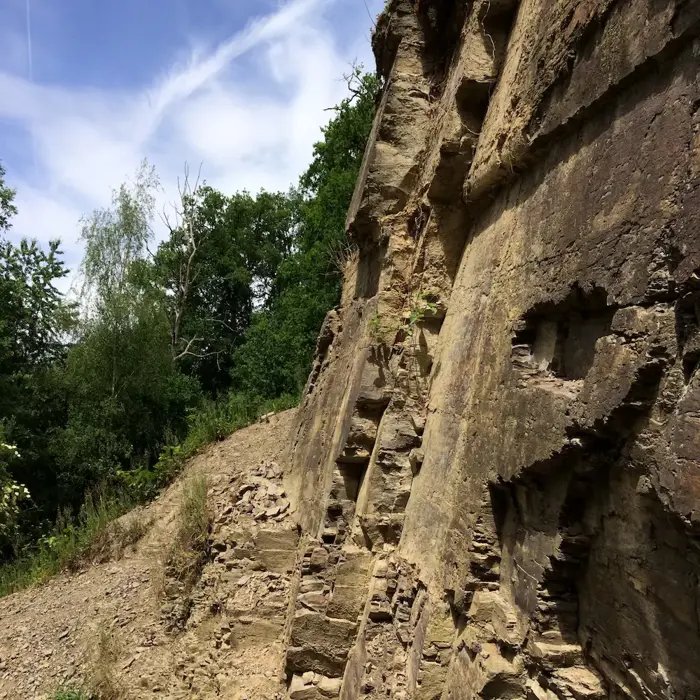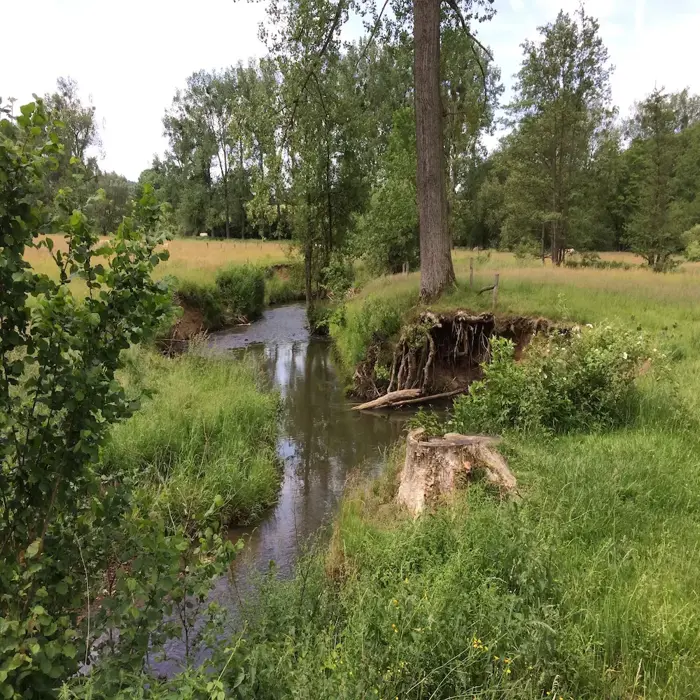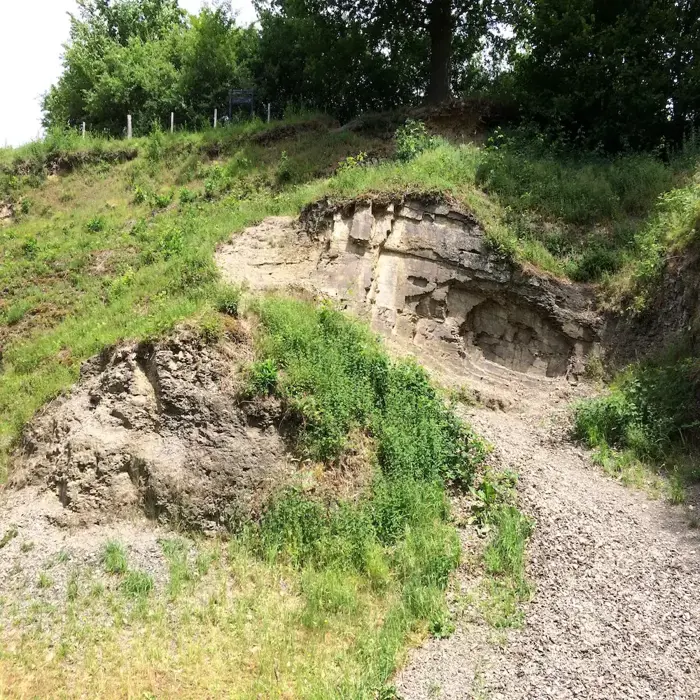




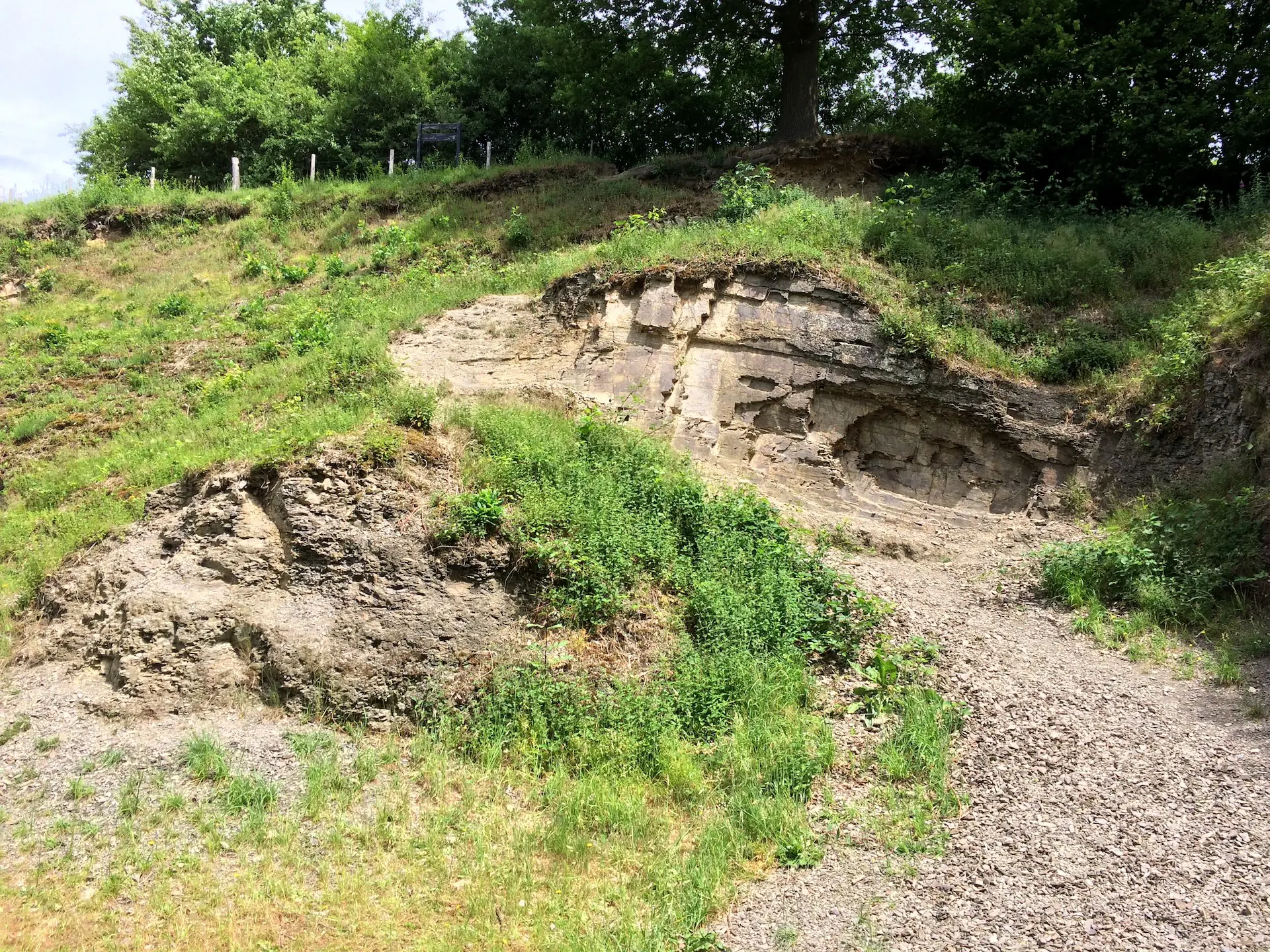








Located in the Geul Valley near the Dutch-Belgian border, northwest of Cottessen in the municipality of Vaals, Heimansgroeve is an inactive quarry exposing the oldest surface rocks found in the Netherlands. The site presents steep cliffs composed of alternating beds of sandstone and shale, folded due to tectonic activity. Some sandstone surfaces retain ripple marks, evidencing sedimentation in an ancient shallow marine environment. Visitors will find fossilized layers of clay and sand that originated from a prehistoric sea. Not far away, the Cottessergroeve quarry south along the Geul river displays similar ancient quartzite and sandstone formations.
Archaeological and Historical Findings
In 1910, naturalist Eli Heimans identified the first marine fossils at this location, specifically the species Derbya (Orthotetes). This discovery allowed geologists to date the rock layers precisely to the lower Namurian stage of the Carboniferous period. Originally, the quarry was excavated to obtain material for road construction. Later, in 1936, geologist Willem Jongmans expanded the quarry with a focus on scientific investigation. The site is notable for fossil impressions of plants and shells, particularly visible in the darker shale layers. Heimansgroeve is currently protected as a geological monument, managed by the foundation Het Limburgs Landschap. A seismological station is also present on site to monitor occasional earthquakes.
Accessibility and Visitor Information
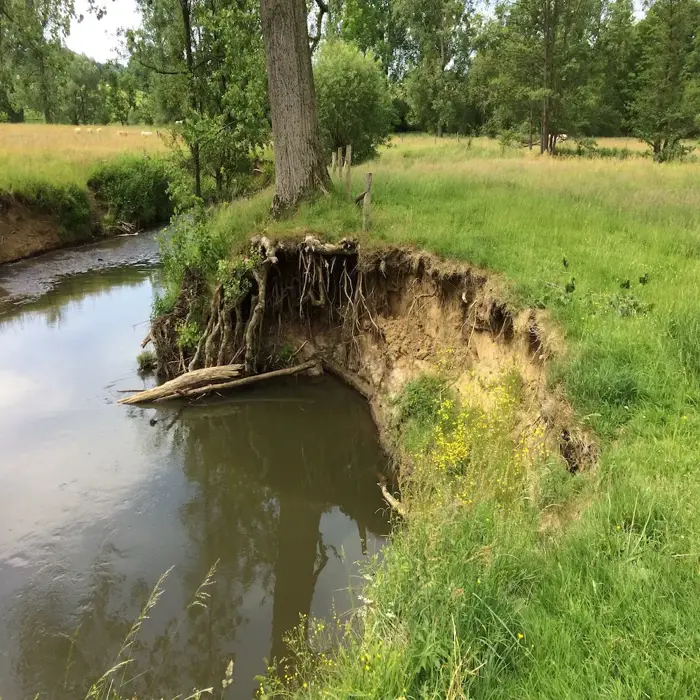
From the parking area at the Cottesserhoeve campsite, visitors can take an easy 500 meters walk to the Kleine Geul River, followed by a short flat trail along the riverside to reach the exposed rock face, approximately another 500 meters away. The terrain includes some uneven rocky sections but no significant inclines or steps. The quarry offers direct access to the rock surfaces for close examination, with an on-site information board providing explanations about the geological features. Admission is free, with no requirement for guided tours or special equipment; however, sturdy footwear is recommended due to the quarry floor conditions.