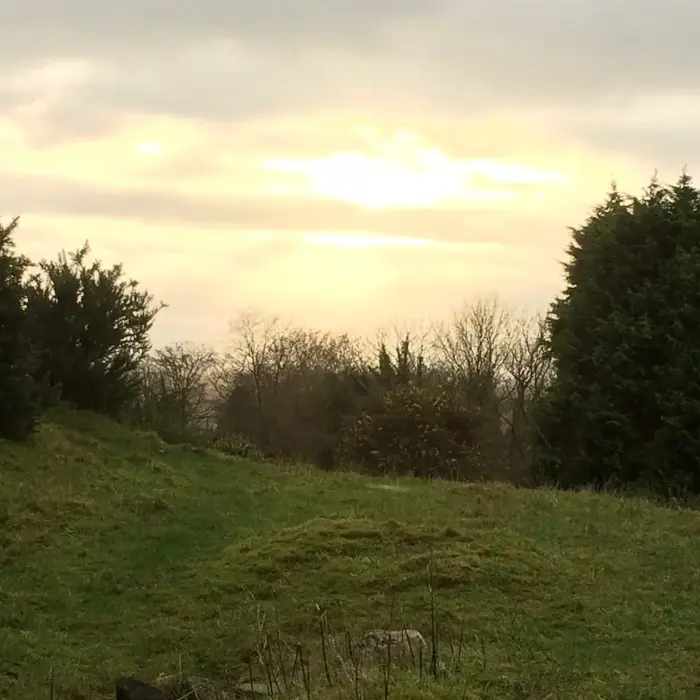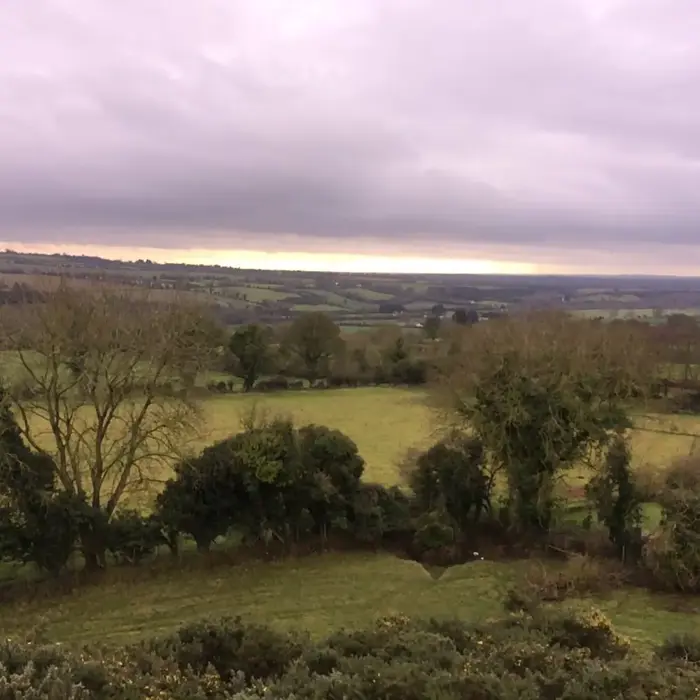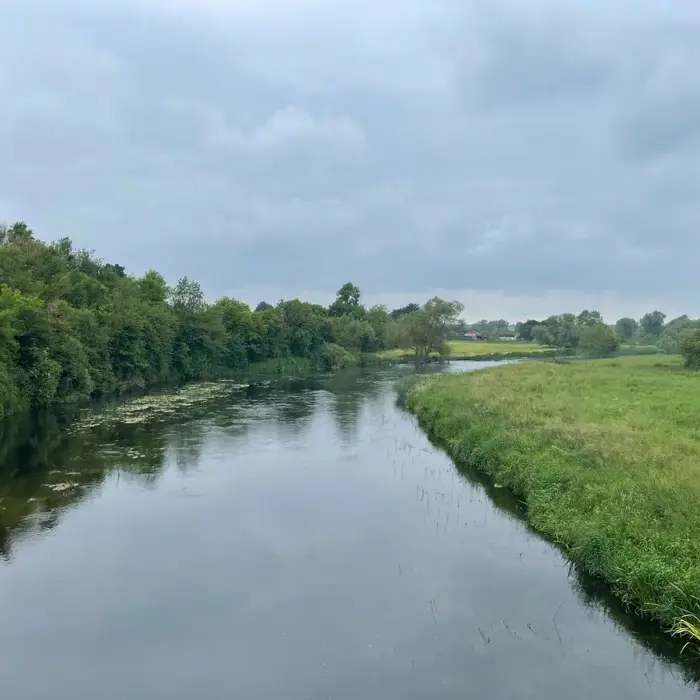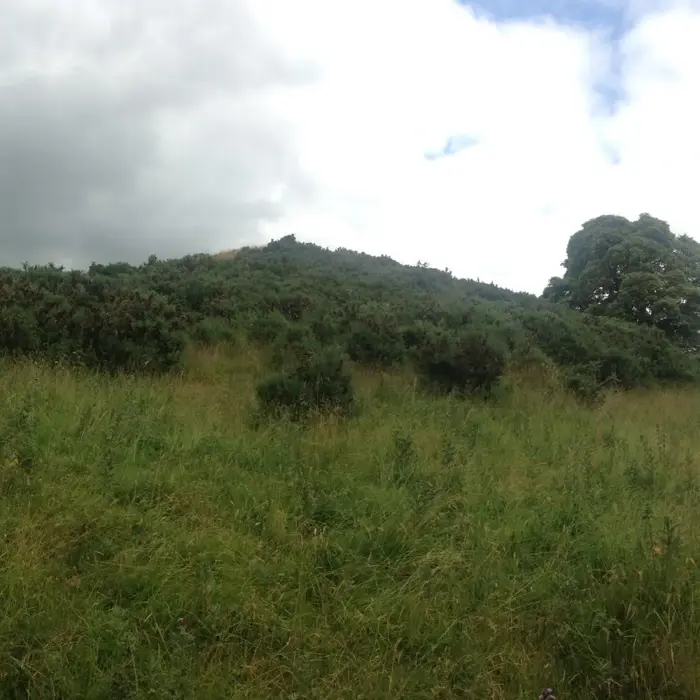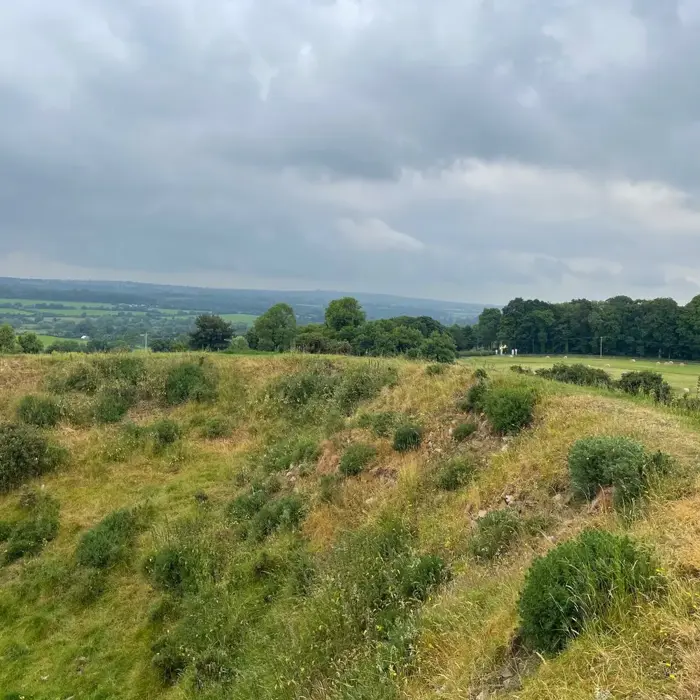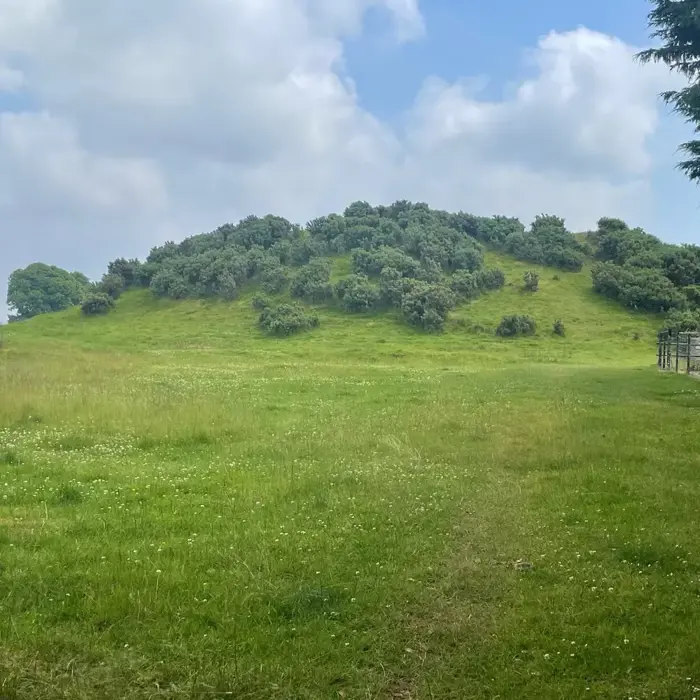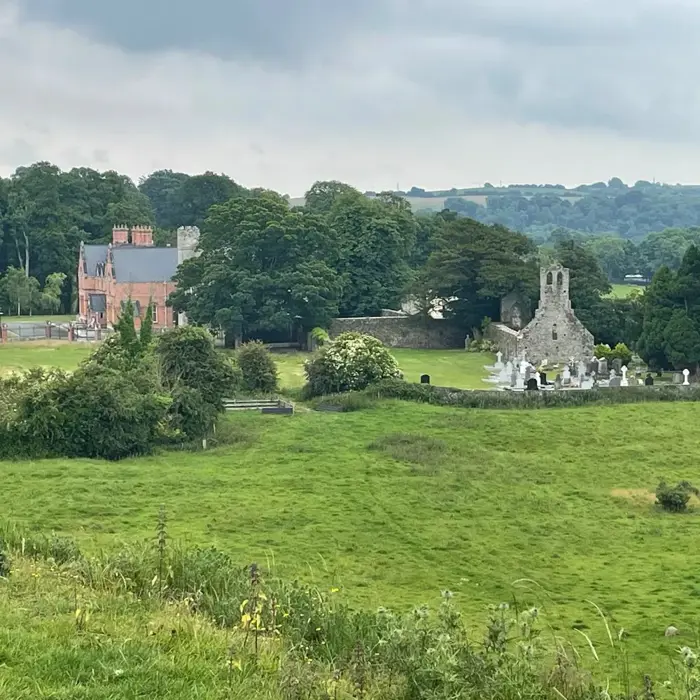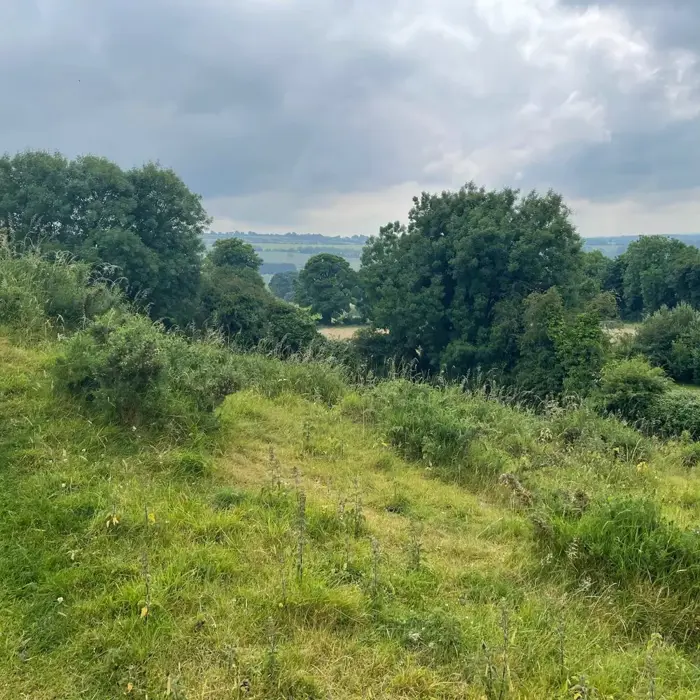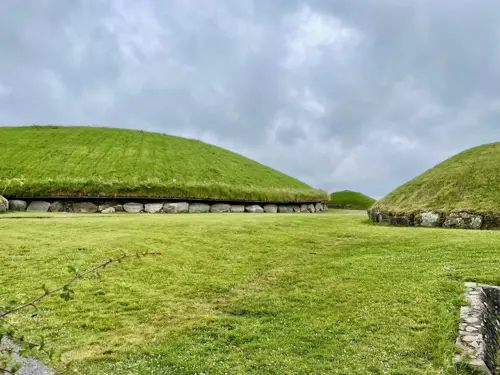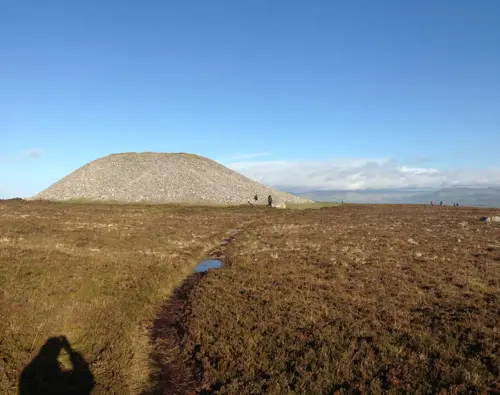




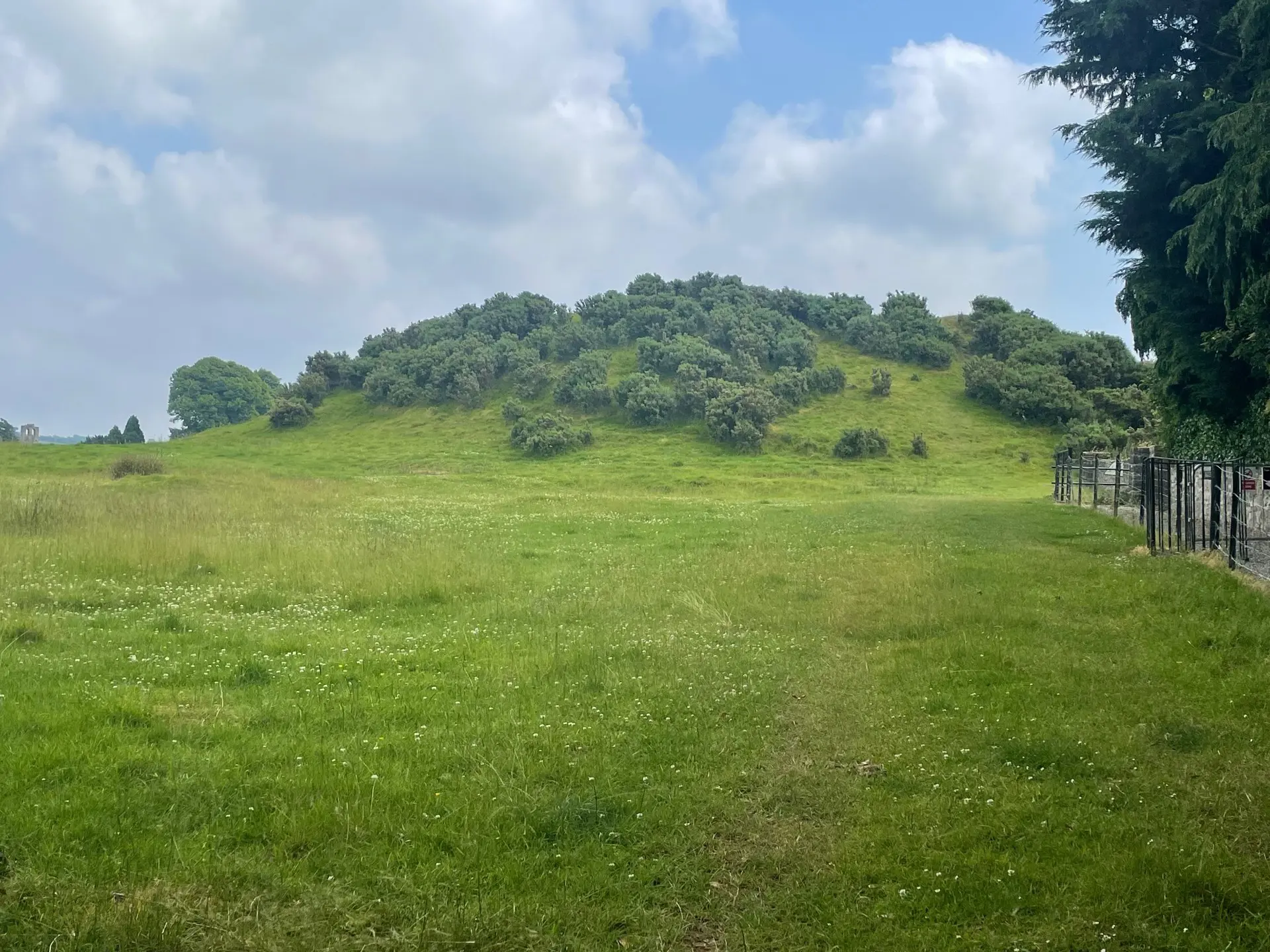








Dowth is an earthen mound measuring about 85 meters in diameter and rising 15 meters tall, distinguished by a large crater at its center, a result of past excavation activities. The site is prominently situated near the River Boyne in County Meath and forms part of the UNESCO-listed Brú na Bóinne World Heritage area, alongside the more famous Newgrange and Knowth tombs. The mound is bordered by roughly 115 kerbstones, many adorned with detailed geometric and astronomical carvings. In contrast to the more refined neighboring tombs, Dowth retains a rugged, natural appearance; many kerbstones remain partially buried, and fragments of white quartz found nearby indicate that its entrance once featured a bright quartz façade similar to Newgrange. The surrounding landscape is rich with archaeological remains, reflecting the dense prehistoric activity throughout the Boyne Valley region.
Archaeological and Historical Findings
The passage tombs at Dowth date back to around 3200 BCE, contemporary with Newgrange and Knowth. The site includes three stone-lined passages entering from the west side: two main tombs (named Dowth North and Dowth South) and a souterrain (an underground structure). Dowth North has an 8.2-meter passage leading to a cruciform chamber containing notable examples of Neolithic art and an unusual side chamber fitted with a large flagstone featuring an oval-shaped depression carved into its surface. Dowth South contains a shorter passage, about 3.5 meters long, ending in a circular chamber with a single recess. The mound suffered significant damage during an unprofessional excavation conducted by the Royal Irish Academy in 1847, when explosives were used to blast open the center, resulting in the present crater that remains open today. Recent archaeological work from 2012 to 2015 involved detailed geophysical surveys, and in 2018, excavations near Dowth Hall uncovered an additional passage tomb bearing significant rock art similar in style to that found at the main site. Evidence of early medieval activity appears through the discovery of souterrains on the western side, indicating some occupation in the first centuries CE.
Archaeoastronomic Orientation
One of Dowth’s kerbstones is decorated with seven sun-like symbols, thought by archaeologists to have served a calendrical or astronomical function. The southern passage tomb at Dowth aligns with the setting sun on the winter solstice, with sunlight reaching inside the chamber around mid-afternoon on those days. While the site evidently had a ritual role connected to celestial events, specific details about all its astronomical alignments remain unclear based on current research.
Accessibility and Visitor Information
Dowth is accessible by car and is located on the north bank of the River Boyne, reachable via local roads connecting the towns of Slane and Drogheda in County Meath. Unlike Newgrange and Knowth, Dowth is not part of guided tours organized through the Brú na Bóinne Visitor Centre; it remains open to visitors freely and without appointment. Visitors can explore the exterior of the mound and walk among the exposed kerbstones on largely undisturbed grassy land. However, entry into the internal passage chambers is prohibited to protect the site, with entrances now secured by metal grilles. The terrain outside the mound consists mostly of open grassland with some uneven areas but is generally accessible to independent visitors. There are no entrance charges or visitor facilities directly at Dowth. For a fuller understanding of the Brú na Bóinne monuments, visitors can go to the nearby Visitor Centre, about 8 kilometers away, which offers interpretive displays and guided tours of Newgrange and Knowth.