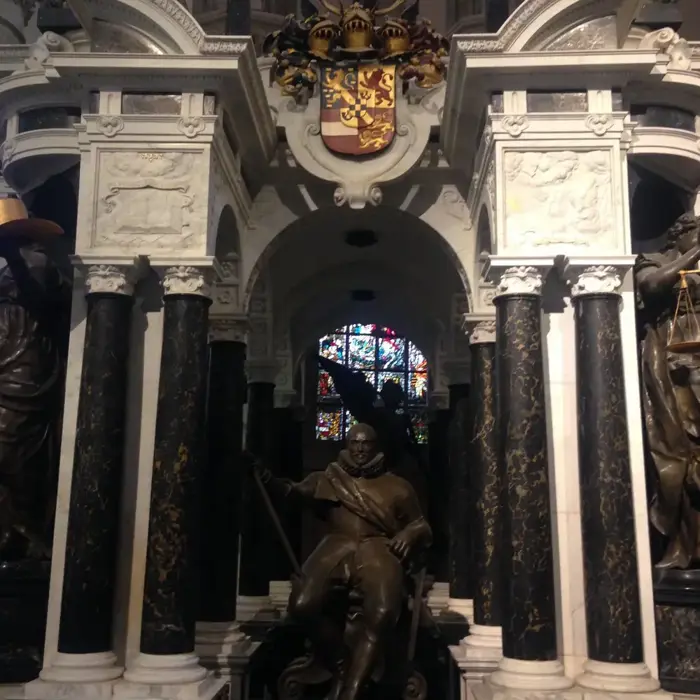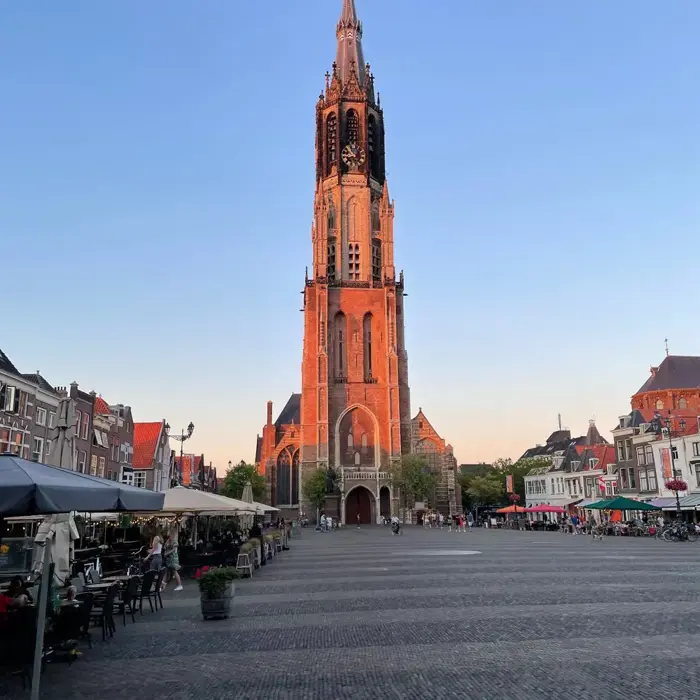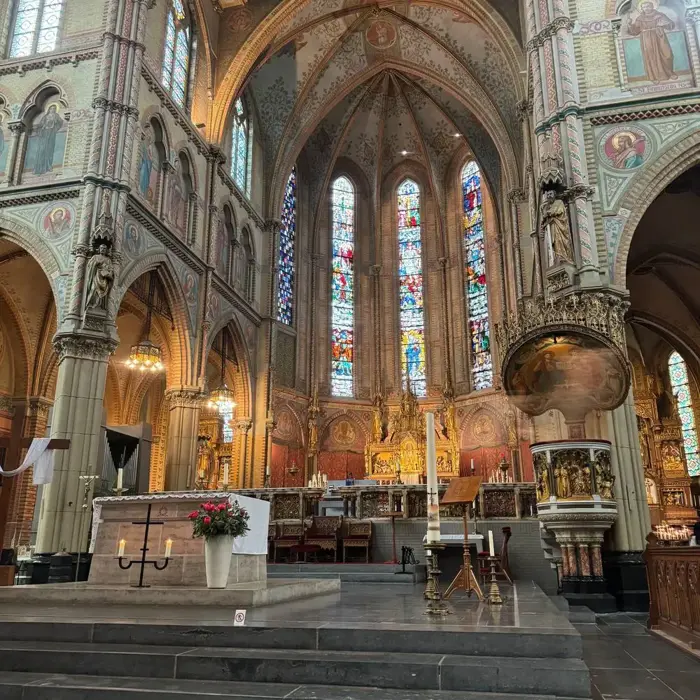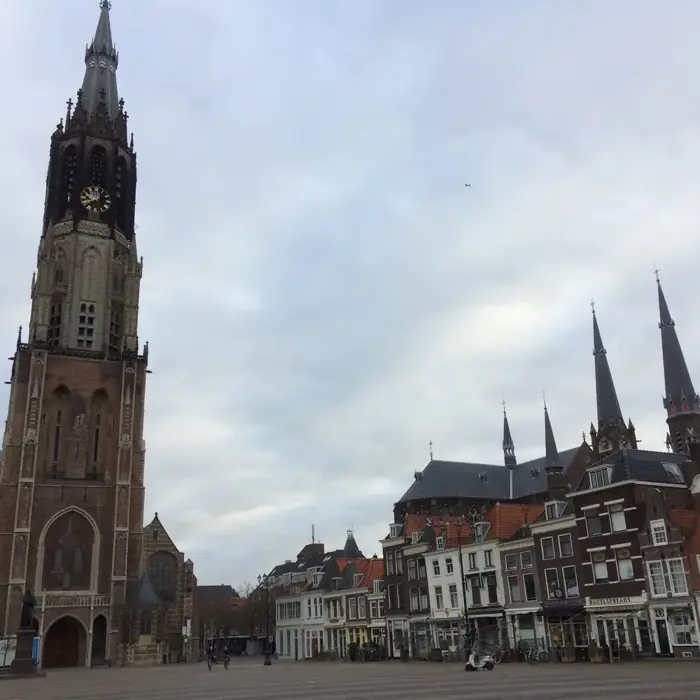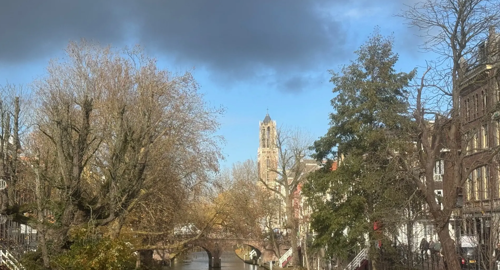




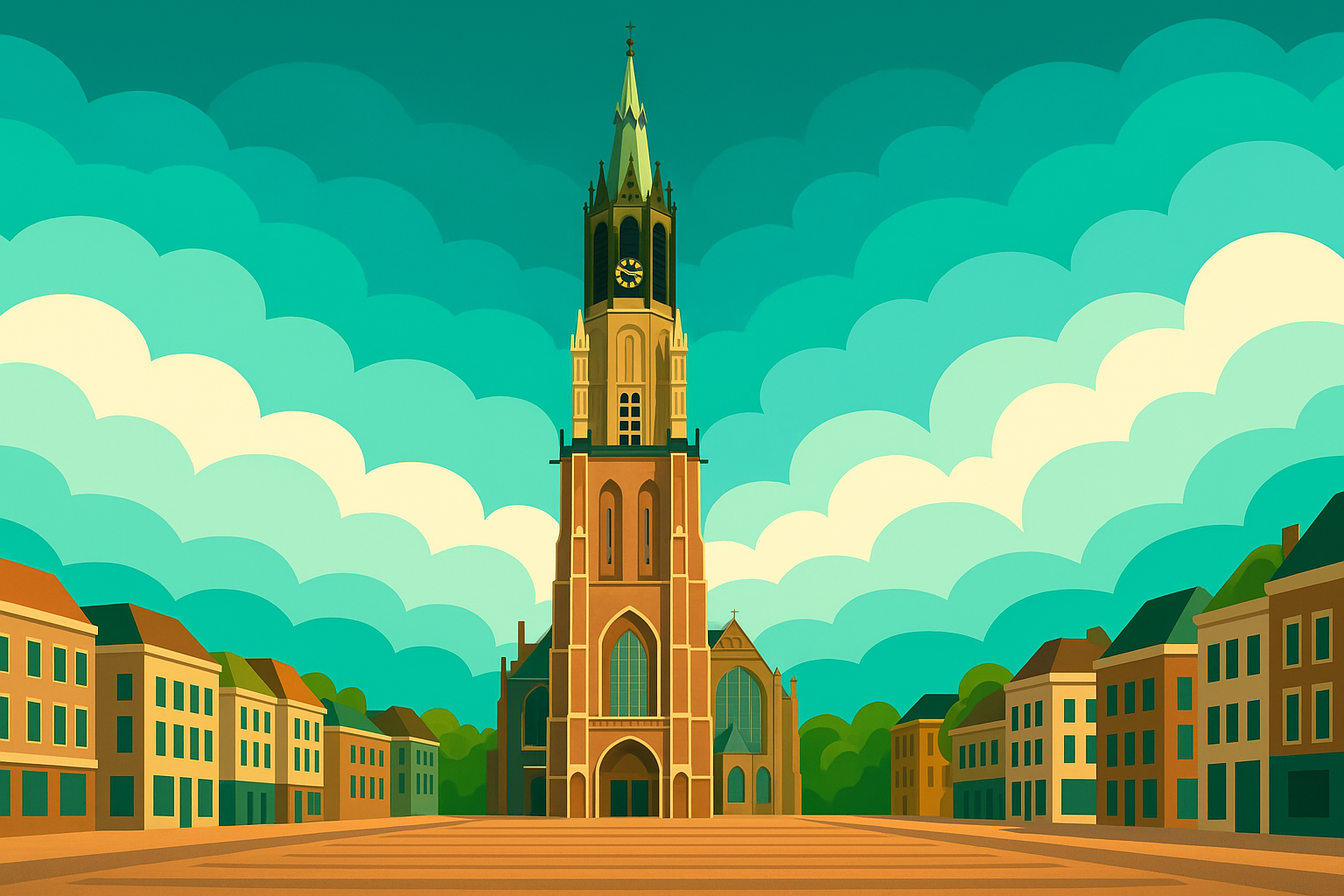







The Nieuwe Kerk is distinguished by its slender Gothic spire, which rises nearly 109 meters above the lively market square. Its light-colored stone façade contrasts with the surrounding red brick buildings typical of Dutch architecture. Inside, tall columns and detailed vaulting create an impressive interior space, which also houses the notable mausoleum of William the Silent. The church is renowned as the burial site of the Dutch royal family; although the royal crypt itself is not open to visitors, its presence confers a solemn importance to the entire structure. Nearby, the Oude Kerk (Old Church) draws interest as well, known for its leaning tower and richly atmospheric interior.
Archaeological and Historical Findings
Research indicates that the Nieuwe Kerk was first built as a wooden church between 1381 and 1382 before being replaced by a Gothic stone basilica starting in 1384. The church was consecrated in honor of the Virgin Mary and Saint Ursula. Construction of the current tower began in 1396, with completion of the distinctive spire in 1496. Throughout its history, the church has endured several significant calamities, including a lightning strike in 1536 that caused a major fire, and the gunpowder explosion in Delft in 1654, which destroyed all the stained-glass windows and damaged the building. Each incident prompted extensive restoration efforts. The present spire, made from resilient Bentheimer sandstone, was designed by renowned architect Pierre Cuypers and completed in 1875. Originally a Catholic church, it became part of the Reformed Church in 1572. Architectural highlights include delicate tracery, ribbed vaulting, and elaborately adorned tombs. Since the 16th century, the royal crypt has served as the official burial place for the House of Orange-Nassau, although it remains inaccessible to the public.
Legends, Folklore and Myths
According to local tradition documented by 17th-century historian Dirk van Bleyswijck, the site was chosen following visions experienced by a beggar, who repeatedly saw a glowing golden church at the location of the current market square. After his passing, the caregiver of the beggar reportedly had the same vision annually for thirty years. The support of two devout Beguines, including Geertruit van Oosten, who was said to have borne stigmata, was instrumental in the church’s eventual construction. This founding story is the most commonly cited legend associated with the Nieuwe Kerk in scholarly works.
Accessibility and Visitor Information
The main entrance to the Nieuwe Kerk faces directly onto Delft’s central Markt square. Visitors can reach the main area within approximately 50 meters from the entrance, with even and smooth surfaces suitable for those with reduced mobility. However, accessing the tower involves a steep climb of over 350 steps and is not suitable for individuals with mobility challenges. Tickets can be purchased online and give access to the Old Church and the New Church. For the latest ticket prices, check the website. Children, students and groups have special lower fees.