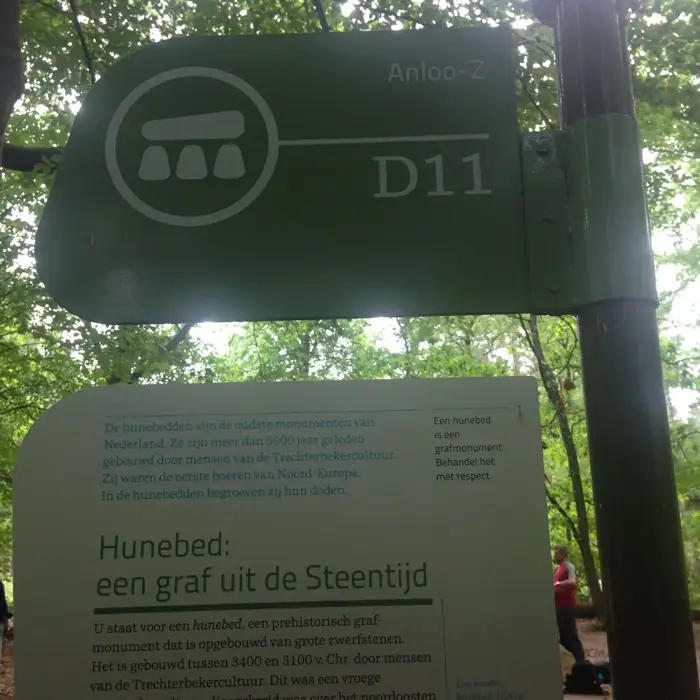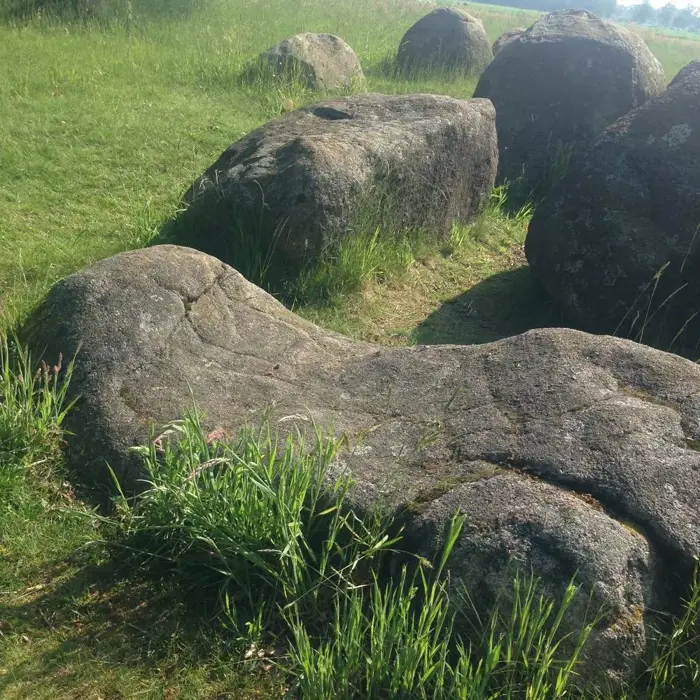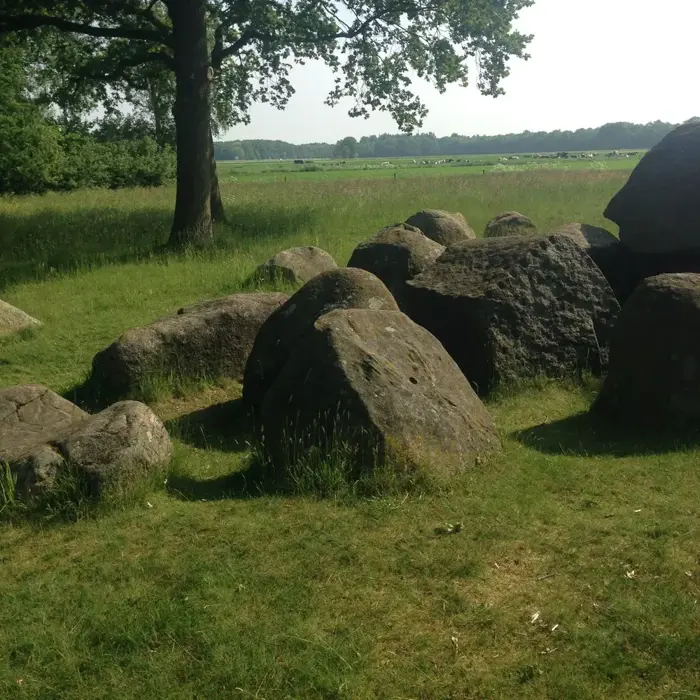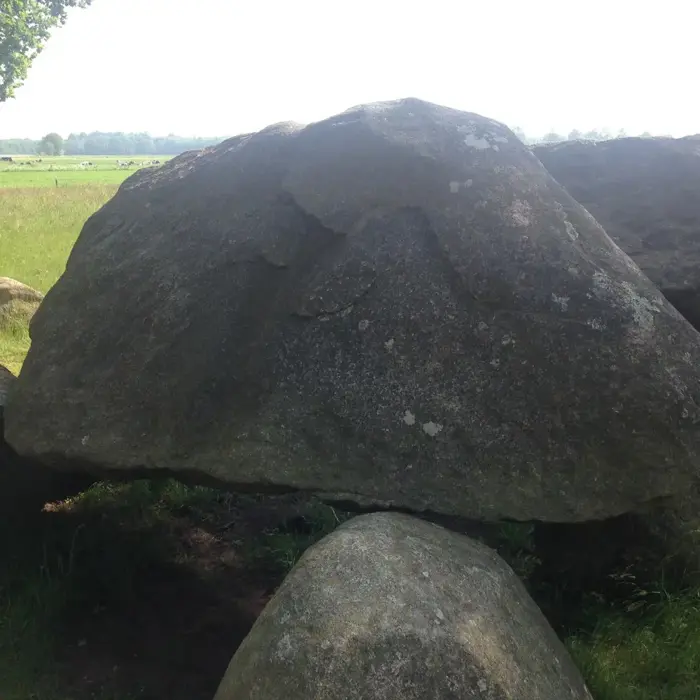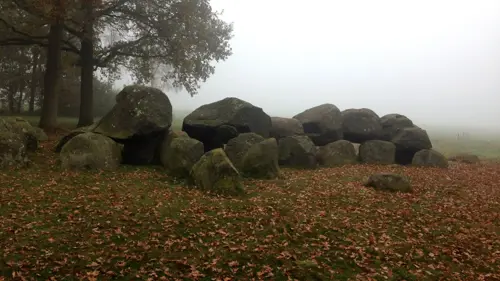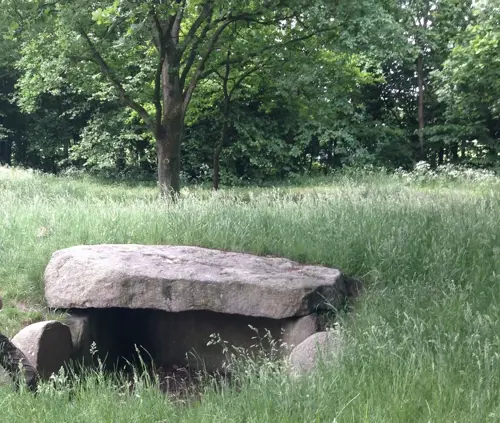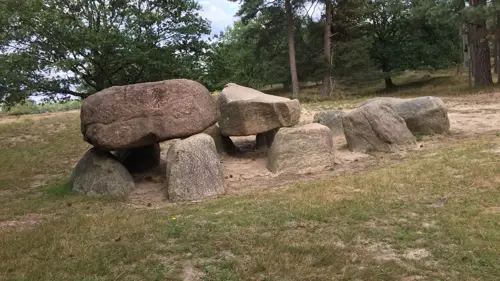




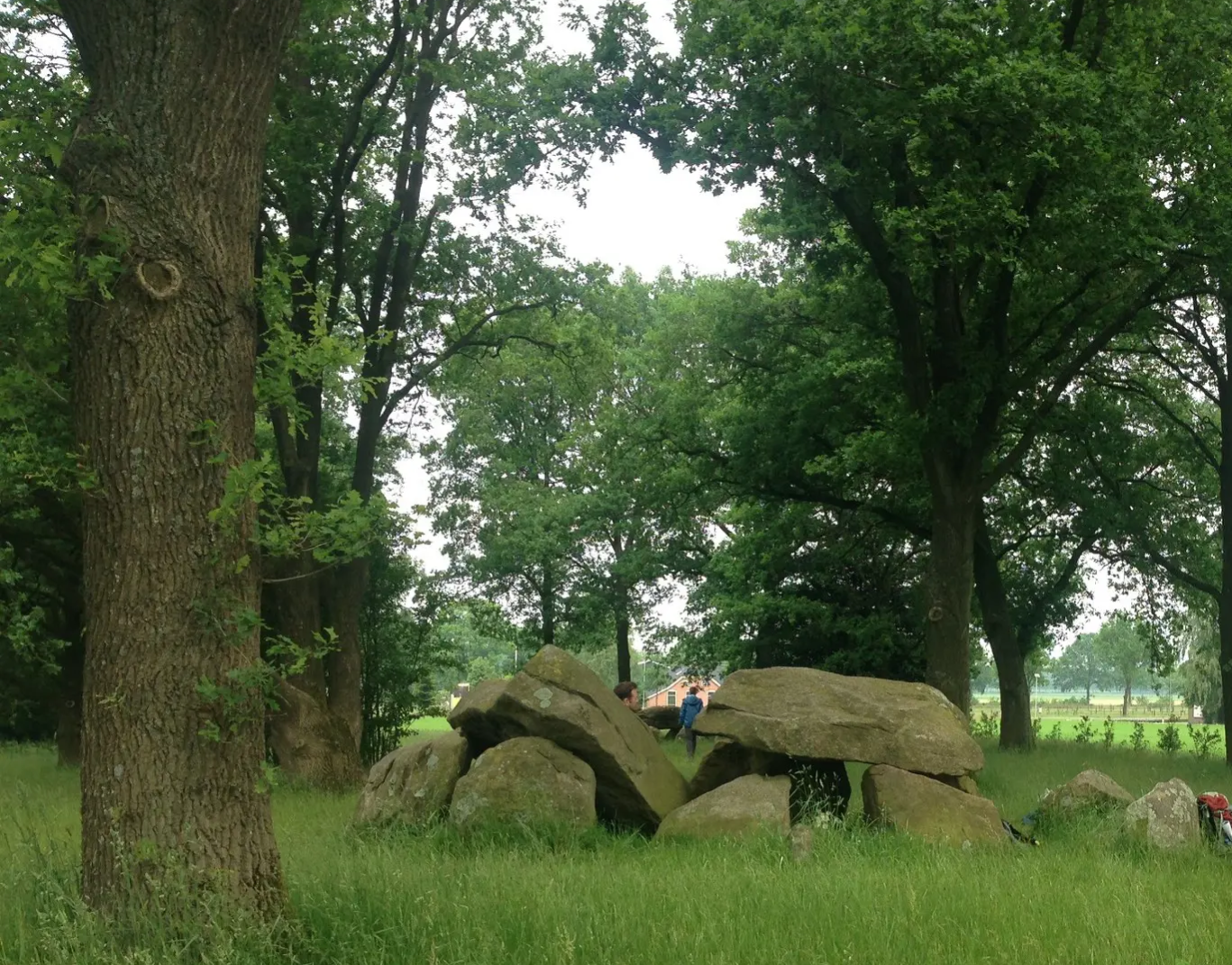








Hunebed D11 is a megalithic tomb, locally referred to as a hunebed, situated on the Terborgh estate close to the Pinetum tree garden. The structure consists of a long oval arrangement of large stones, partially sheltered by the surrounding forest. Measuring roughly nine meters in length, the tomb remains mostly intact apart from the loss of one capstone. The peacefulness and low visitor traffic here contribute to a strong feeling of timelessness. The sandy path leading to D11 crosses typical heath and forest landscapes of the Drenthe region. While similar hunebeds exist throughout the province, including at Balloo (D16) and within Anloo, D11 is notable for its well-maintained condition.
Archaeological and Historical Findings
Research indicates that Hunebed D11 originates from the neolithic era, built by communities linked to the Funnel Beaker Culture, likely between 3400 and 3200 BCE. Constructed from glacial erratic stones, the tomb forms a rectangular chamber that was originally covered with earth. These hunebeds served as collective burial sites, and examinations at D11 and surrounding locations have revealed pottery fragments, notably undecorated funnel beakers, alongside some flint tools. However, no extensive archaeological digs have been recorded at this site. Most hunebeds in Drenthe, including D11, were documented during early twentieth-century surveys focused on megalithic monuments in the Netherlands. The near-complete set of capstones and supporting stones suggests the internal chamber largely maintains its original form.
Accessibility and Visitor Information
Access to Hunebed D11 is via a sandy path starting near the road from Anloo to Anderen, close to the Gagelveen fen. After turning left onto the trail and proceeding to a barrier, visitors face about a ten-minute walk (roughly 600-800 meters) across level, natural forest terrain. The path is generally manageable but can be uneven, particularly after rain, and is not recommended for wheelchairs or mobility scooters[1]. No steep slopes or steps are present, though sturdy footwear is advised. The site is free to be visited.