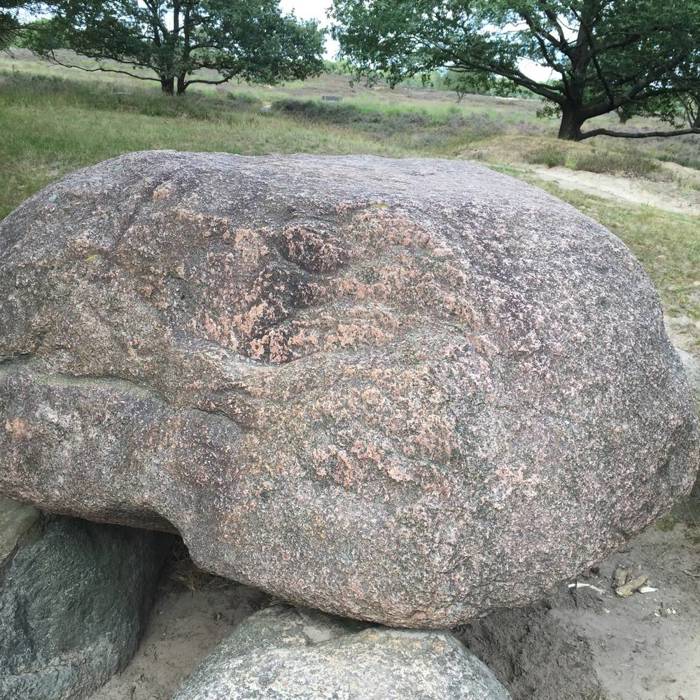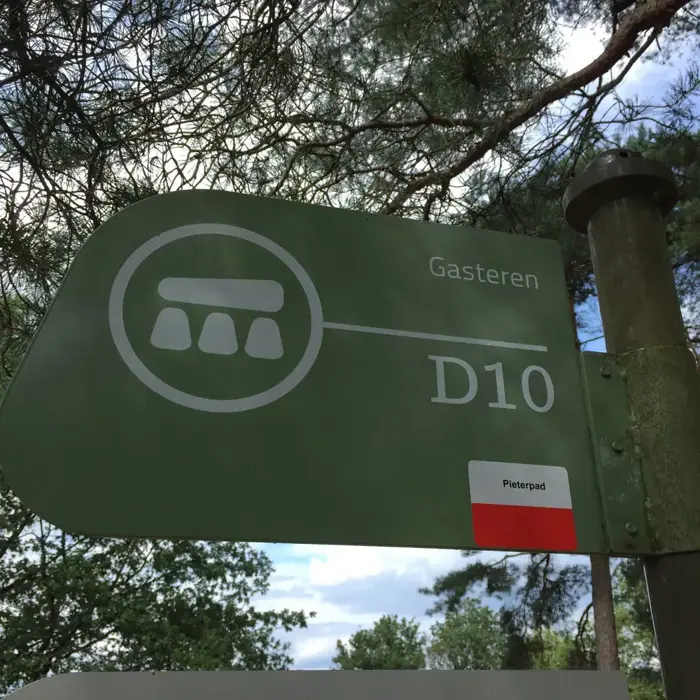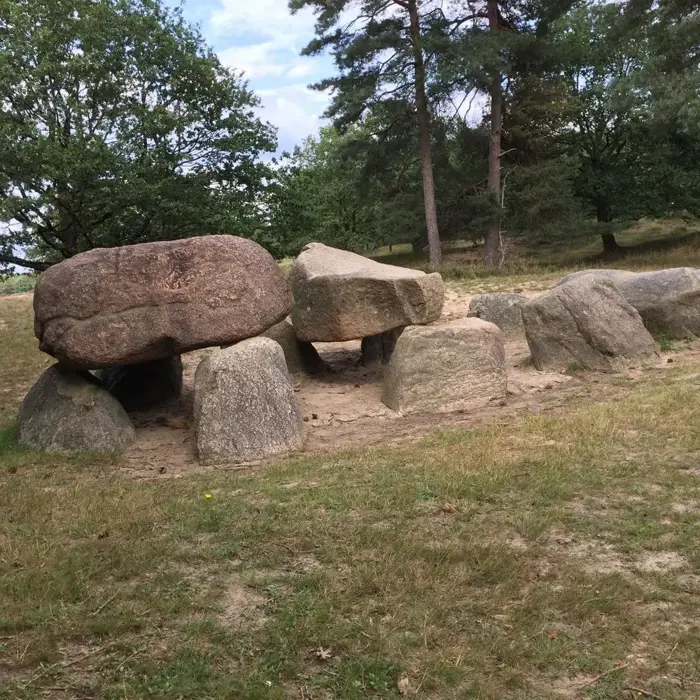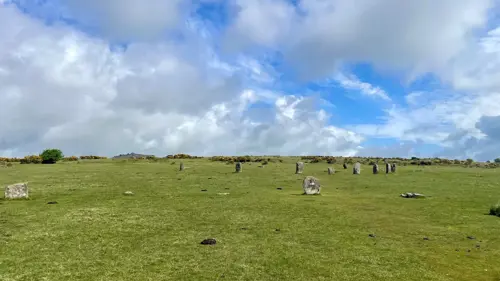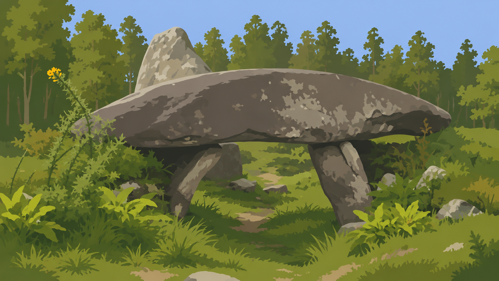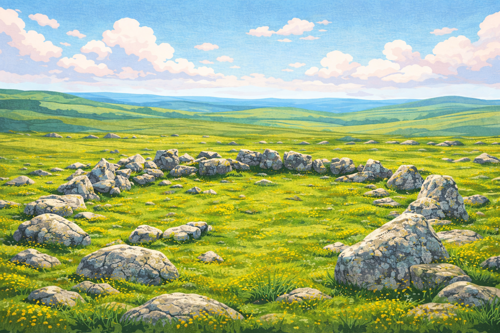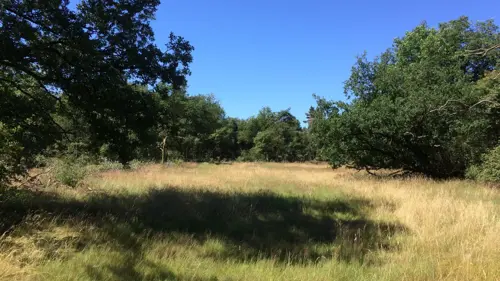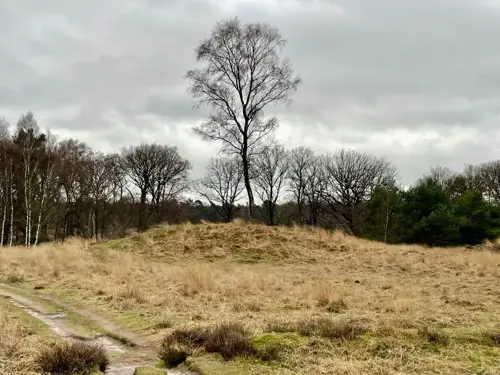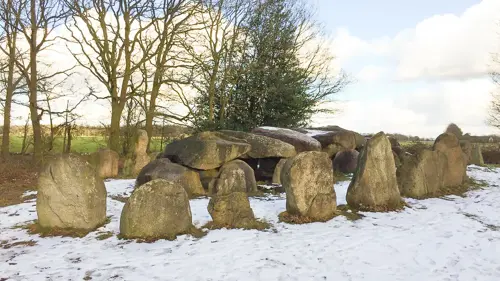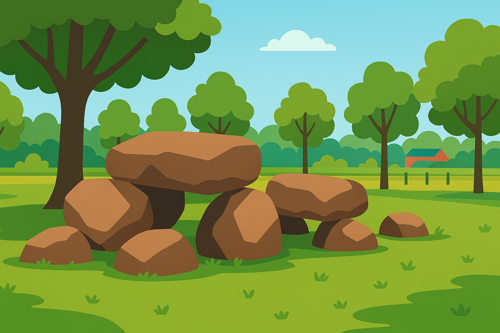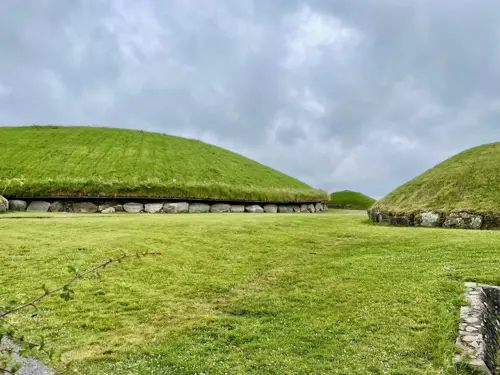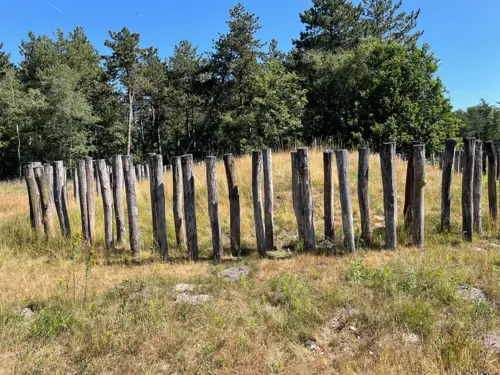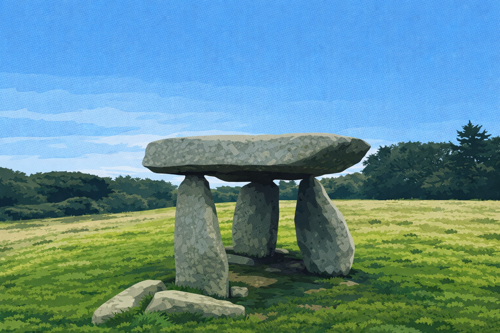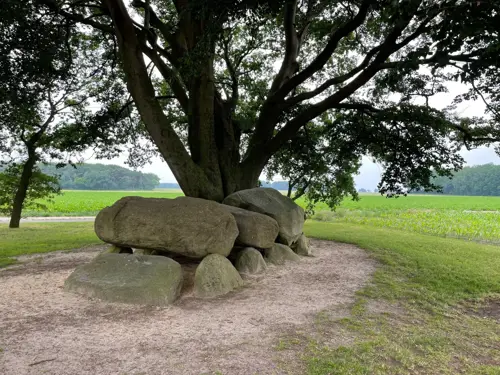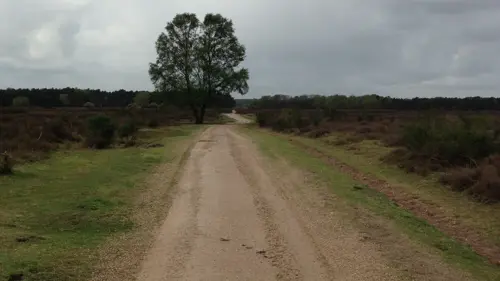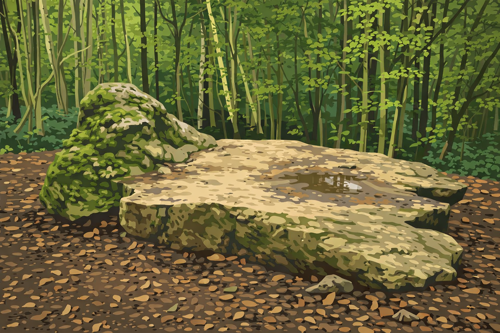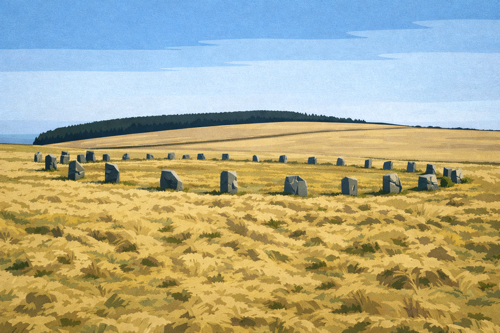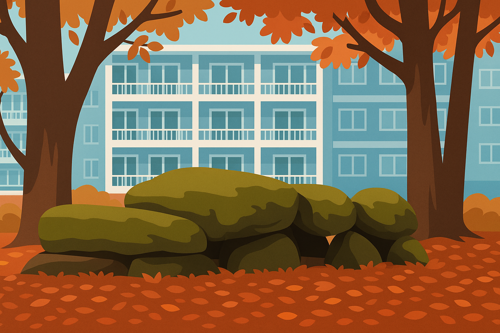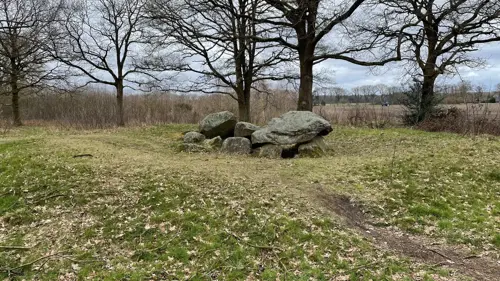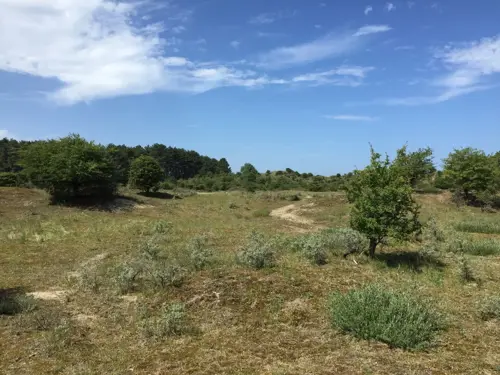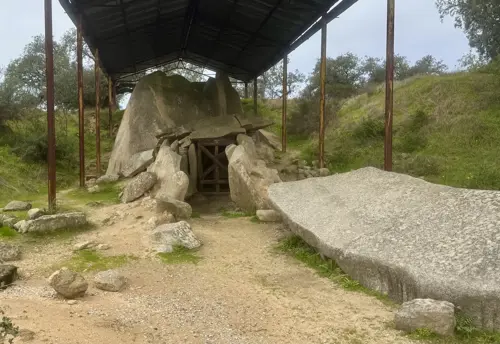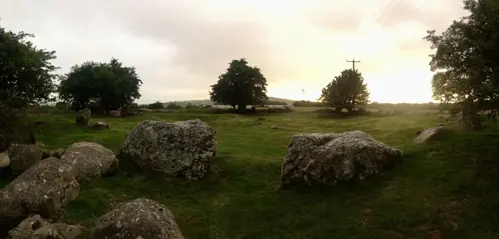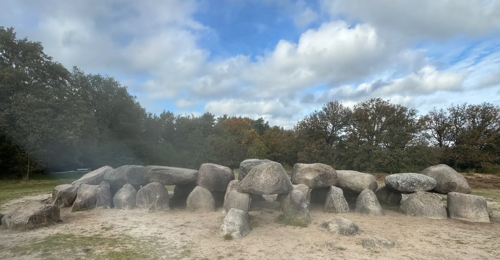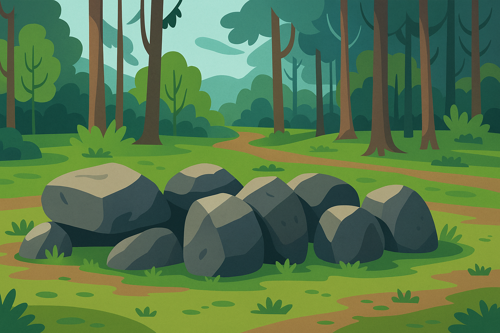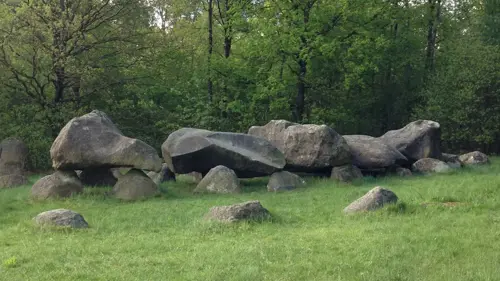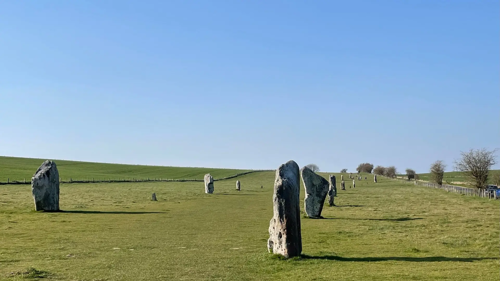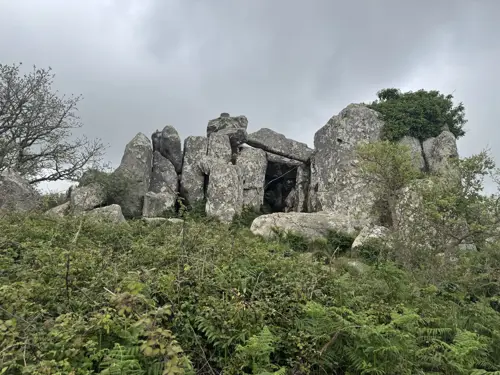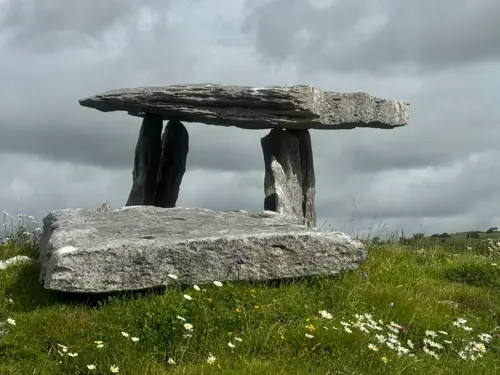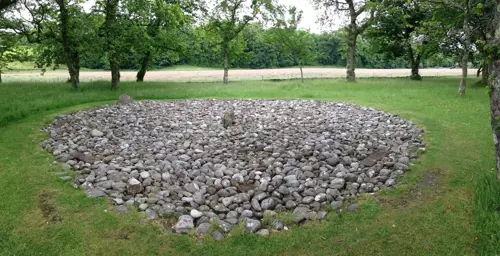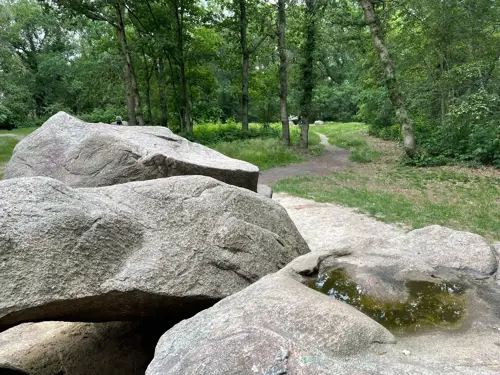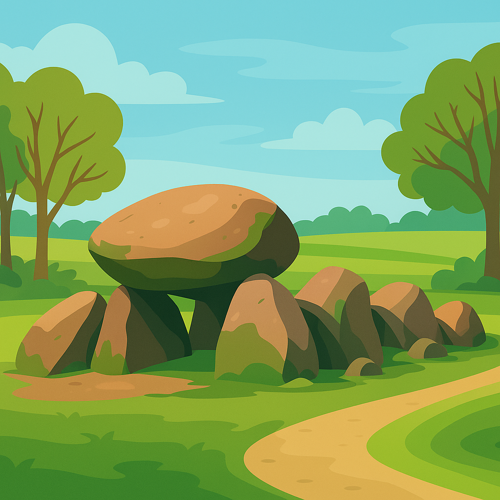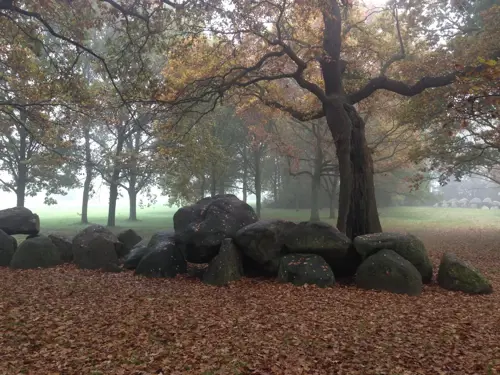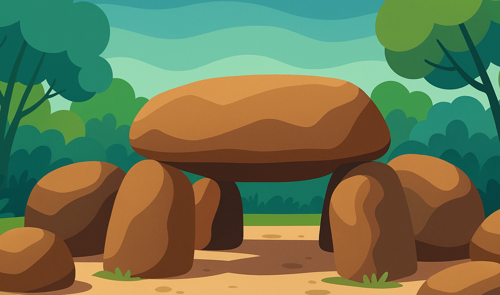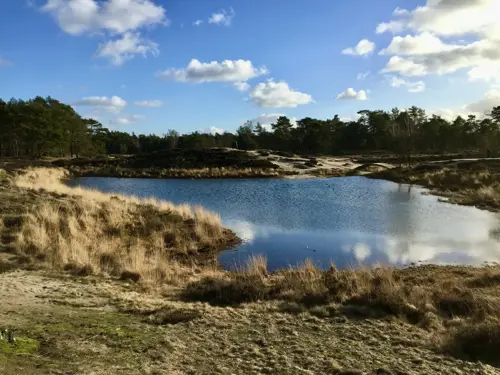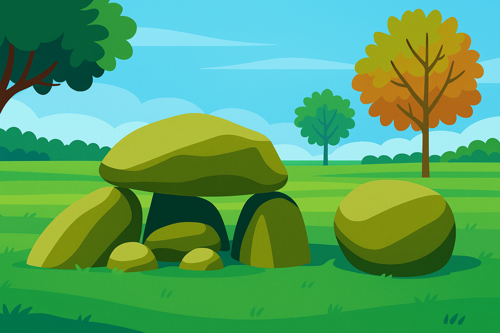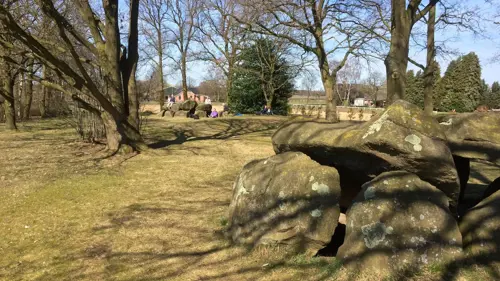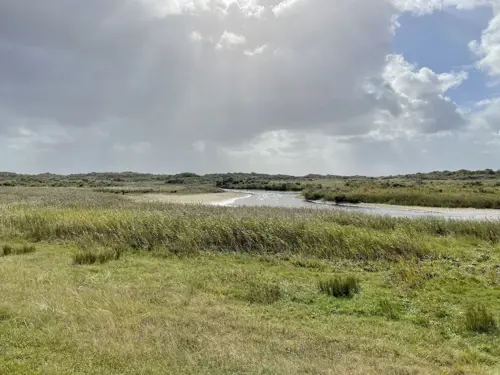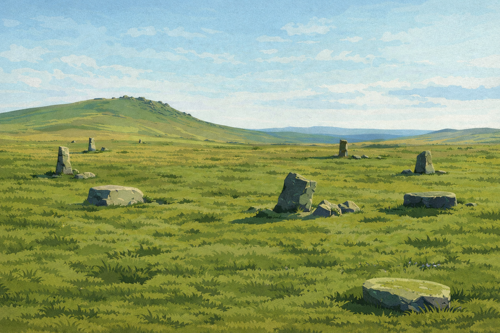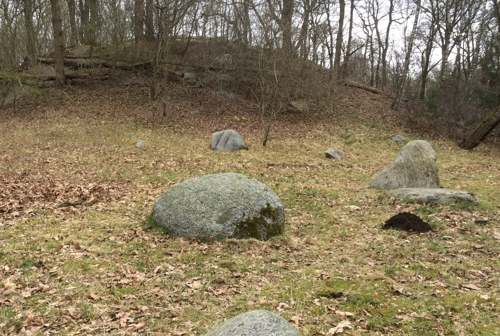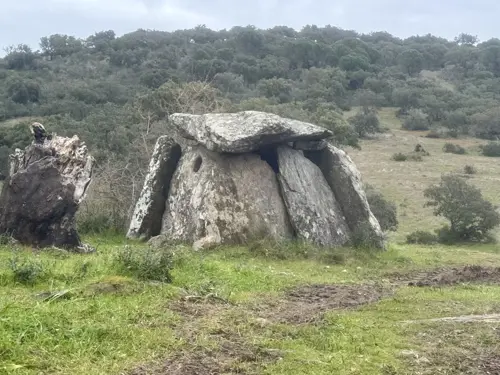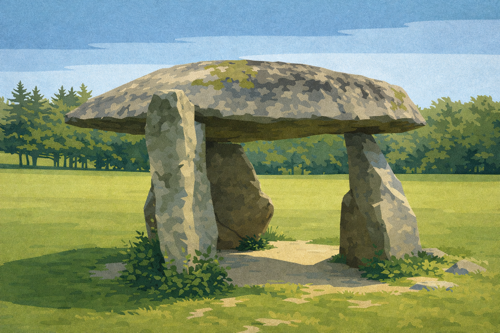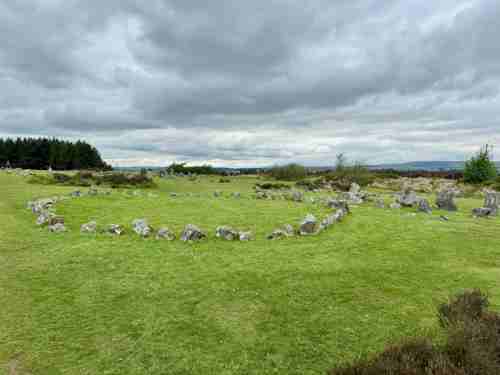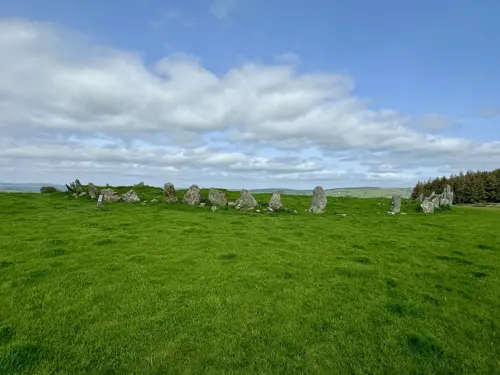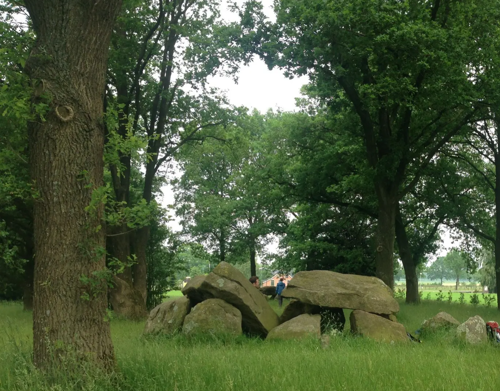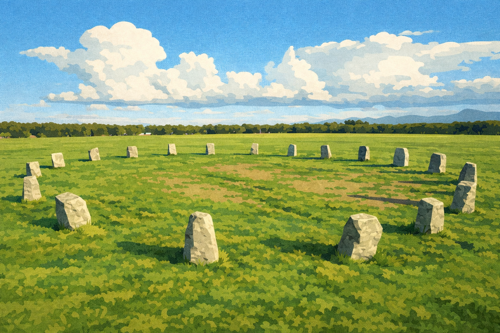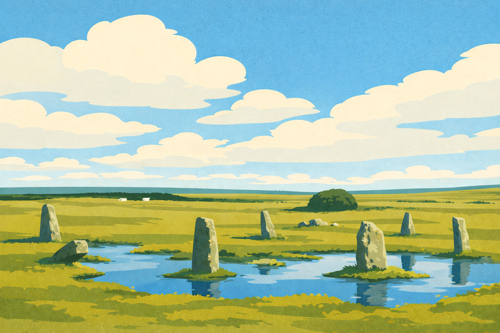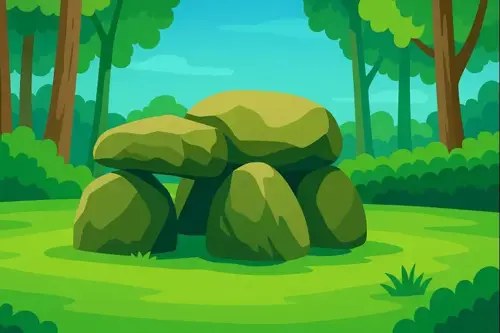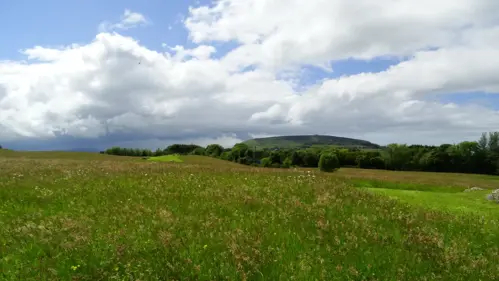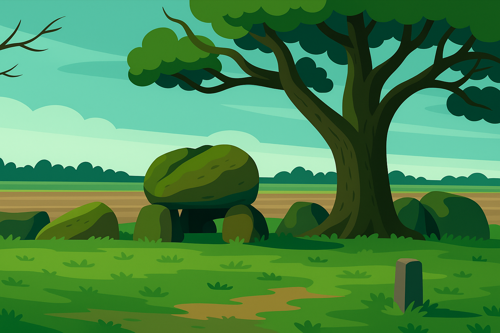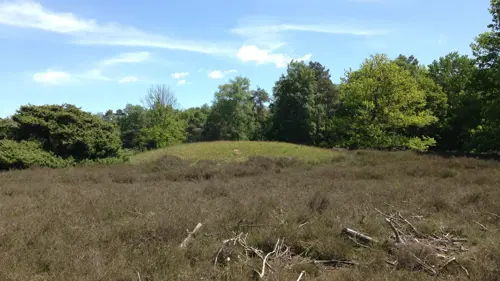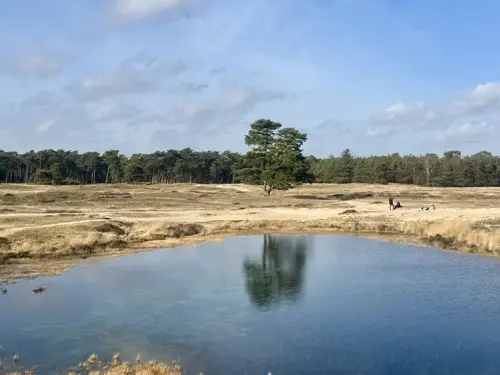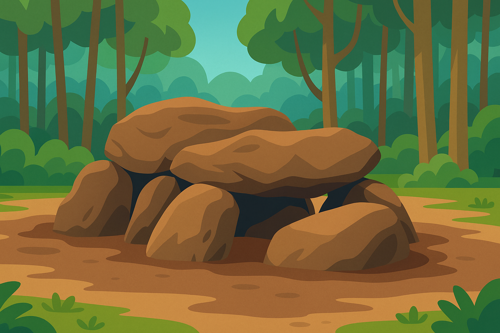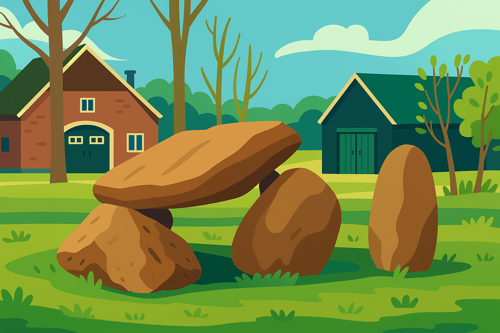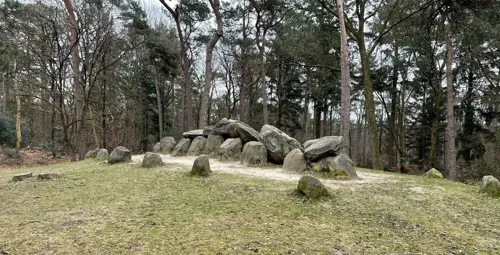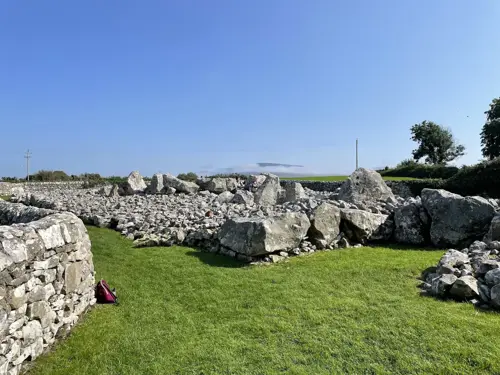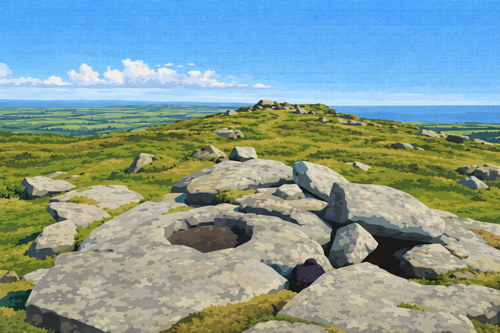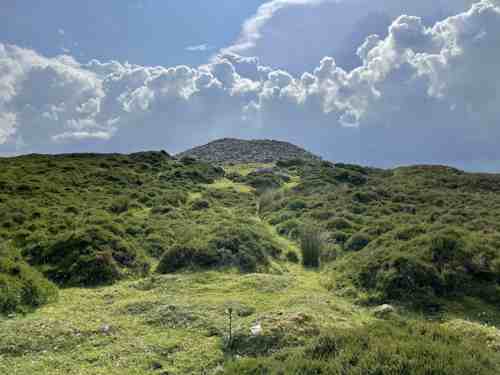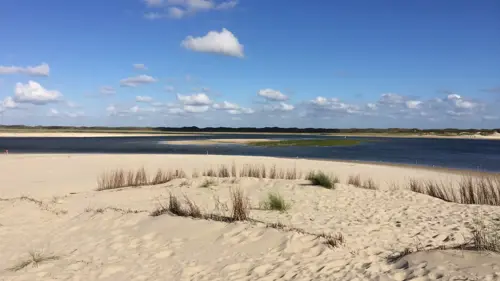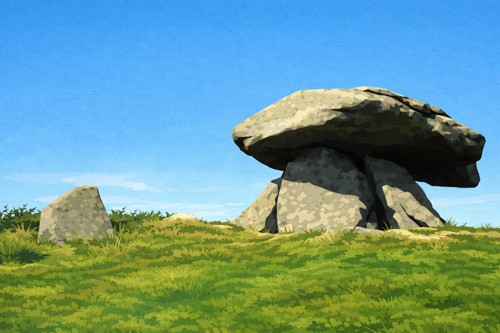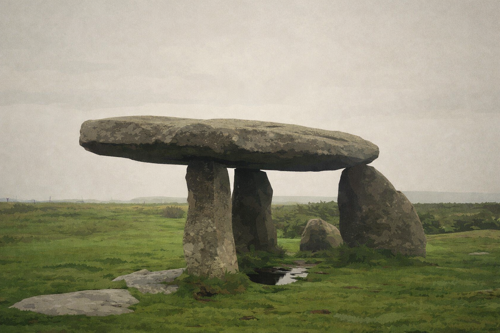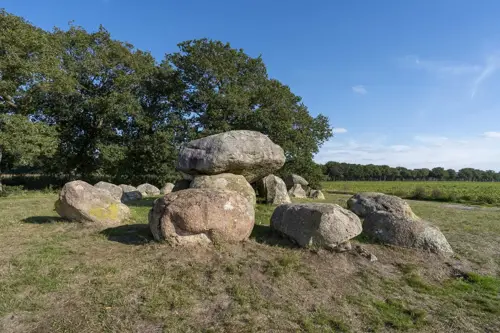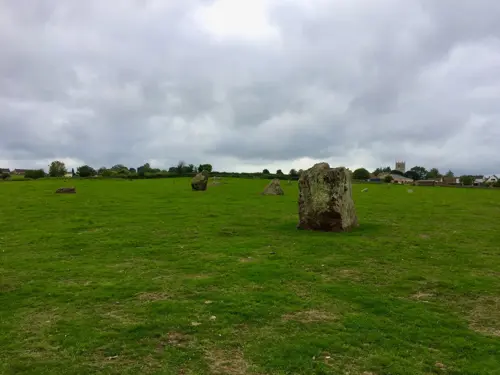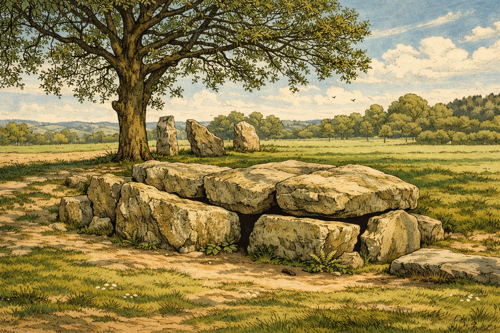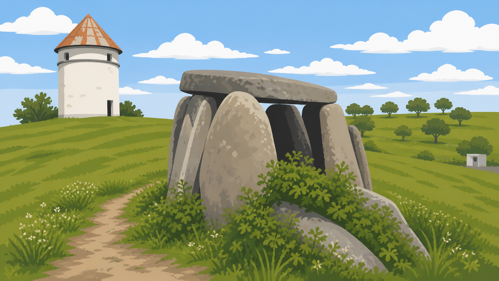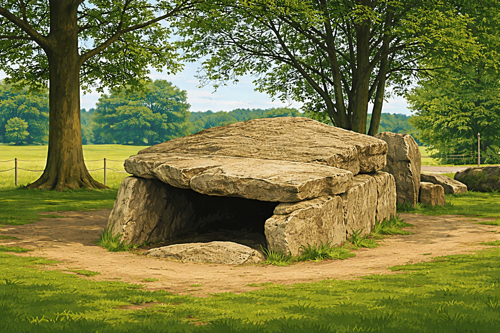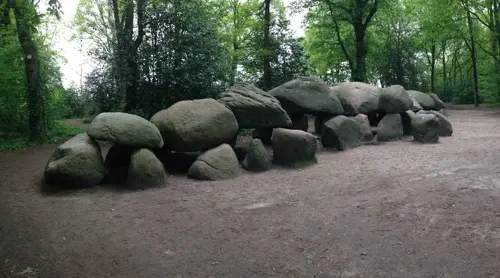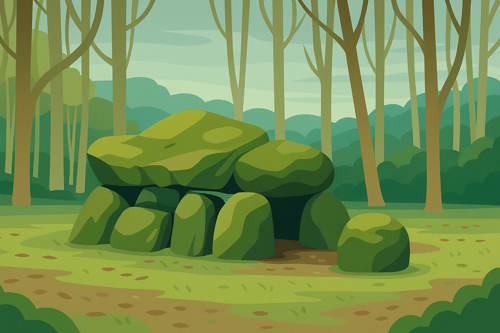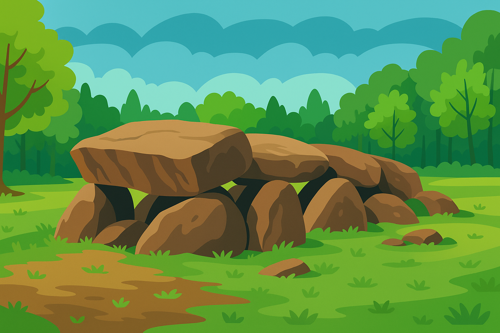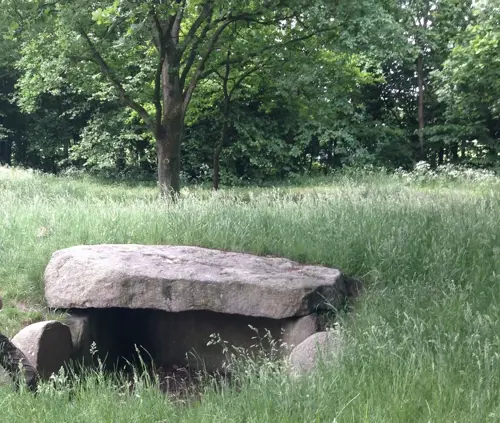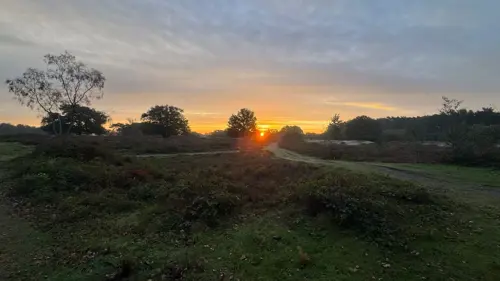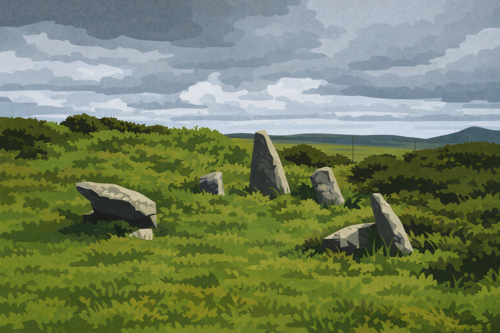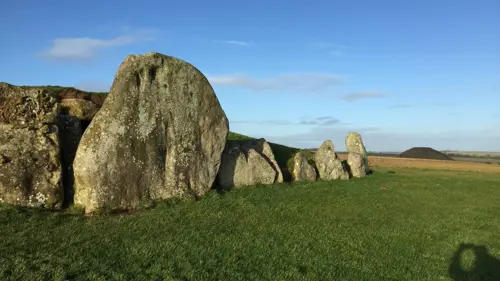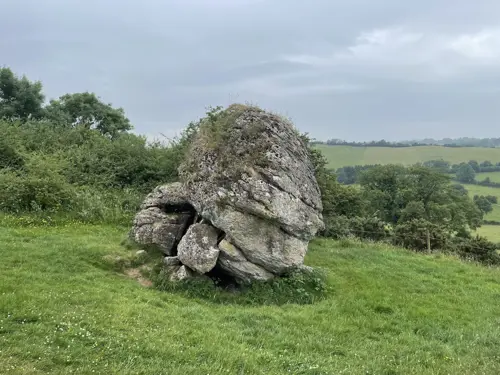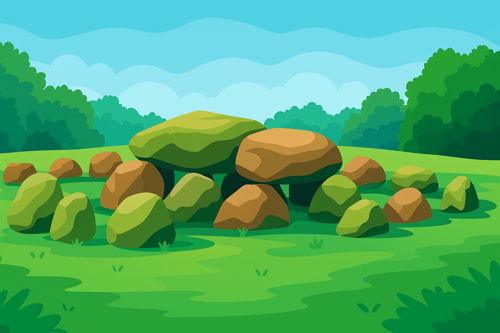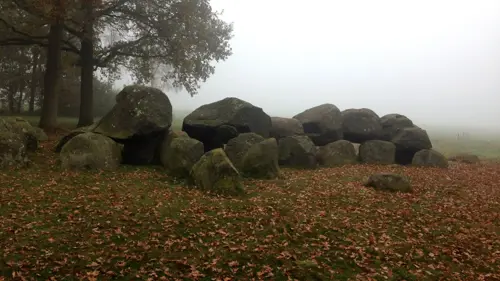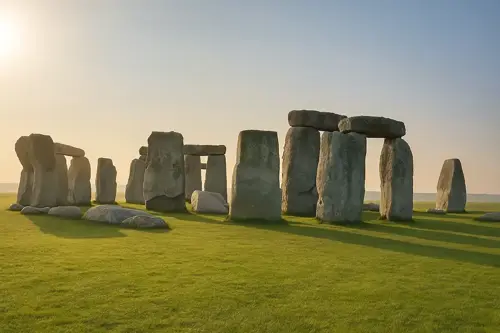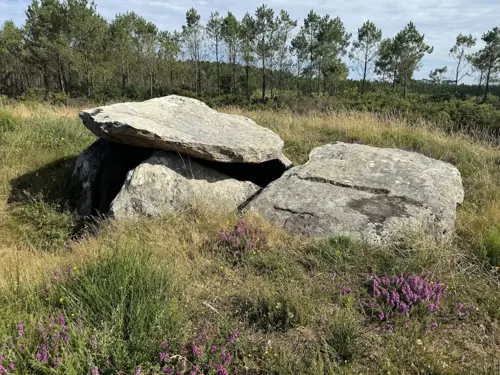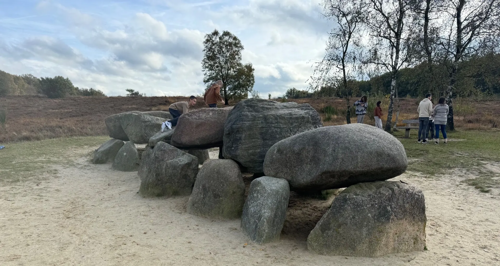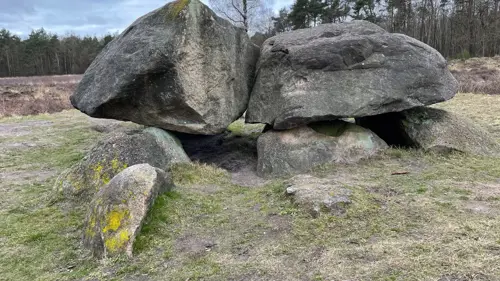




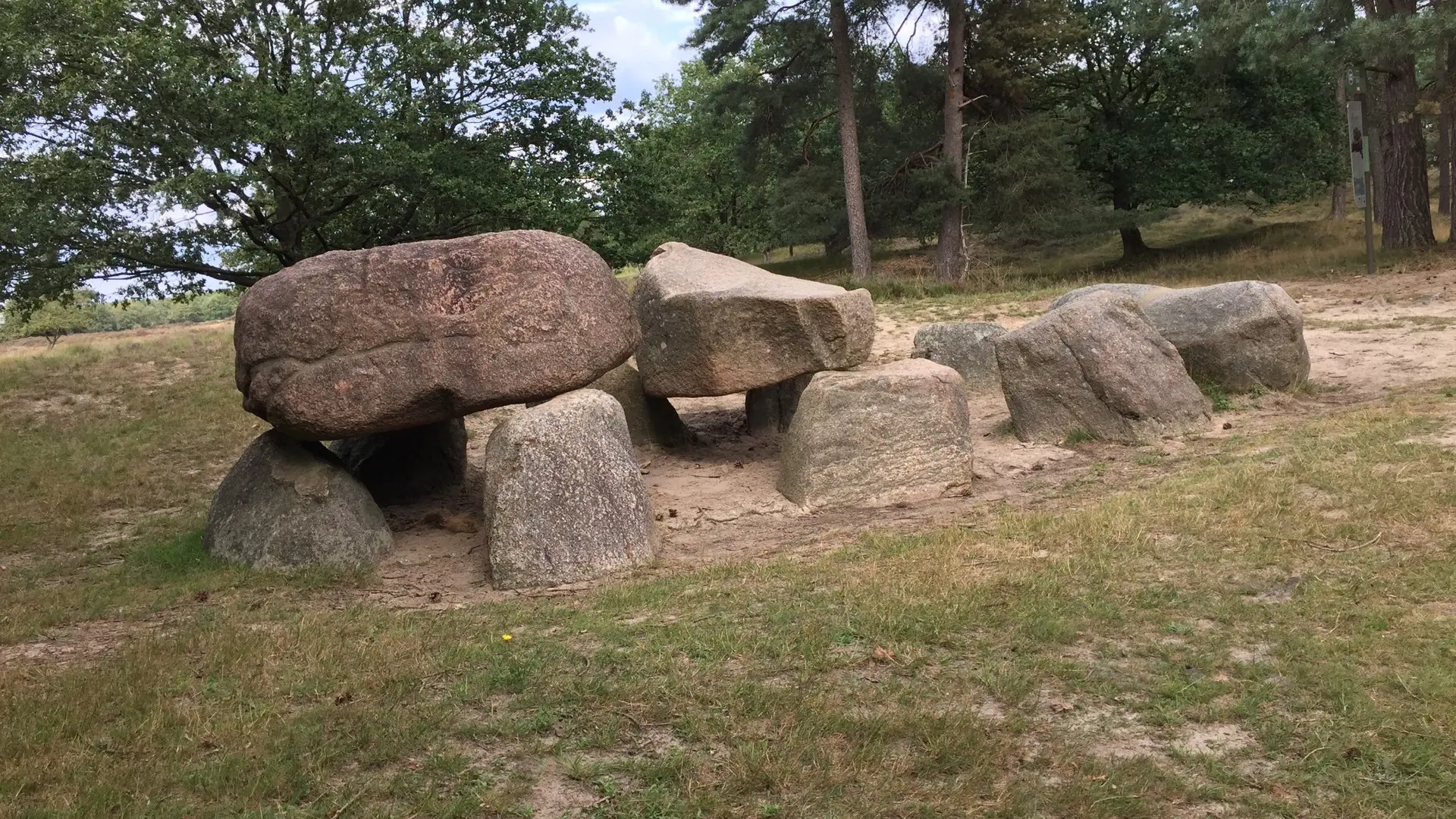








Hunebed D10 is a modestly sized megalithic tomb situated in the Gasterse Duinen nature reserve, distinguishable by its two remaining capstones supported by largely intact upright stones at the ends and sides. Although four capstones were originally part of the construction, the absence of two does not diminish the site’s enduring presence. Set amid sandy terrain interspersed with heath, the location is particularly striking in late summer when the heather blooms in vibrant purple hues. This hunebed is among several in the area, forming part of a broader collection of similar prehistoric tombs throughout Drenthe.
Archaeological and Historical Findings
Hunebed D10, like other dolmens in Drenthe, is attributed to the Funnel Beaker Culture, active roughly between 3400 and 2850 BCE. This group transported large glacial boulders to construct communal burial chambers. The tomb was originally capped with four large stones, with currently only two remaining. Its design includes upright sidestones and endstones supporting the capstones, creating a chamber that would originally have been covered by an earthen mound. While artifacts such as pottery and tools have been found at similar sites, implying these tombs had ritual significance, no prominent finds specifically from Hunebed D10 are currently documented in public records.
Legends, Folklore and Myths
Historical documents from the Renaissance period reveal that Hunebed D10 was known by local nicknames such as "Duyffelskutte" and "De Kut van de Duivel" ("The Devil's Cunt"). Folklore recounts local customs involving people crawling through the chamber while being playfully pelted with dung, potentially as part of a communal mock ritual called a charivari. Such names and traditions are specifically associated with D10, though similar stories exist around other hunebeds in the region.
Accessibility and Visitor Information
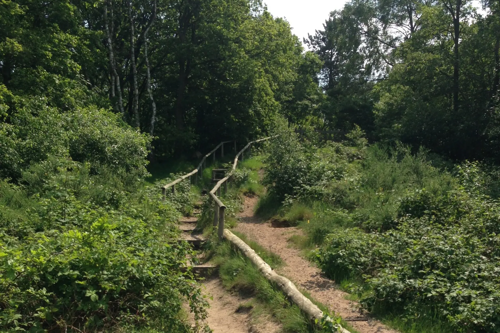
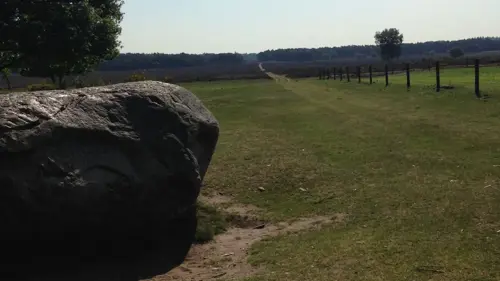
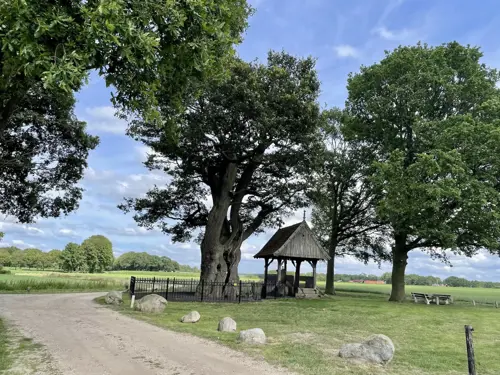
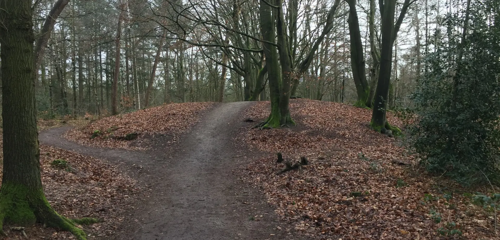
Hunebed D10 can be reached from a parking area on Oudemolenseweg, just north of Gasteren village. From there, a sandy path leads approximately 150 meters eastward through peaty heathland. The trail is gently sloped and relatively level, crossing fenced grazing land. While accessible for most pedestrians, wheelchair access may be difficult due to the loose sandy surface and natural terrain. Hunebed D10 is free to be visited.