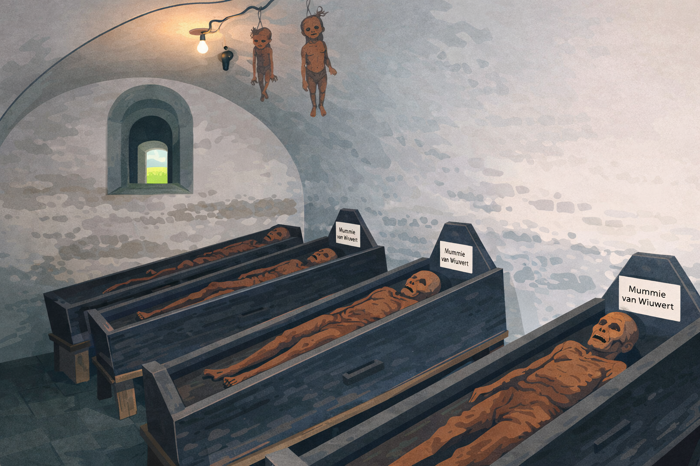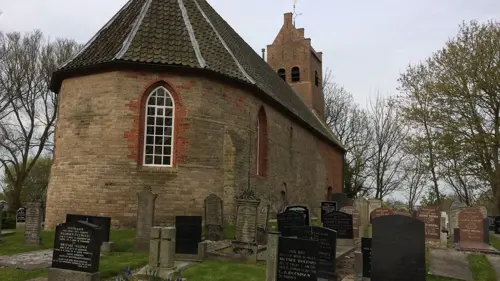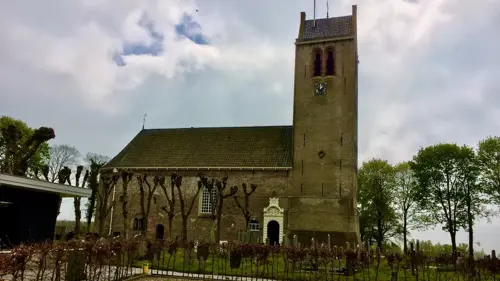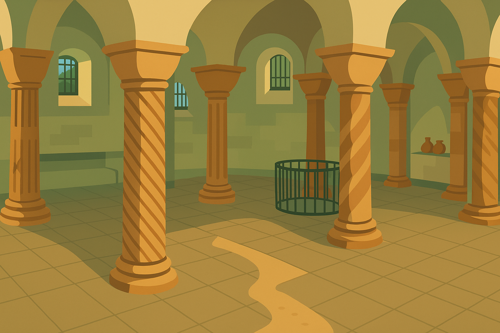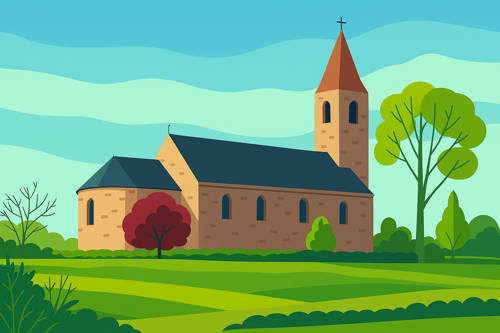




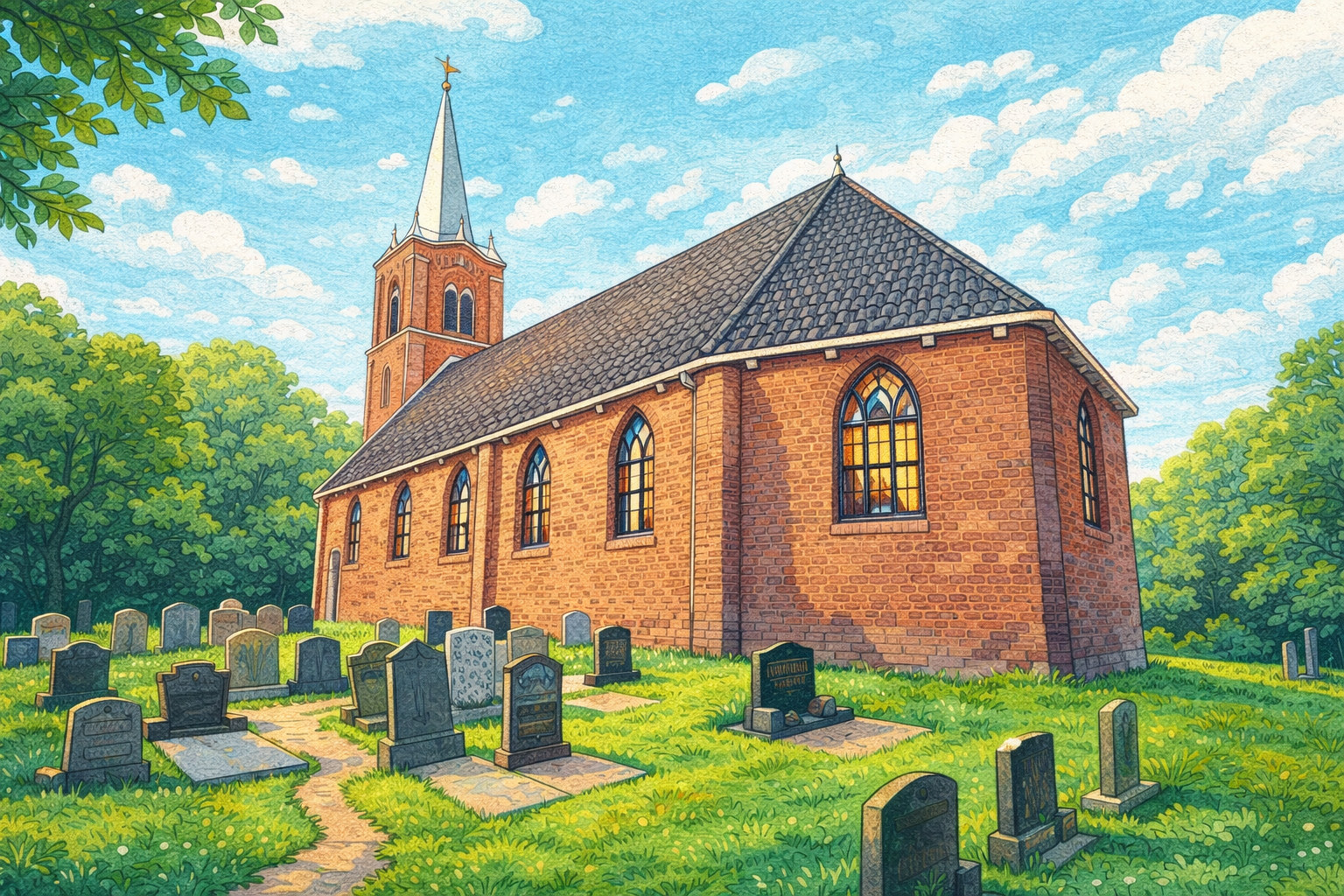








Situated amid Friesland’s calm farmlands, the church itself, built predominantly in the 13th century with some 19th-century modifications and a tower from 1888, has a modest exterior of red brick and a simple tower set atop an ancient man-made hill called a terp. Visitors enter through the main door and then descend a short staircase inside the church nave to reach a small crypt below, where four naturally mummified bodies remain displayed in their original coffins behind glass panels. The surrounding landscape features open skies and green fields, with other medieval villages and historic sites nearby.
Archaeological and Historical Findings
The mummies were uncovered in 1765 when carpenters renovating the church accidentally found a hidden crypt containing 11 coffins. Unusually, the bodies showed minimal signs of decay, attributed to specific environmental factors such as soil type, ventilation, and the microclimate beneath the building, which together enabled natural mummification. Historical evidence suggests that many of those buried here were associated with the 17th-century Labadist community, a Protestant sect known for communal living, which had settled in Wieuwerd and resided at the nearby Walta State manor. The crypt was initially constructed in 1609 by the affluent Walta family, whose members and later the Labadists used it for burials. While 11 mummies were originally discovered, only four remain on public display today.