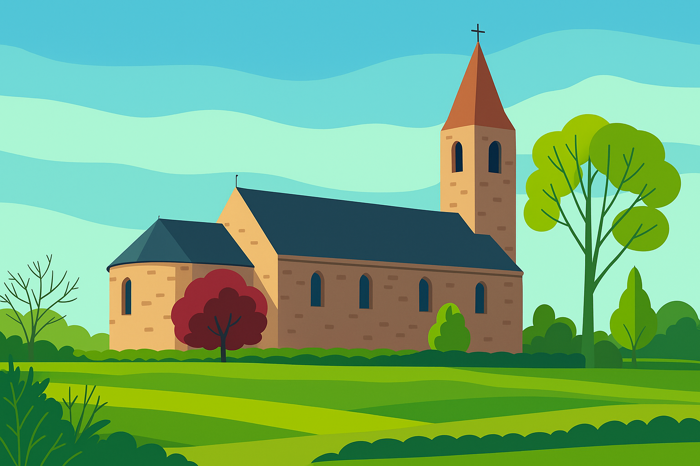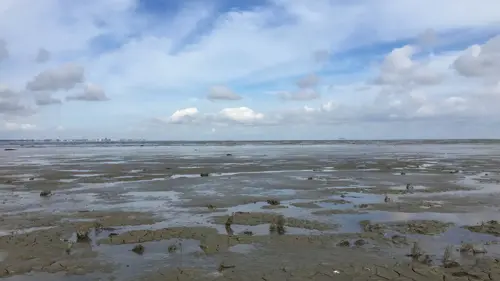




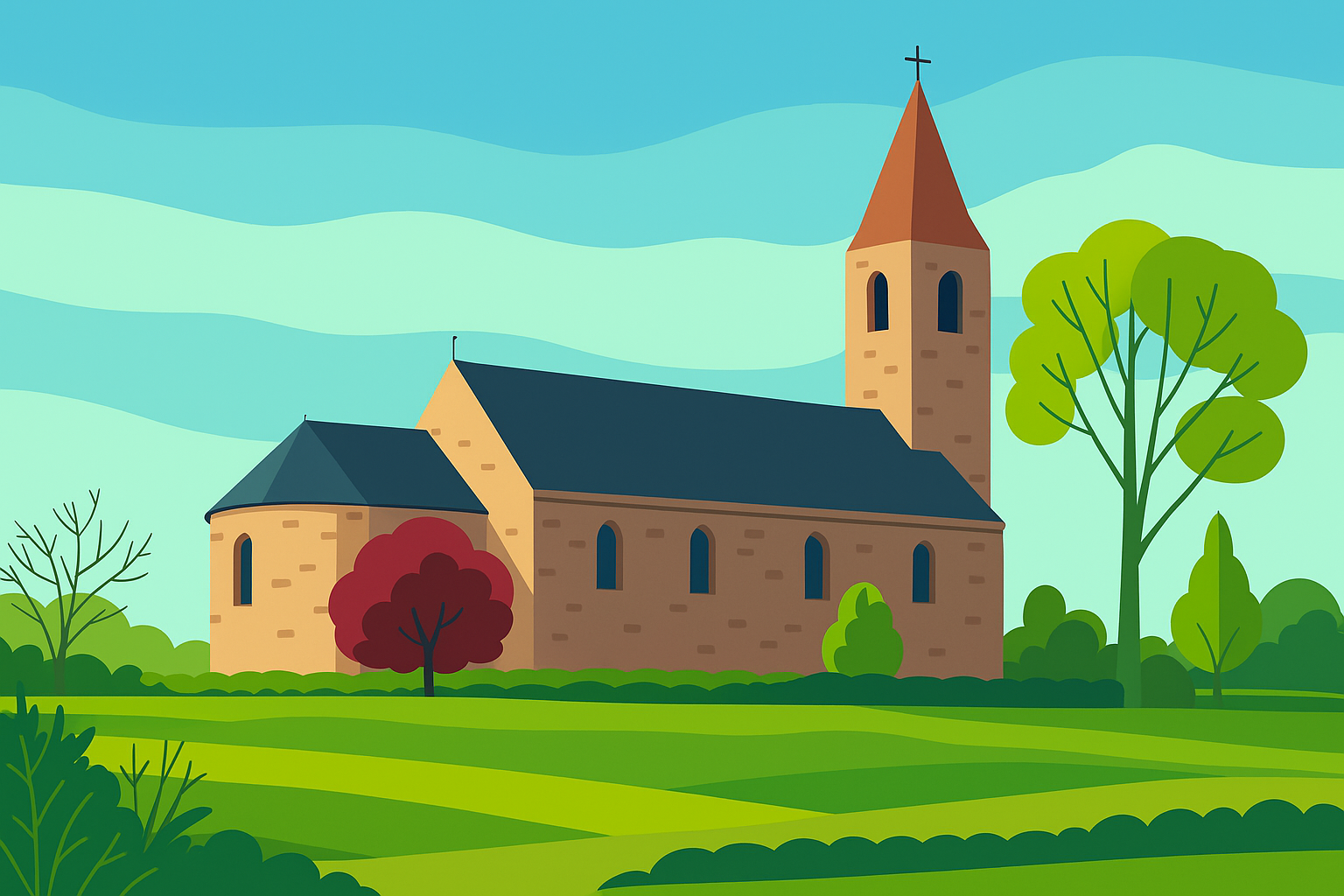







The Michaëlskerk is a Romanesque-style church known for its peaceful countryside surroundings and its prominent position atop a terp, a man-made mound designed historically to safeguard against flooding from the North Sea. Its slender tower and robust stone walls dominate the level polder terrain. The church’s uncomplicated yet commanding form is complemented by the traditional farm buildings and protective dikes nearby, echoing the island character that Wieringen once held. Close to the church, landmarks like the Wieringer Eiland Museum and the site of the Viking Treasure discovery offer additional insight into the area's archaeological and cultural background.
Archaeological and Historical Findings
Constructed initially in the early 12th century, Michaëlskerk was built using a mixture of locally sourced tuff (a volcanic stone) and later brick, materials typical for the region and era. The oldest sections, including the nave and chancel, remain mostly intact, featuring solid masonry and narrow windows typical of Romanesque architecture. The church has seen various modifications over time, such as alterations to the choir and the replacement of an earlier western tower with a sturdier brick tower in the 13th century. Its orientation, with the choir facing east, aligns with common medieval Christian church design in the Netherlands, following a traditional east-west axis. The foundation on a terp reflects a regional tradition in the Wadden Sea area where inhabitants raised mounds to create safe, flood-resistant living spaces dating back to pre-medieval periods. Archaeologists and historians have identified original foundation elements and grave markers on site, confirming the church’s continuous religious role and significance to the local community for over eight centuries
Accessibility and Visitor Information
Michaëlskerk is clearly visible from Oosterland village, situated atop its terp at the edge of the settlement. Visitors can reach the church from the nearest parking area by a short paved path of less than 150 meters, which includes a gentle ascent of the mound. While mostly accessible, the route may be somewhat challenging for those with limited mobility due to uneven surfaces and the incline. Admission is generally free, though voluntary donations are encouraged to help with the church’s upkeep.