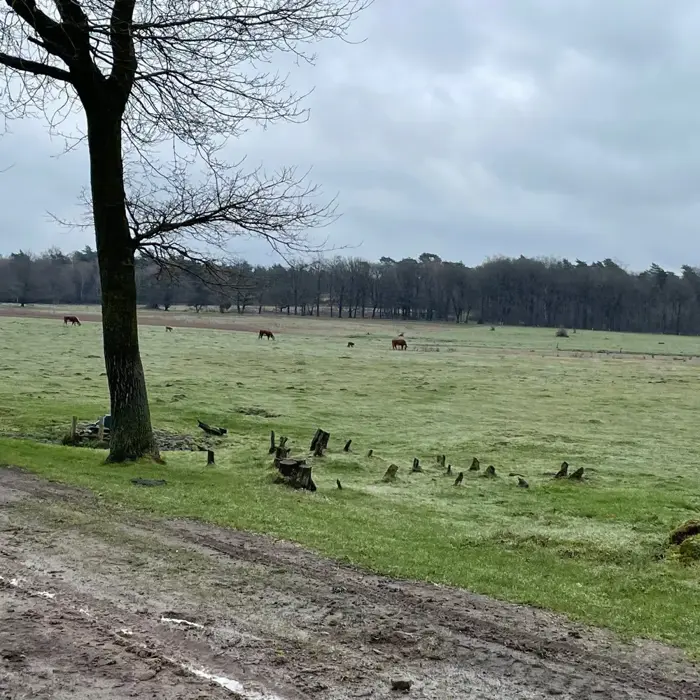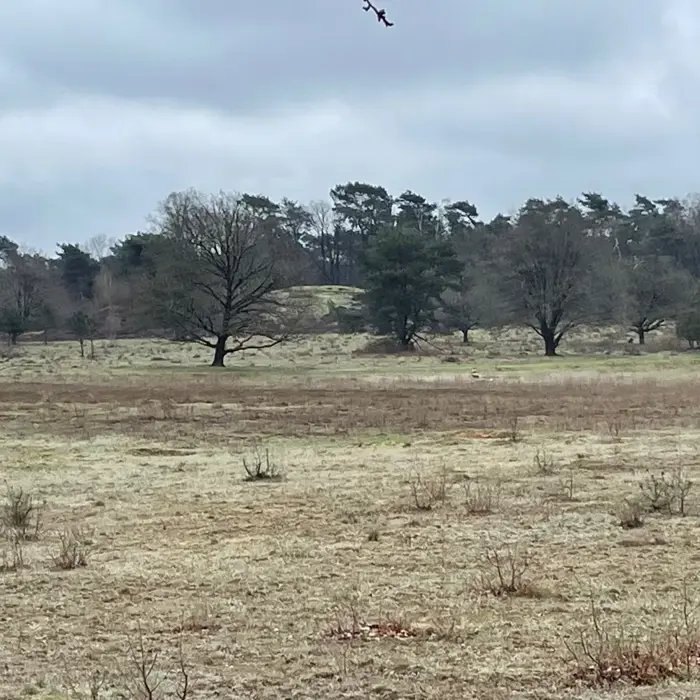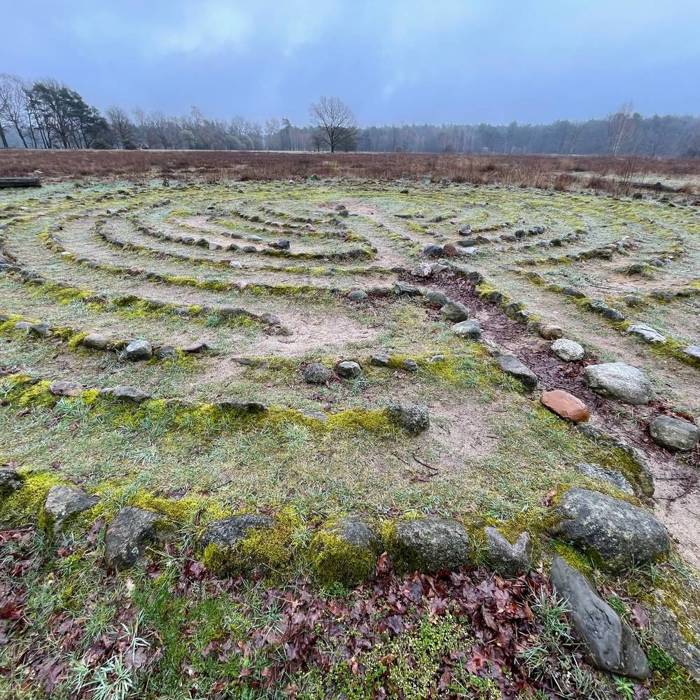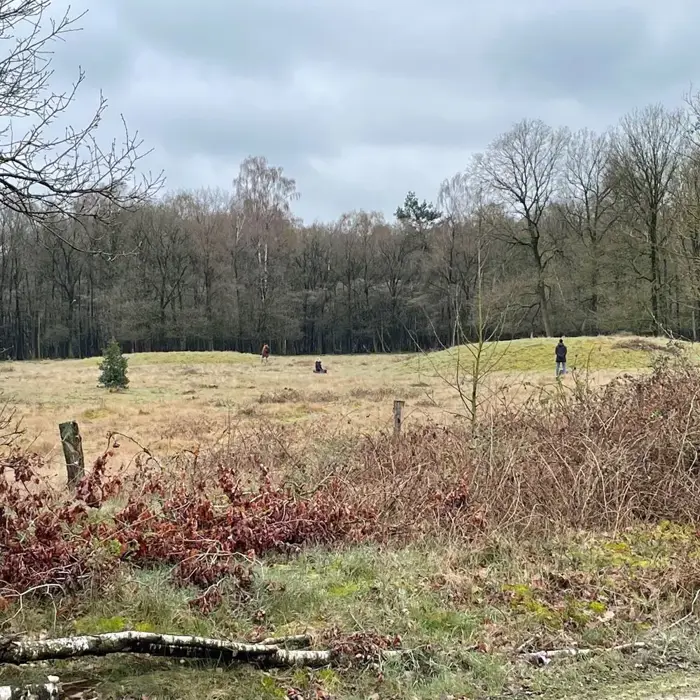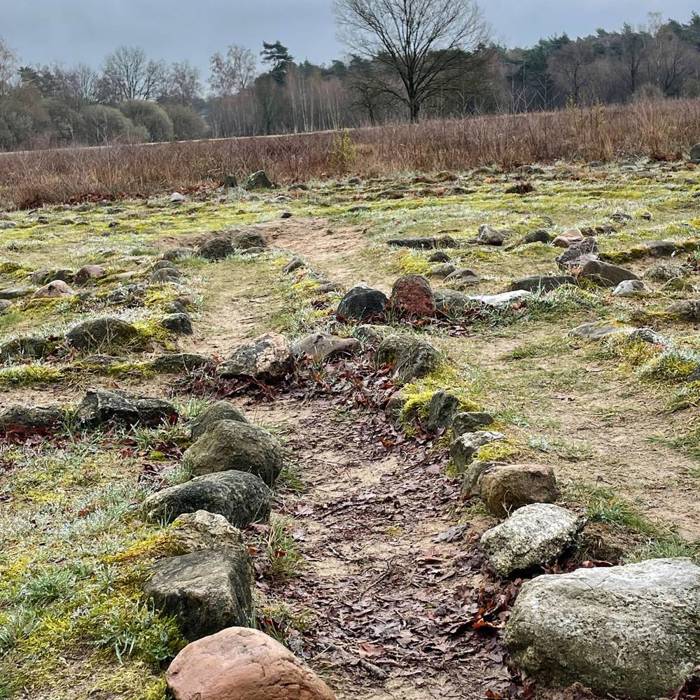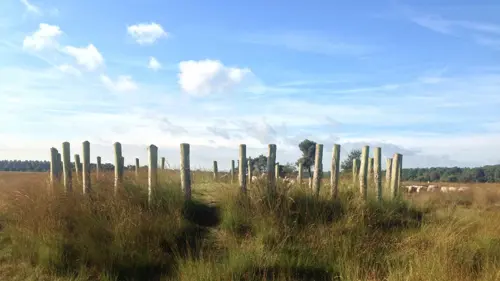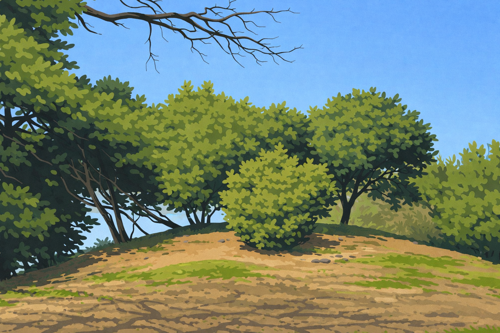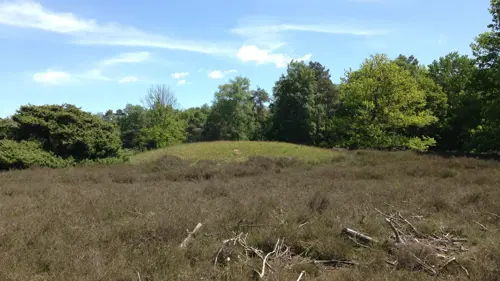










The burial mounds (grafheuvels) in De Borkeld stand out prominently within this nature reserve located in eastern Netherlands. At least nine prehistoric burial mounds are present, visible as rounded rises across the open heath. Surrounding these mounds, the landscape features a patchwork of purple heath, sandy trails, and native tree species. De Borkeld is notable for its archaeological significance, with similar burial sites found in nearby areas such as Hijkerveld and other sandy regions throughout the Netherlands.
Archaeological and Historical Findings
Research indicates that these burial mounds, or tumuli, date from the late Neolithic through the Bronze age, approximately 4,000 to 6,000 years old. Excavations at comparable sites within the Netherlands show these mounds were constructed using sand and heather turf and served as burial places for local populations. Evidence suggests that some mounds contain single burials, while others include multiple interments over successive generations. The surrounding land may have been cleared intentionally to accommodate ceremonial or funeral activities. Additionally, findings in similar sites reveal the existence of ancient agricultural plots known as Celtic fields, pointing to prolonged human settlement and farming practices during prehistoric times.
Accessibility and Visitor Information
Parking is possible at Borkeldweg 17, in Markelo.The burial mounds can be accessed via marked walking paths originating from the entrance of the De Borkeld reserve. The primary trail to the most intact mounds covers approximately 1 to 1.5 kilometers over sandy and somewhat uneven ground. The terrain is mostly flat with mild slopes passing through heathland and sparse woodland. Although the path is unpaved, visitors who are reasonably mobile can navigate it; however, those with limited mobility may find the sandy patches and natural surfaces challenging. Entry to De Borkeld nature reserve and access to the burial mounds are free of charge.