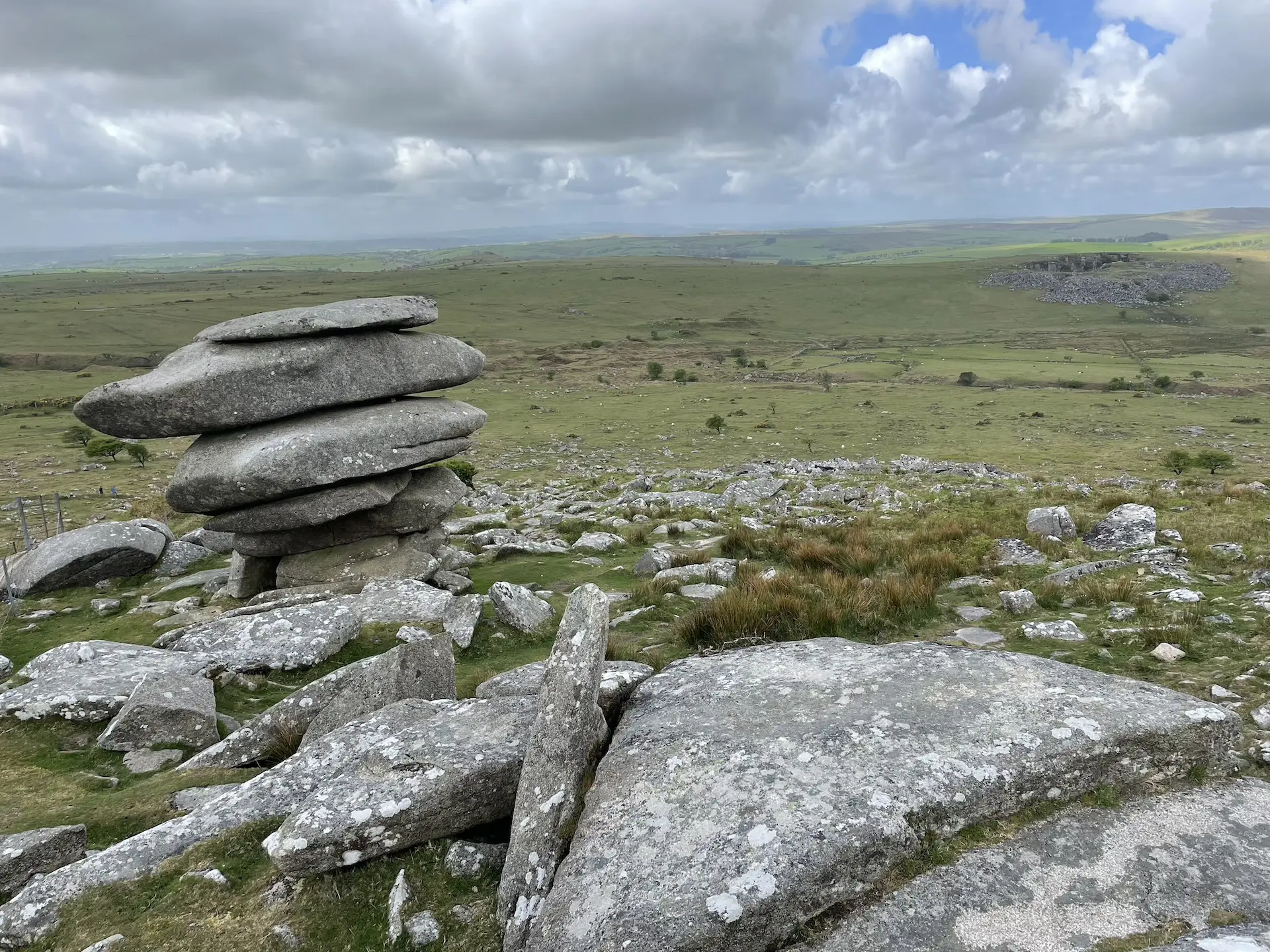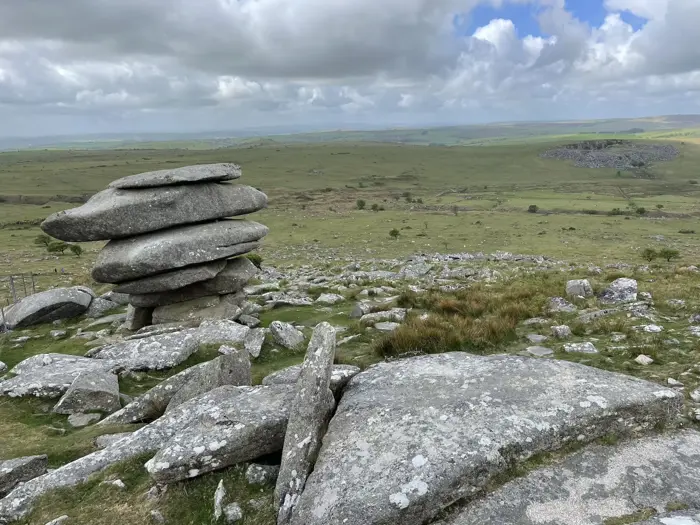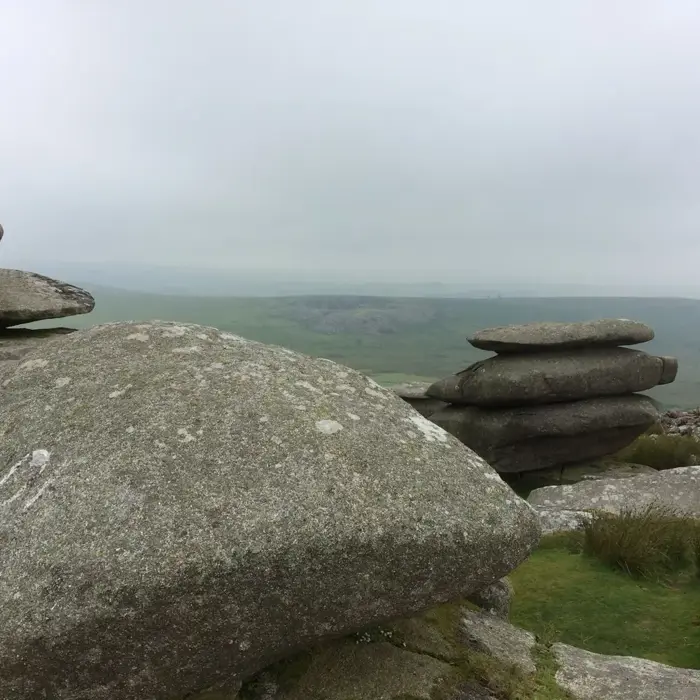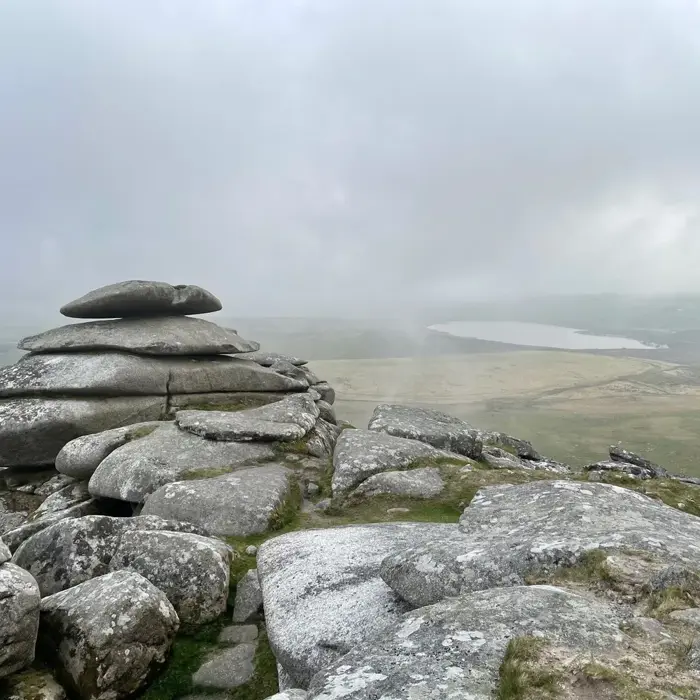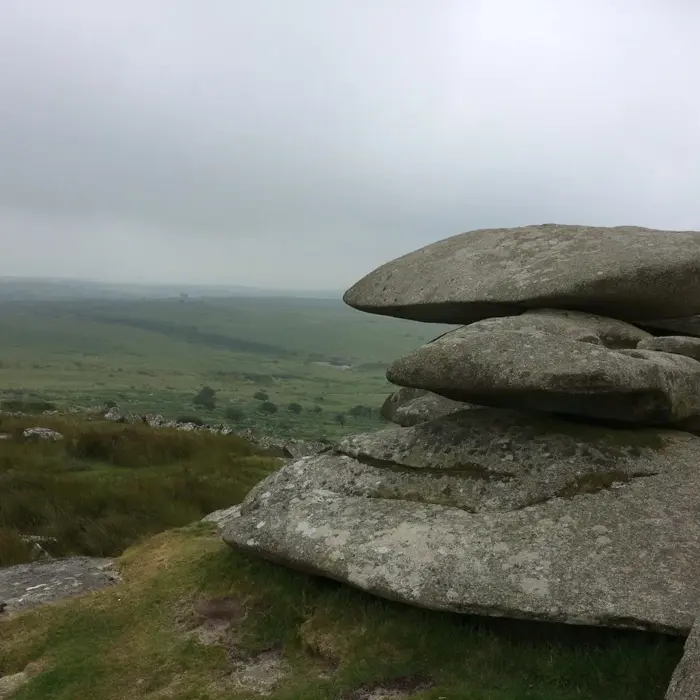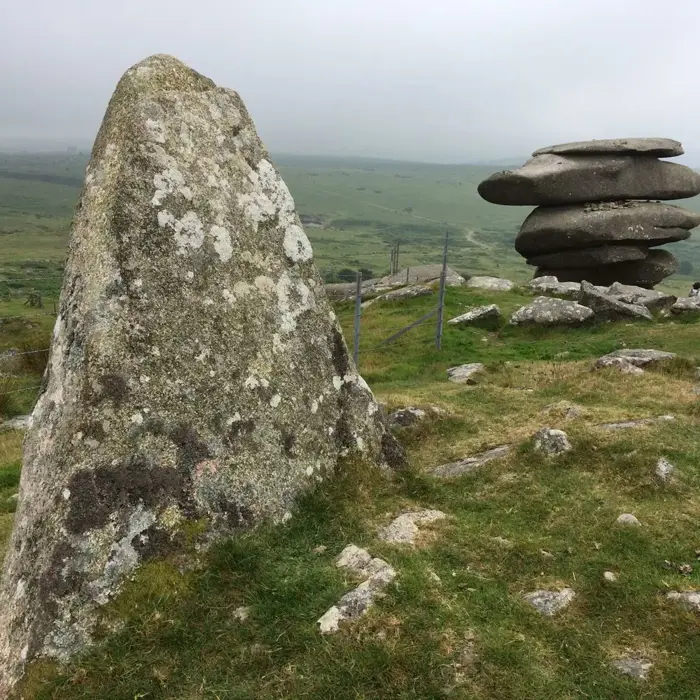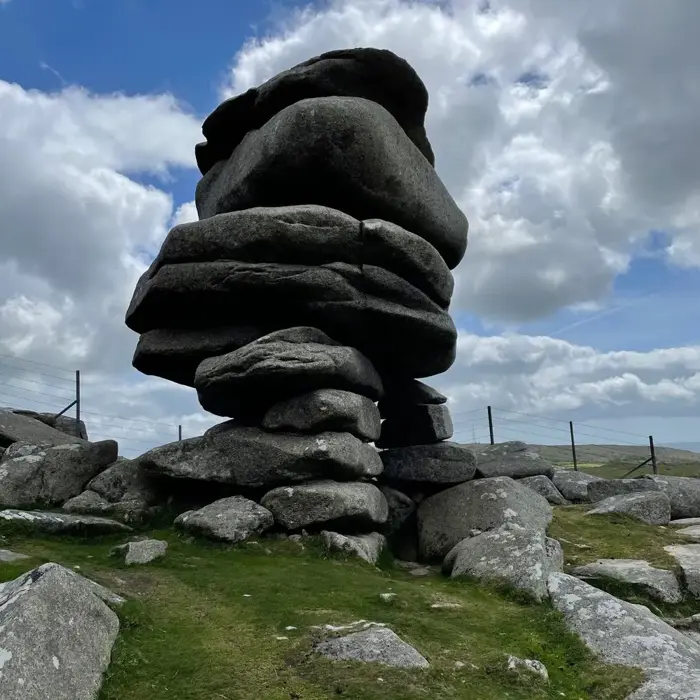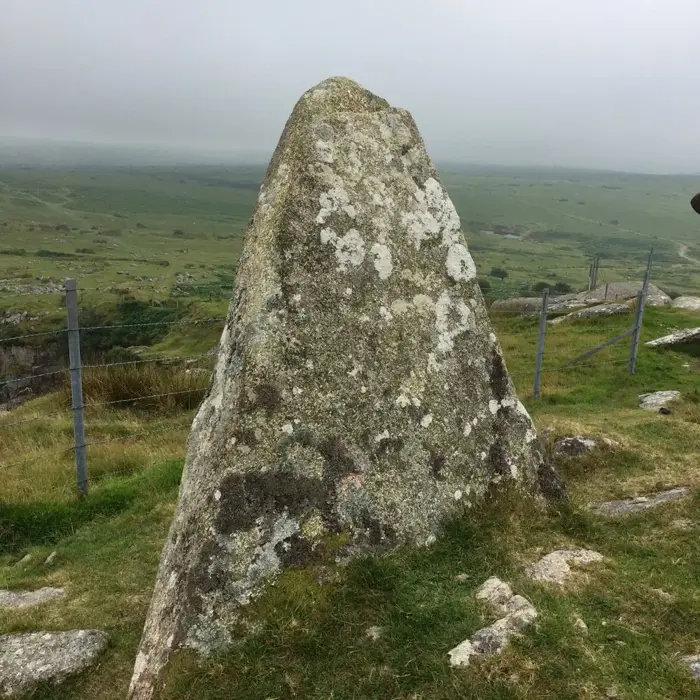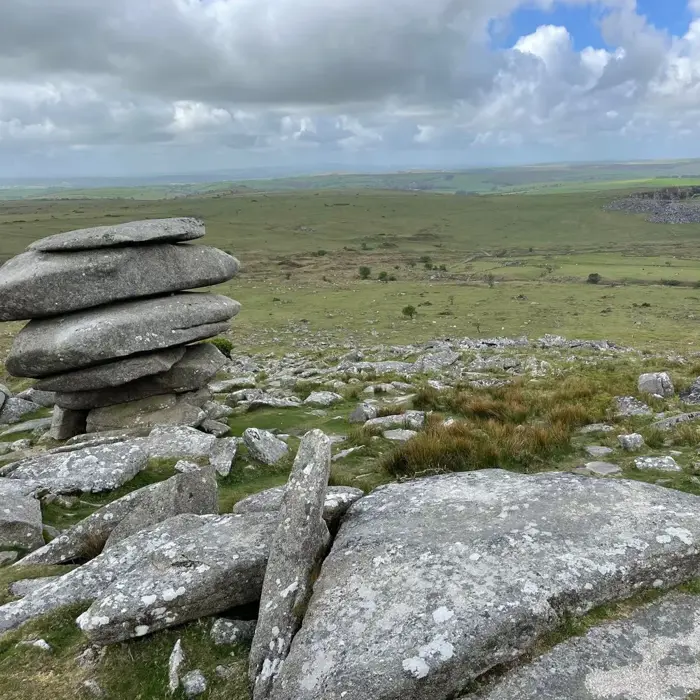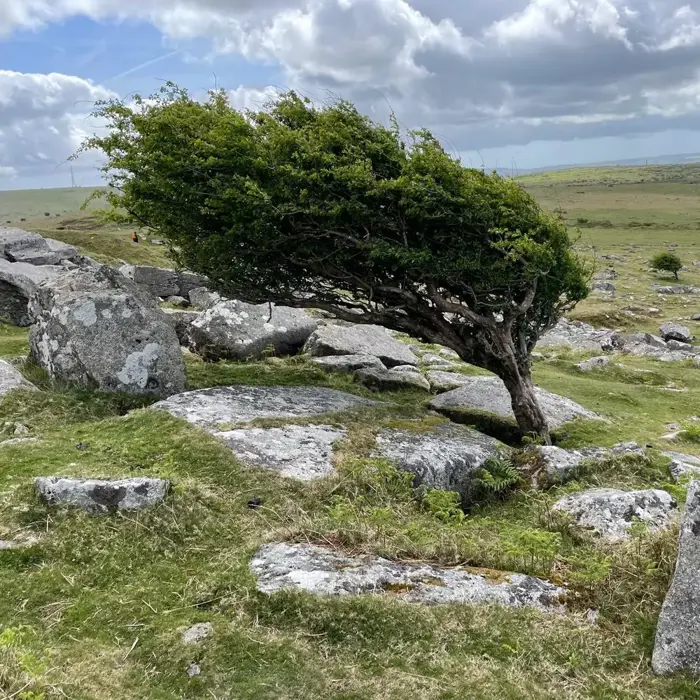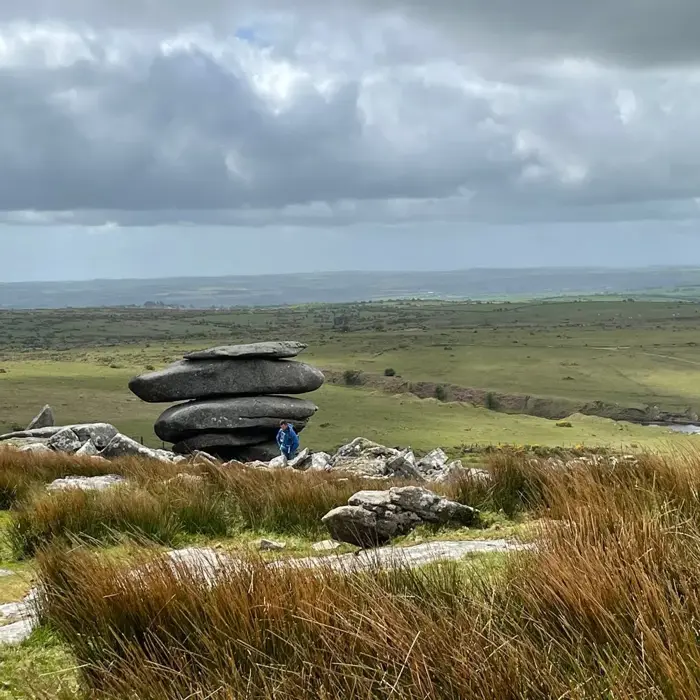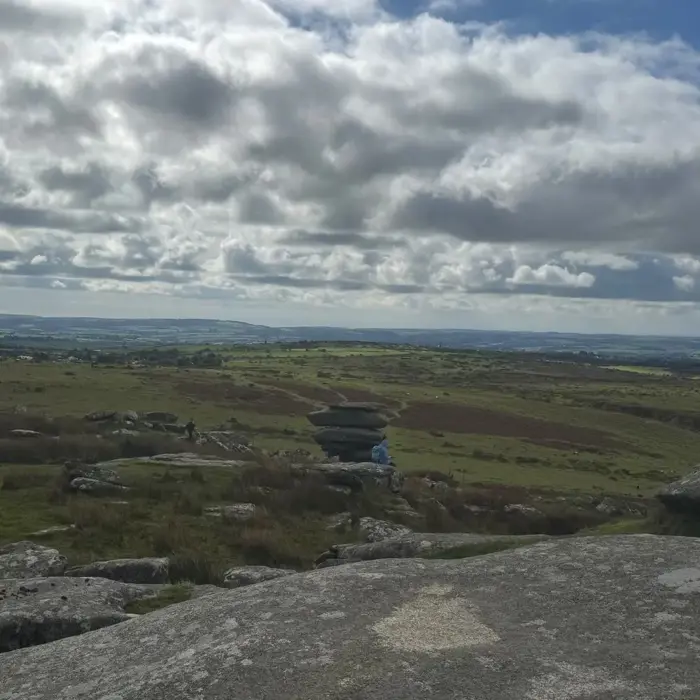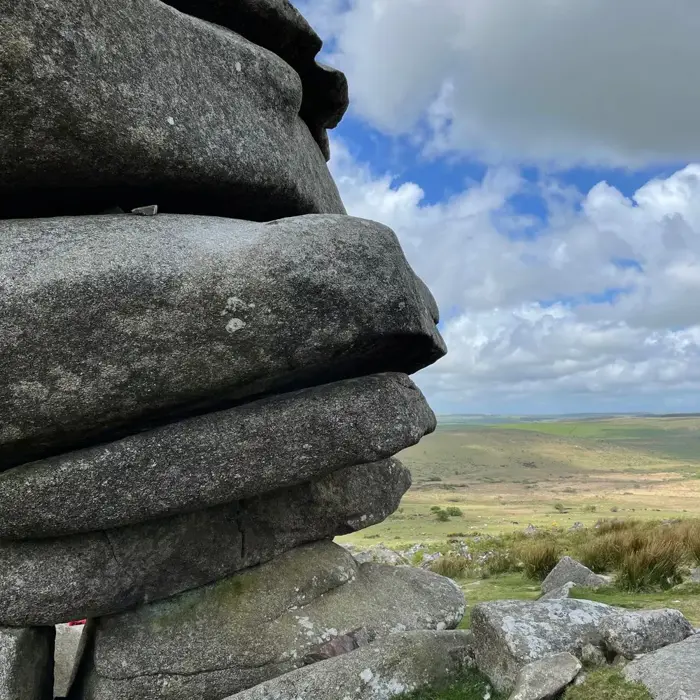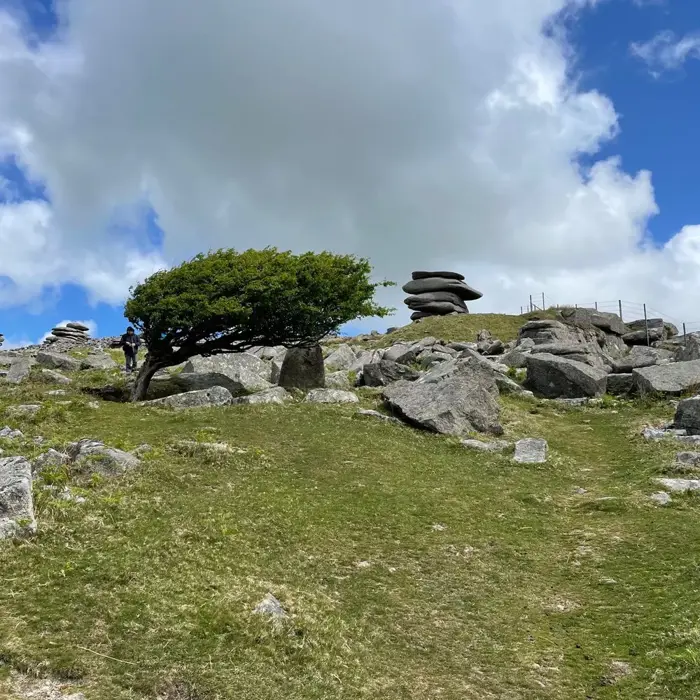




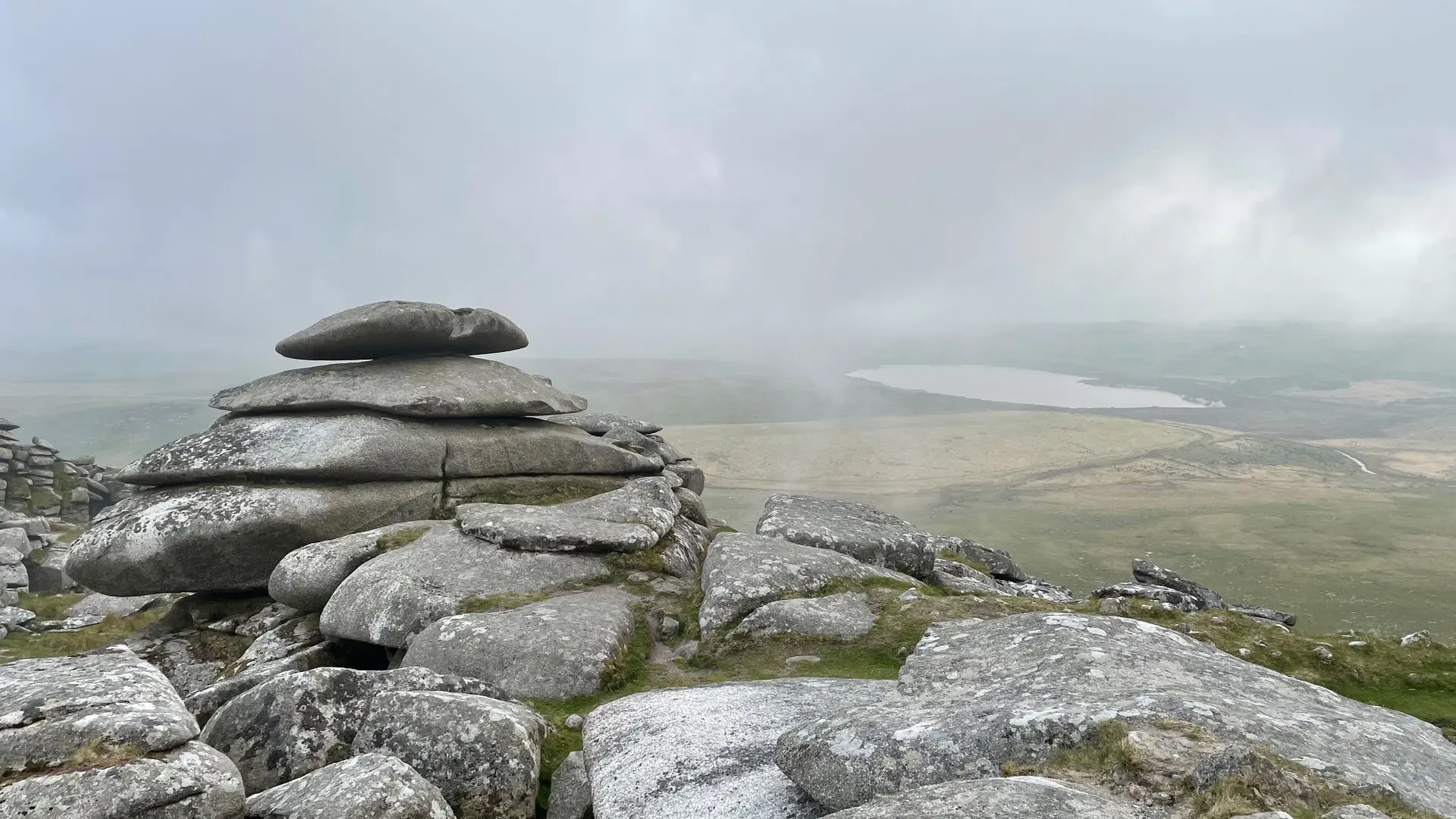








Cheesewring is a naturally occurring granite tor found on the side of Stowe’s Hill, just north of the village of Minions on Bodmin Moor. The formation consists of seven massive slabs of granite, stacked to a height of approximately 10 metres. Unusually, smaller stones form the base, with much heavier blocks balancing above them, giving the tor a dramatic, top-heavy profile. The surrounding landscape is open moorland dotted with other granite outcrops, remnants of mining heritage, and the nearby Cheesewring Quarry, a historic site that once supplied stone for major construction projects such as the Tower Bridge in London. The Neolithic encampment of Stowe’s Hill, with its ancient collapsed walls, encircles the summit, adding further archaeological interest to the site.
Archaeological and Historical Findings
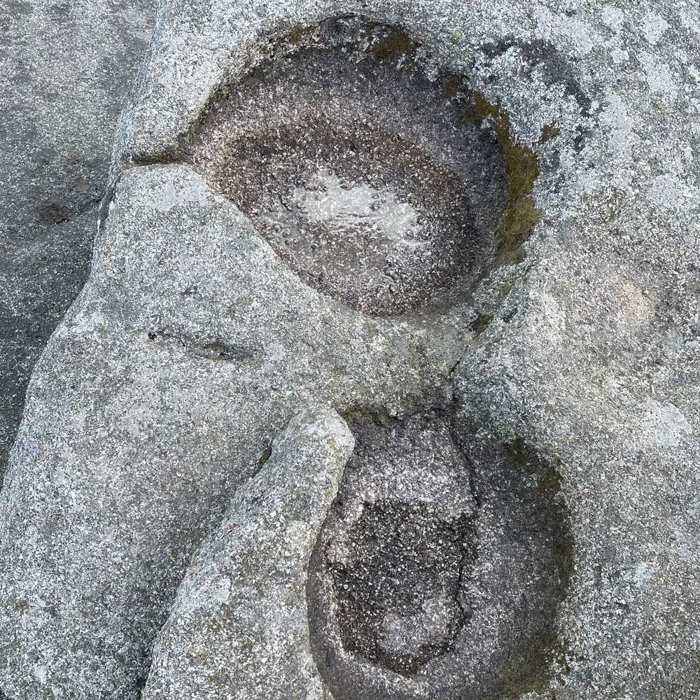
The Cheesewring tor on Stowes Hill formed through the natural weathering of granite over millions of years, as wind and water gradually eroded the rock along its natural joints. The tor’s name comes from its resemblance to a traditional press used for making cheese. Although once associated with Druidic activity, modern understanding identifies the structure as a product of geological processes rather than human construction. The site is adjacent to Cheesewring Quarry, which operated from the mid-19th to early 20th centuries and played a significant role in local industry. Granite from the quarry was used for notable projects, including the cladding of Tower Bridge in London. At the summit of Stowe’s Hill are the remains of a Neolithic enclosure, featuring collapsed stone walls that date back roughly 6,000 years, evidence of early human settlement in the area.
Legends, Folklore and Myths
Cheesewring is the subject of a well-known Cornish legend involving a contest between the giant Uther and Saint Tue. According to the story, when Christianity began to spread in Cornwall, the giants who inhabited the high places were angered by the arrival of saints. Uther, the giant, challenged Saint Tue to a rock-throwing contest to decide who would remain. If Uther won, the saints would leave Cornwall; if Saint Tue won, the giants would convert to Christianity. Saint Tue succeeded, and the resulting stack of rocks became known as the Cheesewring. This tale remains a popular element of Cornish folklore and is closely tied to the site’s cultural identity.
Accessibility and Visitor Information
Visitors can reach Cheesewring by parking in one of the car parks in Minions village. From there, a well-trodden path leads north across open moorland to the base of Stowe’s Hill. The walk is approximately 1 kilometre, with a steady incline and uneven, rocky terrain typical of moorland. The approach is not paved, and the final ascent to the tor involves traversing grassy and sometimes boggy ground, making it moderately challenging for those with limited mobility. Visiting the site is free of charge.