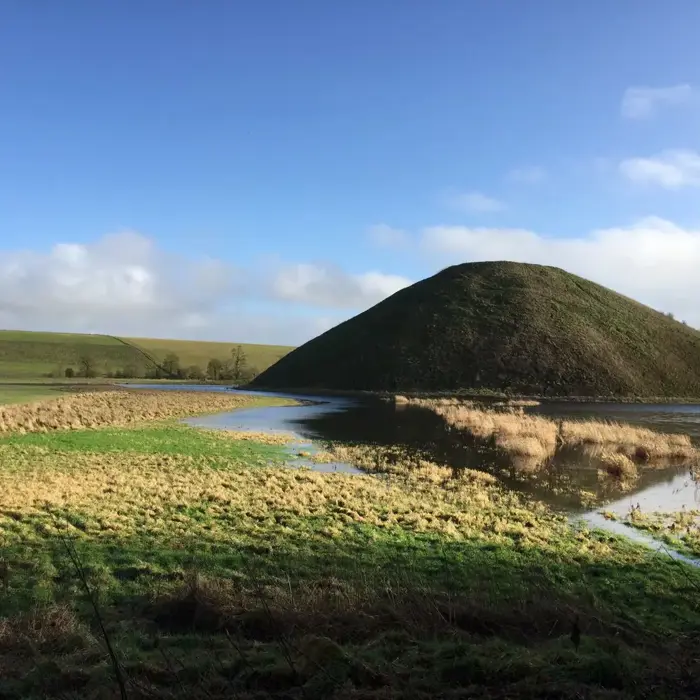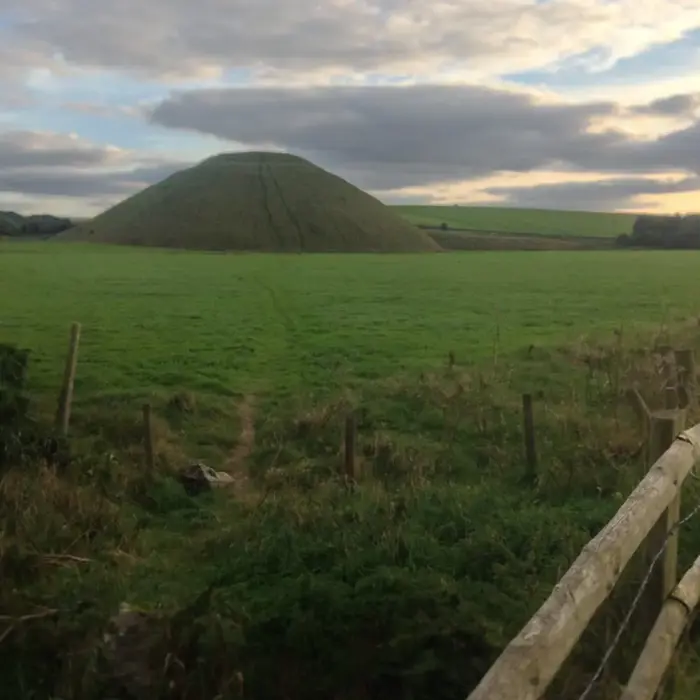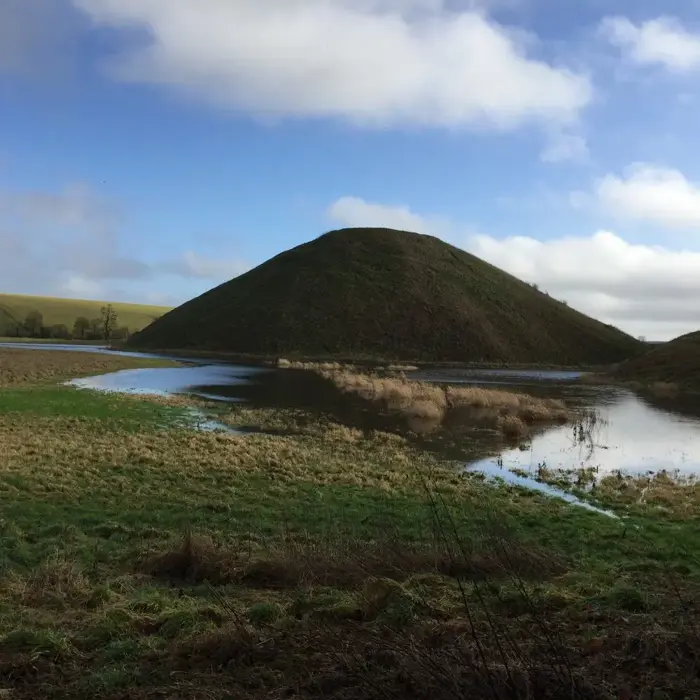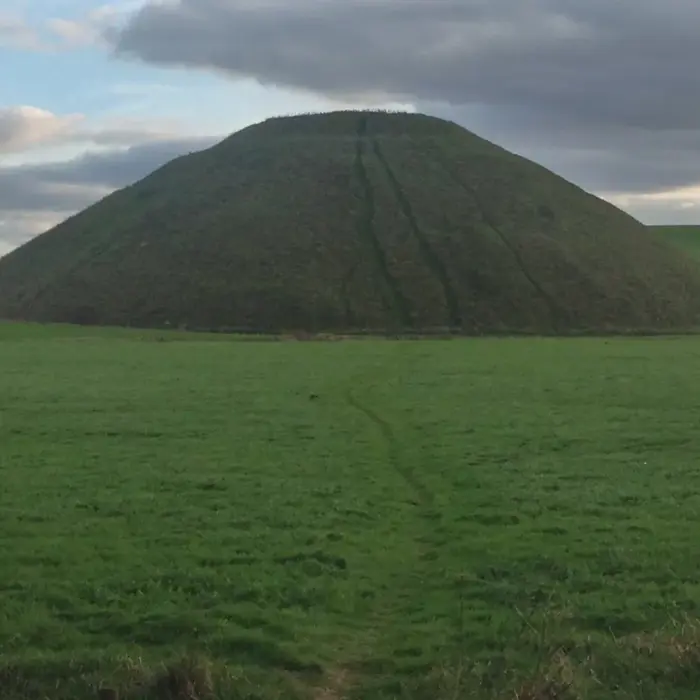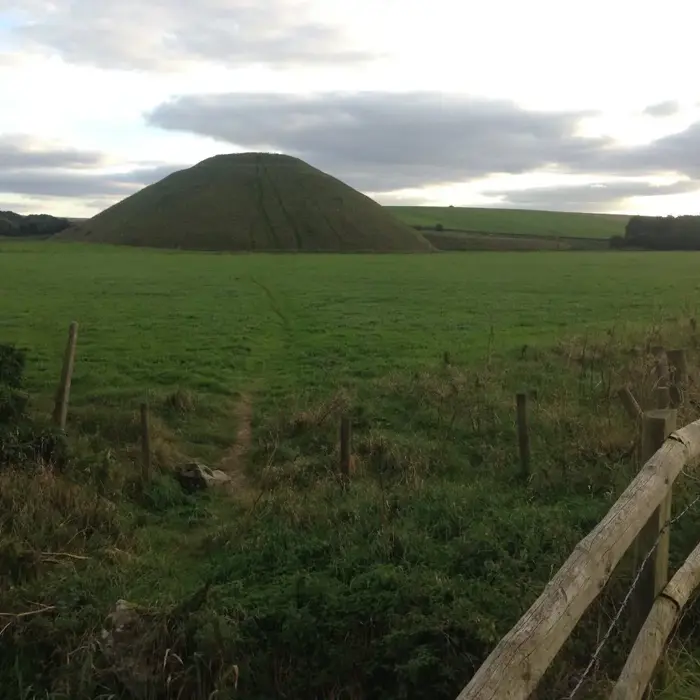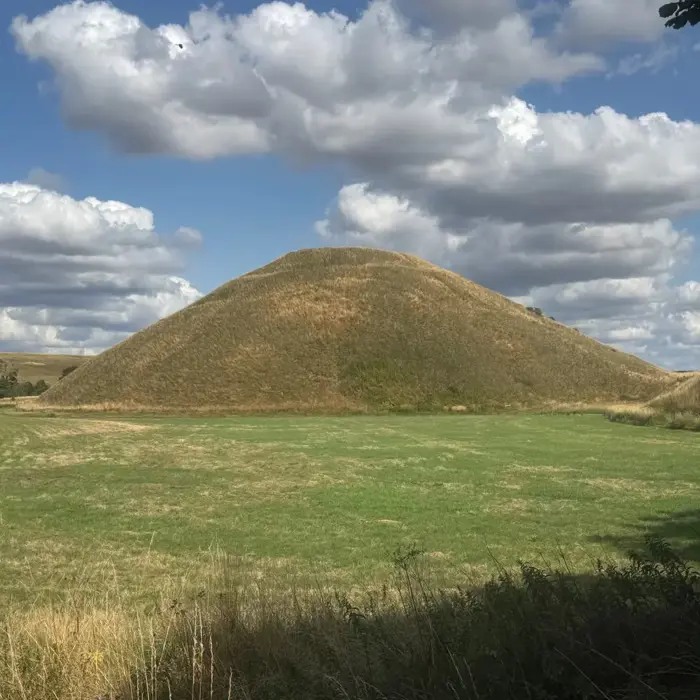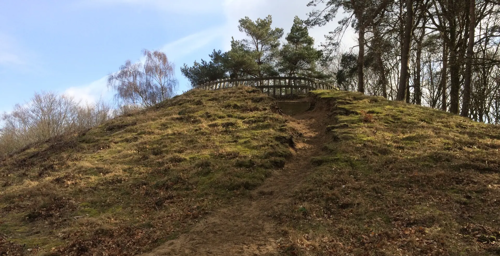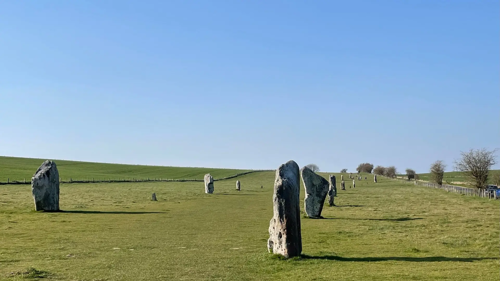




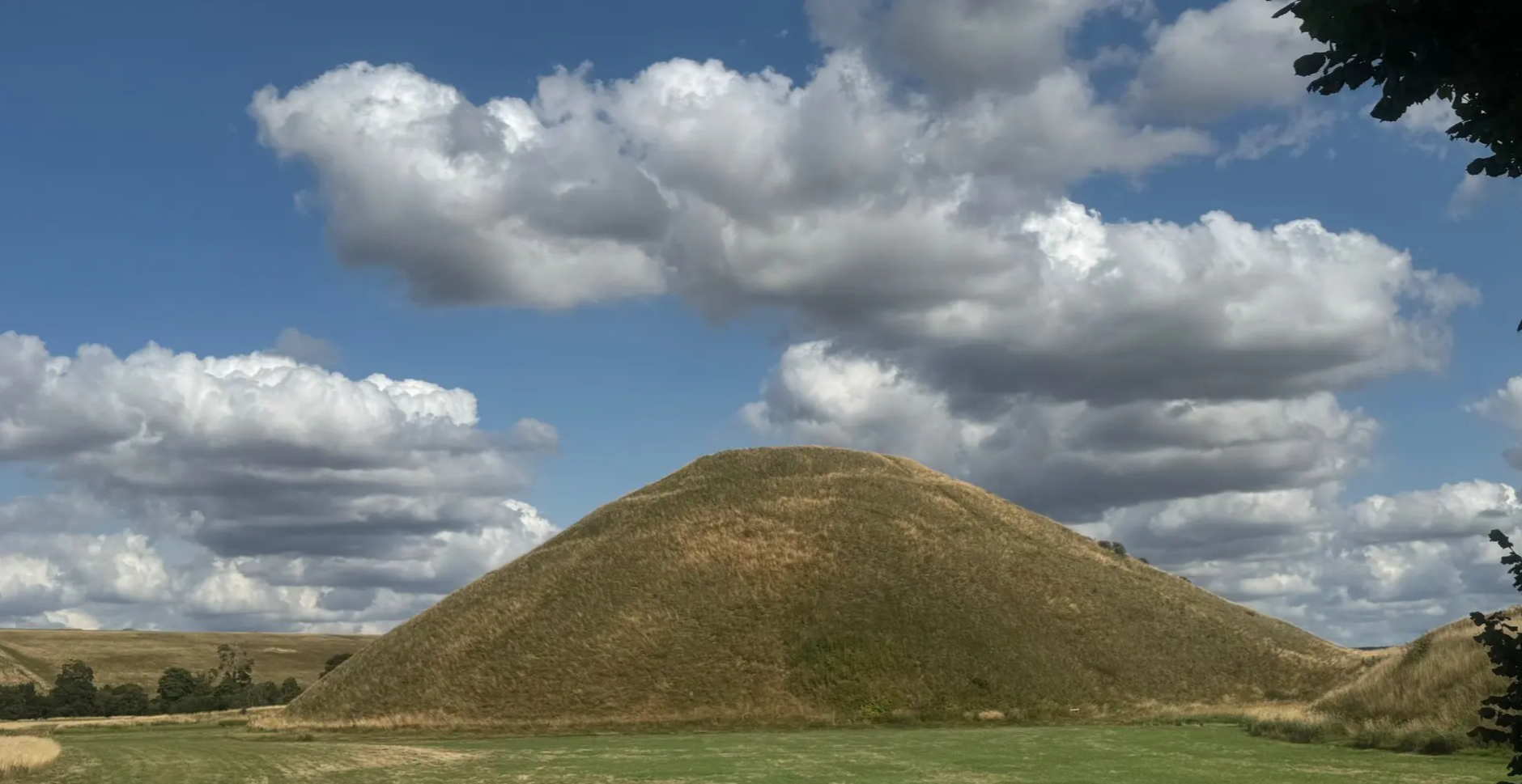








Silbury Hill is a large earthen mound, covered in grass and featuring a flat summit, reaching roughly 31 meters in height. It is recognized as the largest man-made prehistoric mound in Europe. Its rounded silhouette overlooks the Kennet Valley, with smooth slopes rising to a fenced plateau that protects the site from damage. The green mound stands out against the cultivated fields around it, forming a distinctive landmark visible from nearby roads and footpaths. In its immediate area lie other significant prehistoric monuments, including the Avebury Stone Circle and West Kennet Long Barrow, all of which contribute to the wider Avebury World Heritage Site landscape.
Archaeological and Historical Findings
Studies and excavations indicate that Silbury Hill was built in phases over time, beginning in the late Neolithic era and into the early Bronze Age, with construction likely finishing around 2400 BCE. Its formation involved the layering of chalk, gravel, and earth, assembled through communal labour using basic tools. Despite numerous investigations, including tunnels dug into the mound’s core, no human burials or major artefacts have been discovered within it, adding to the ongoing mystery about its original purpose. The scale of the construction reflects a highly organised community effort and significant resource investment, showing the mound’s importance in prehistoric society. Techniques and materials found at Silbury Hill align closely with those used in nearby monuments, suggesting a deliberately unified monumental landscape.
Legends, Folklore, and Myths
Over time, a number of local legends have become associated with Silbury Hill. One popular tale suggests that a hidden king, sometimes referred to as King Sil or a similar figure, is buried within the mound along with treasures such as golden armor or a horse. Variations of this story are found in historic antiquarian writings from the 18th and 19th centuries as well as in regional folklore collections. Another legend tells of the Devil attempting to bury the town of Marlborough beneath the earth, dropping material here after being stopped by clergy. These stories, documented by authors like Kathleen Wiltshire in her collections of Wiltshire folklore and cited by local heritage groups, remain part of the site's cultural heritage though no archaeological findings support them.
Accessibility and Visitor Information
Visitors commonly access Silbury Hill from designated viewing spots near the A4 road, which include parking facilities. From the car park, the mound is reached by a gently level path about 200 meters long. The paths are well-kept and mostly flat, making the area readily accessible to most visitors. The surrounding landscape features open fields and gentle slopes. To protect the mound, visitors are not allowed to climb to its summit but may enjoy clear views from the base, which offers a close perspective on this remarkable monument. Entry to Silbury Hill is free, with only parking subject to a small fee.