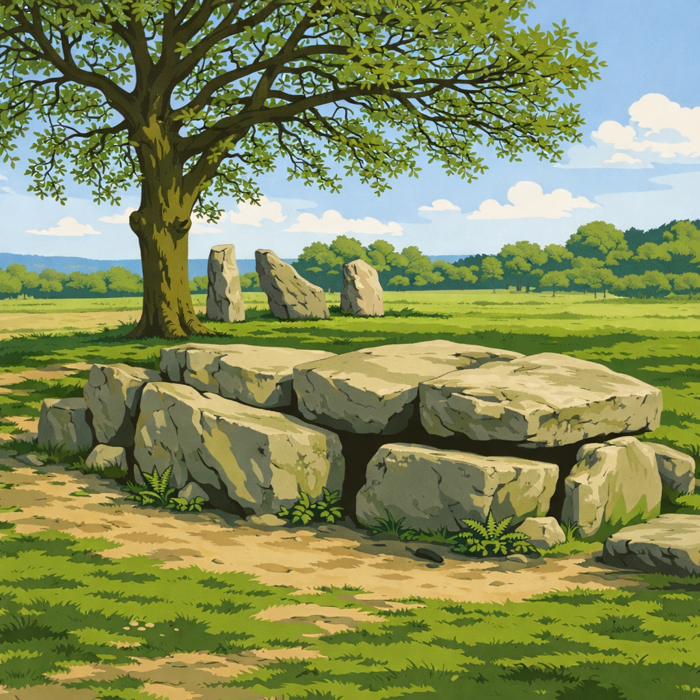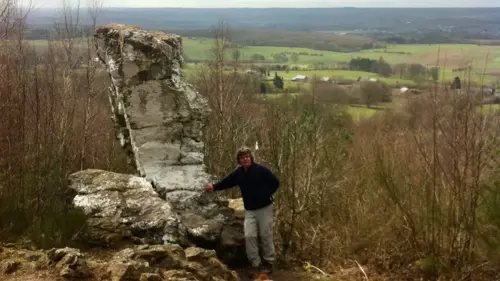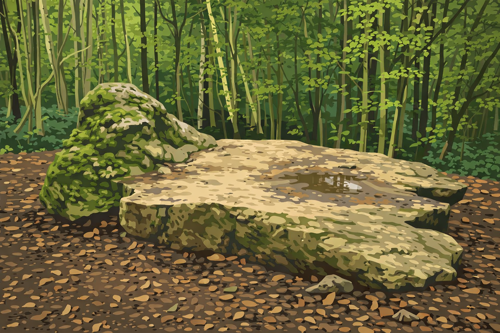




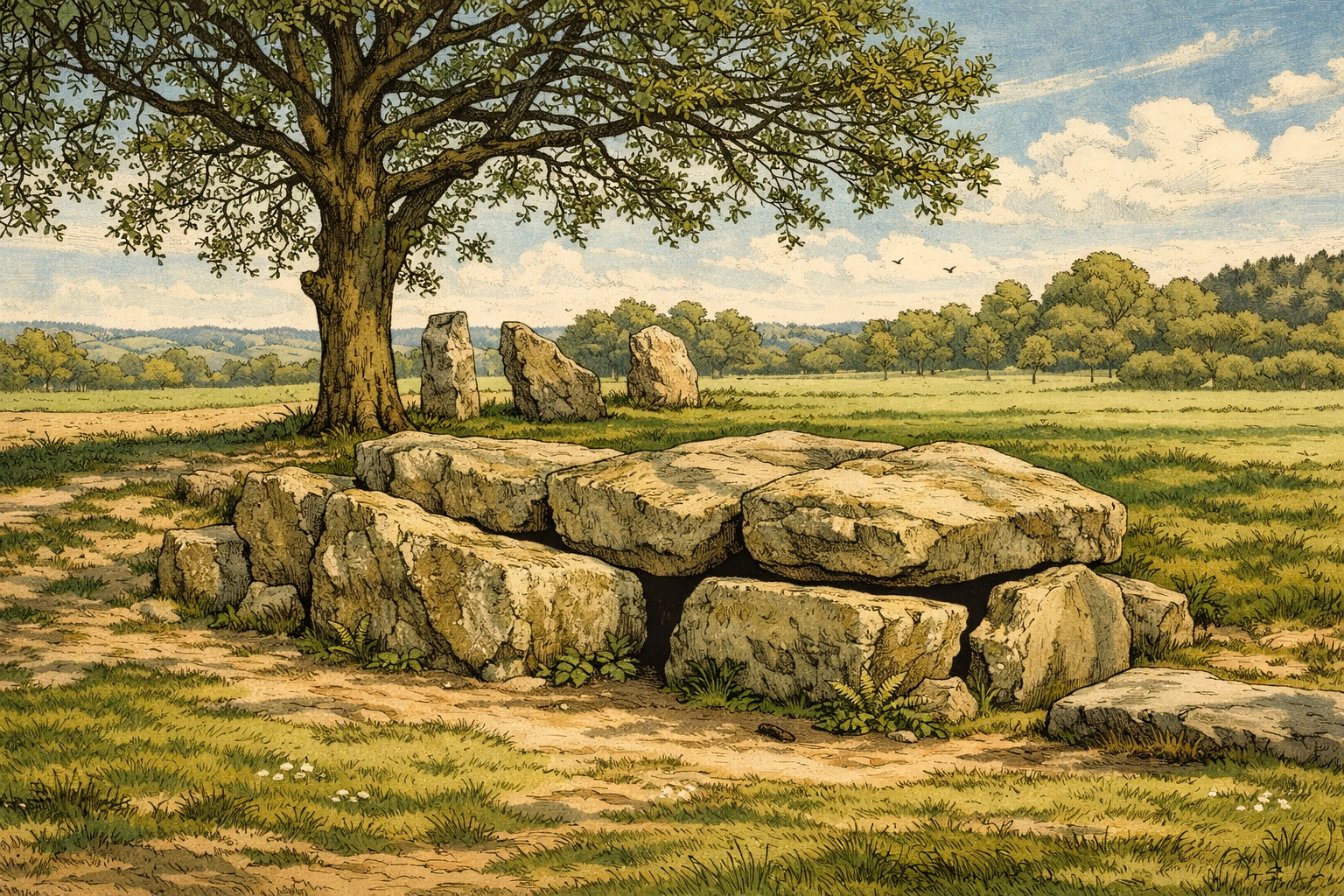







Located in the terrain south of Wéris village, Dolmen Sud Oppagne is a gallery grave featuring a burial chamber about 5 meters in length, ranging from 1 to 1.8 meters in width and standing between 0.7 and 0.9 meters tall. The chamber's structure includes four vertical slabs supporting three horizontal capstones, with an additional rear slab at the back. Access to the chamber is granted through an arched opening set in a port-hole slab. A short, uncovered porch extends from the entrance, and the entire monument is positioned within a trench dug across the hillside, measuring 1 to 1.5 meters wider than the main structure. Smaller stones were used to fill gaps and seal the burial chamber. Around the dolmen, a paved path made of grès-psammite and limestone plaquettes encircles it, with one side preserved intact. In the nearby fields, five menhirs (four of which were re-erected in 1997), stand, marking the site's surroundings characteristic of this region.
Archaeological and Historical Findings
First identified in spring 1888 by Félix Lambert, this site was purchased by the state in 1890 and has undergone several excavations: in 1906 by A. de Loë and E. Rahir, in 1987 by the Service national des Fouilles, and between 1996 and 1997 by the Direction de l'Archéologie de la Région wallonne, which became the site's owner in 2000. The tomb dates back to the Neolithic era, approximately 3200–2600 BCE, and contained remains from at least ten individuals of various ages, confirmed by bone fragments. Artifacts recovered include stone scrapers, hammerstones, a tanged arrowhead, and Bell Beaker culture pottery (circa 2200–2000 BCE), suggesting the site was reused later. Restoration efforts in 1997 rebuilt a collapsed porch, reattached a broken entrance slab, and aimed to return the dolmen to its original condition while introducing safety enhancements.
Accessibility and Visitor Information
To visit, head south from the village of Wéris along marked local paths toward Oppagne; the dolmen is about 1.5 kilometers from Dolmen Nord (Wéris I). The site is situated in an open field without an on-site visitor center. Visitors should expect a brief walk over uneven grassy ground with some slopes following the hillside’s contour where the dolmen is set within the trench. There are no constructed steps, and parts of the terrain may show ruts from former agricultural use. Entry is free and unrestricted outdoors, but visitors are asked to respect barriers, refrain from climbing on the stones, and consider guided tours starting at the Maison des Mégalithes in Wéris (reservations recommended).