







This is the story of the Knights Templar, as close as possible to what historians actually know about them. At the end, you will find a list of Templar sites in Portugal and Spain.
A handful of knights with a strange plan
Around 1119, shortly after the First Crusade, a small group of French knights presented themselves to King Baldwin II of Jerusalem. Their leader was Hugues de Payns: he proposed a brotherhood to protect pilgrims on the perilous routes to the Holy City. The king and the Patriarch of Jerusalem agreed and provided the knights with accommodation in a wing of the royal palace on the Temple Mount. According to tradition, this is the site that lies above the ruins of Solomon’s Temple. Hence their name: the Poor Knights of Christ and of the Temple of Solomon.
In Europe, the idea sounded strange. Monks carrying swords, knights taking monastic vows…
Bernard of Clairvaux gives the Templars a voice
The answer came from Bernard of Clairvaux, the influential Cistercian abbot and scion of the French nobility. At the Council of Troyes, in January 1129, Hugues de Payns argued for an official monastic rule for his knights. Bernard, whose nephew André de Montbard was one of the founders, strongly supported him, and the council approved the rule: poverty, chastity and obedience, supplemented by the duty to defend the Holy Land. The knights were given their distinctive white cloaks. The red cross on the shoulder came later.
With Rome’s blessing, the gates of Europe swung open. Donations, land and new recruits poured in, from France to Portugal and Spain.
From Paris to La Rochelle: an empire in the making
Back in France, the Order’s power grew rapidly. In Paris, ‘le Temple’ rose up – their urban stronghold and financial centre, where monarchs secured their treasures and took out loans. On the Atlantic coast, they developed a port base in La Rochelle with a modest fleet. This consisted mainly of galleys and merchant ships for transporting knights, pilgrims and goods. Around the time of the arrests of 1307, rumours abounded that ships laden with Templar treasures had secretly set sail from here. However, there is no historical evidence to support this, and most researchers regard the story as one of the unsubstantiated legends that have always surrounded the Order’s downfall.
What is well documented, however, are the Order’s houses or commanderies that sprang up in the French interior: small islands of order and discipline in the medieval landscape. The commandery of Arville near Blois, Sainte-Eulalie-de-Cernon and La Couvertoirade on the rugged Larzac plateau, Avalleur in Champagne, and Coulommiers in Brie. These were clusters of farmsteads, chapels and fortifications where pilgrims were welcomed, horsemen were trained and revenue was collected. Some of these houses of the Order still stand today, well-preserved and open to visitors.
Southwards: border guards in Spain
Across the Pyrenees, the Templars appeared early on along the front lines of the Reconquista. In Aragon, they manned strategic castles such as Miravet, high above the River Ebro (conferred upon the Order in 1153), and Monzón, which was developed from 1143 onwards into one of their most important strongholds. Along the pilgrimage routes to Santiago de Compostela, through Navarre, León and Castile, they built and managed churches and hospices, such as the striking octagonal church of Santa María de Eunate and the imposing Castillo de los Templarios in Ponferrada. A chain of Templar outposts made the holy route just that little bit safer.
Early bankers: trading in trust
Whilst their fortresses, churches and granaries stretched from the Rhine Valley to the Atlantic coast of Galicia, a very different form of power was growing: their bookkeeping. The Templars developed a system of deposits and letters of credit whereby a pilgrim could deposit their money in Paris and, upon presentation of the correct document, withdraw it again in Jerusalem. Monarchs on the warpath could thus make payments without having to transport chests full of coins. Historians rightly regard this as an early form of banking. It may even have been the first precursor to the cheque. Behind the Order’s stone façades, therefore, lay not only military but also financial expertise.
Friday the 13th: the fall of an Order
It was precisely this financial power that led to their downfall. King Philip IV of France was deeply in debt to the Order. His crown depended on loans and promises. On 13 October 1307, he carried out a coordinated wave of arrests: at the break of dawn, locks rattled in the Temple complex in Paris and in commanderies throughout the country. The charges were grave: heresy, idolatry and the worship of a mysterious figure named Baphomet. Under torture, dozens of knights made confessions which, as historians now widely acknowledge, reveal more about the rack than about the truth.
In the prison towers of Chinon Castle, amongst others, Grand Master Jacques de Molay was interrogated for hours on end. In 2001, the so-called Chinon Parchment resurfaced in the Vatican archives: it reveals that Pope Clement V had secretly absolved the Order of heresy at the time. This was an absolution that could no longer prevent the public condemnation. The Order was officially dissolved in 1312 during the Council of Vienne. De Molay himself, having recanted his confession, was burned at the stake in Paris on 18 March 1314.
Portugal takes a different path
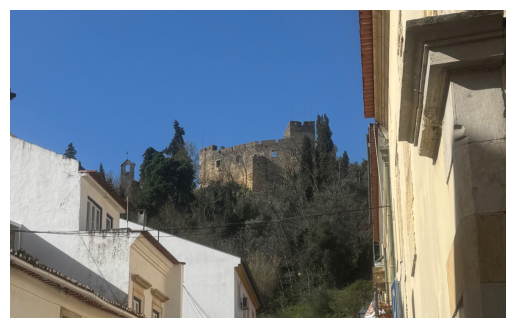
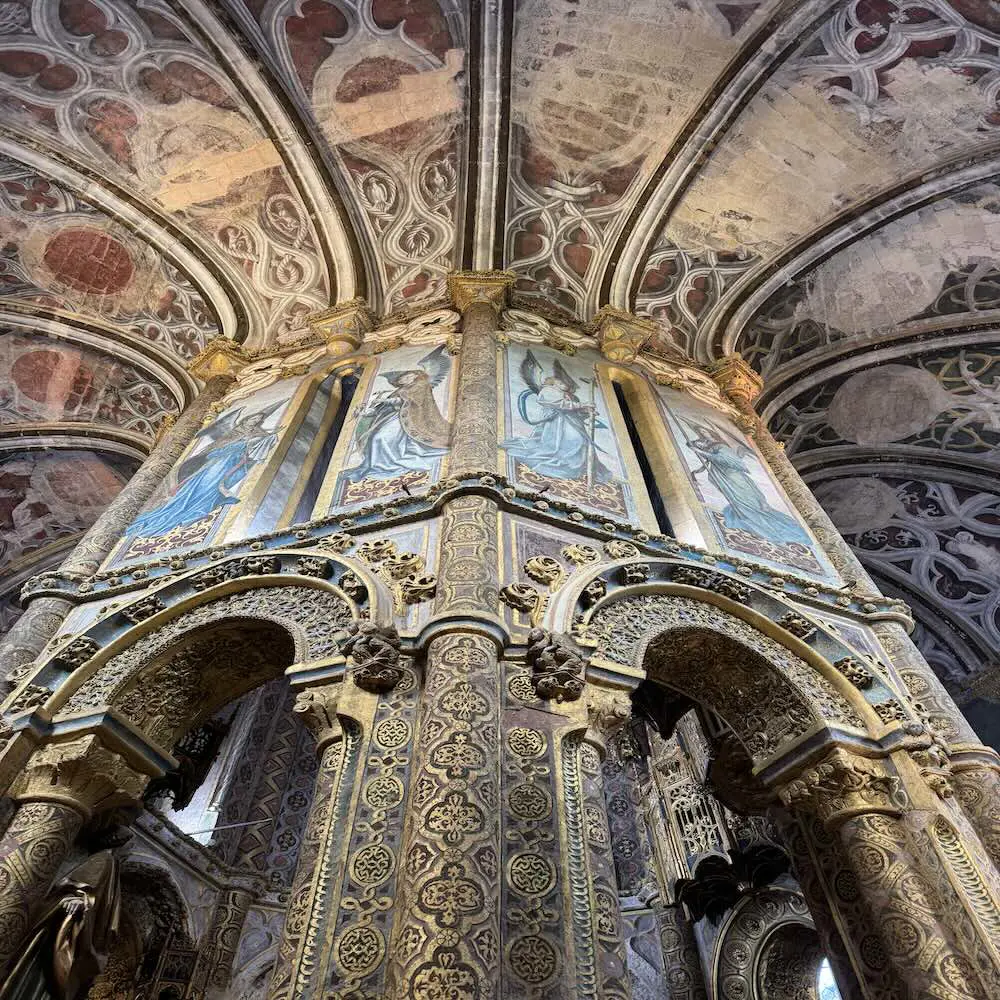
On the fringes of the Christian West, a very different scenario unfolded. In Portugal, the Templars had been helping to defend the kingdom’s young borders since the 12th century: Tomar, with its castle and round church, the Charola, stands as a stone chronicle of that struggle. When the French persecution erupted, King Dinis chose a different path: he acknowledged the pressure from Rome but refused to destroy his own knights.
Through a combination of diplomacy and legal ingenuity, he negotiated with the Pope for years. The result: on 14 March 1319, Pope John XXII approved the establishment of a new order of knights, the Order of Christ, into which the Portuguese Knights Templar were incorporated almost seamlessly. Instead of dungeons, a quiet metamorphosis awaited them. Cloaks and seals changed, but the castles – including Tomar – the Church of Santa Maria do Olival (the burial place of the Portuguese Templar Masters) and the estates remained largely in the same hands. The new order was initially based in Castro Marim in the Algarve, until it moved its headquarters back to Tomar in 1357.
From Knights Templar to explorers
From Tomar, the Order’s focus gradually shifted from the Holy Land to the ocean. In the 15th century, the cross of the Order of Christ adorned the sails of Portuguese exploration vessels. Infante Henry the Navigator, Grand Master of the Order from 1417 to 1460, helped to fund his school of navigation in Sagres with the Order’s revenues. Whilst the Order in France literally went up in flames, in Portugal it grew to become the driving force behind a naval power. It had its own revenues, its own fleet and considerable influence at court.
What really happened to the ‘disappeared’ Knights Templar
Following their official dissolution in 1312, the question arises: did the Knights Templar really disappear? Historically speaking, the answer is rather matter-of-fact: their possessions – and often their members as well – were absorbed into other orders. In Portugal, this involved the Order of Christ; in Aragon and Valencia, the Order of Montesa (founded in 1317 and affiliated with the Order of Calatrava); and in ordinary secular structures.
From the 18th century onwards, so-called ‘Templar degrees’ began to appear in Masonic lodges, particularly in Scotland, England and France: rituals, symbols and stories drawing on the chivalric order. Historians are, incidentally, quite adamant that no direct organisational link or bloodline between the medieval Knights Templar and these later brotherhoods has been proven. This is largely rejected by both historians and Freemasonry itself. What is true, however, is that these lodges deliberately chose the emblem and mysticism of the Knights Templar as a romantic legacy. That association remains powerful. To this day, the red-and-white cross keeps reappearing, like an echo of an order that ceased to exist over seven centuries ago.
Templar sites in Portugal
- Tomar, Castelo de Tomar & Convento de Cristo (with the Charola): the heart of the Portuguese Templars, founded around 1160 by Grand Master Gualdim Pais and, from 1357, the headquarters of their successor, the Order of Christ.
- Sintra, Castle & Comenda of Santa Maria: following the conquest of Lisbon in 1147, King Afonso Henriques entrusted the castle and the defence of the town to the Knights Templar, who maintained their own commandery there, centred around the Church of Santa Maria.
- Idanha-a-Velha: this ancient town — once the Roman settlement of Egitânia — was granted to the Knights Templar in the 13th century; the Torre dos Templários, which still stands today, rises from the ruins of a Roman temple dedicated to Venus.
- Castelo de Almourol: a castle dramatically situated on a small river island in the Tagus, fortified by Gualdim Pais in 1171.
- Castelo de Soure: Portugal’s first Templar castle, donated by Countess Teresa in 1128.
- Castelo de Pombal: one of the Order’s early border forts, featuring innovations in fortification dating from the 1170s.
- Castelo de Longroiva: assigned to the Order in 1145, with early examples of fortified keep.
- Castelo de Monsanto: donated to the Knights Templar in 1165, although the castle passed to the Order of Santiago as early as 1172 — a brief but authentic chapter in the history of this iconic granite village.
- Castro Marim (Algarve): the Order of Christ’s first, brief seat, prior to its move to Tomar in 1357.
Templar sites in Spain
- Miravet (Catalonia/Tarragona): a spectacular castle towering high above the Ebro, granted to the Order in 1153.
- Monzón (Aragon/Huesca): developed from 1143 onwards into one of the most powerful Templar castles in Aragon.
- Castillo de los Templarios, Ponferrada (Castile and León): an imposing fortress along the Camino de Santiago, granted to the Order in 1178.
- Santa María de Eunate (Navarre): a striking octagonal pilgrimage church, built around 1170, with strong links to the Knights Templar.
- Church of Vera Cruz, Segovia (Castile and León): a dodecagonal Romanesque church, presumably built by the Knights Templar modelled on the Church of the Holy Sepulchre in Jerusalem.
- Castell de Tortosa (Catalonia/Tarragona): a medieval fortress which was reinforced and extended by the Order.
- Jerez de los Caballeros (Extremadura): a Templar castle featuring the infamous ‘Tower of Blood’.
- Castillo de San Servando, Toledo: an early fortress near the Alcántara Bridge, later associated with the Order.
- Peñíscola (Valencia): a coastal castle built between 1294 and 1307, which passed to the Order of Montesa following the dissolution of the Knights Templar.
- Castillo de Montesa (Valencia): headquarters of the Order of Montesa, the direct successor to the Aragonese and Valencian Knights Templar from 1317 onwards.
Finally: why these places remain worth visiting
The true story of the Knights Templar needs neither a hidden treasure nor an unbroken secret brotherhood to be fascinating. It is the story of a handful of knights who grew to become a European superpower. It fell due to a king’s debts, and in Portugal – almost the only place in Europe – it simply continued to exist under a new name. From the chilling dungeons of Chinon to the sun-drenched Charola of Tomar and the granite silence of Monsanto: the same order, two completely different fates.
Perhaps that is the true power of these places: not the mystery itself, but how tangible and palpable the history still is there. When you stand in the round church of Tomar, you are standing on the very spot where, eight centuries ago, knights knelt, managed funds and forged plans for a world that was just beginning to open up.
For the ‘energy-sensers’ amongst us: there is a great deal to experience in these places. Places like Tomar and Monsanto hold a wealth of knowledge and share it with those who are open to it.