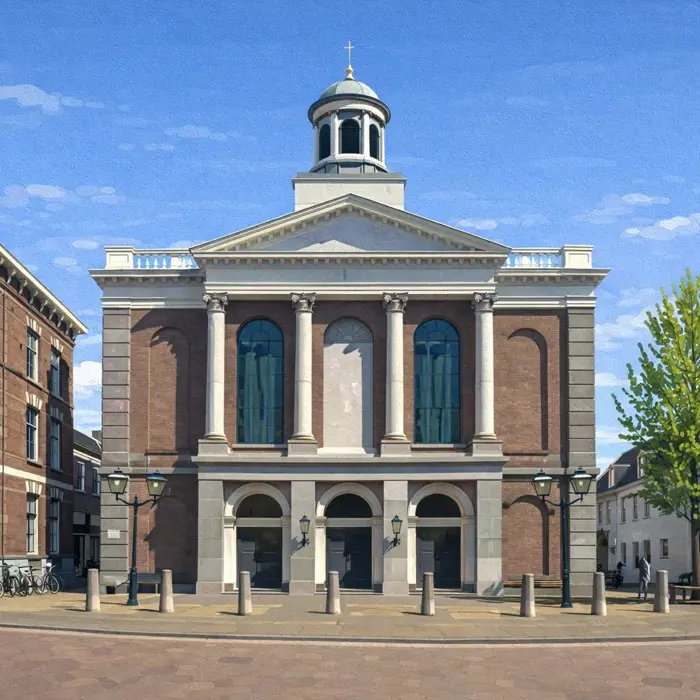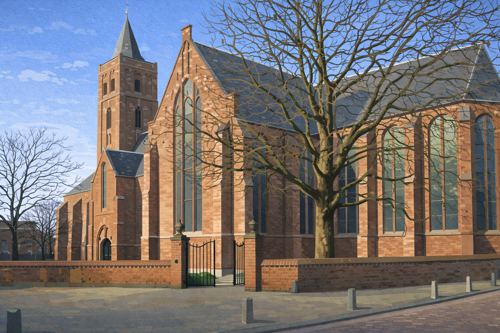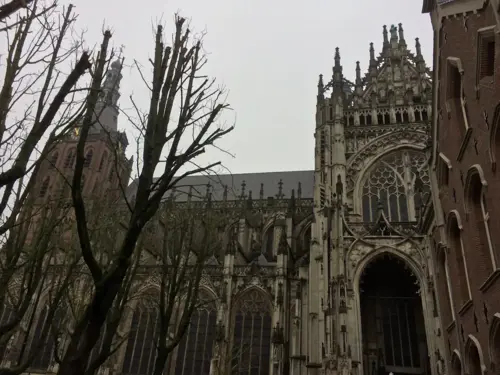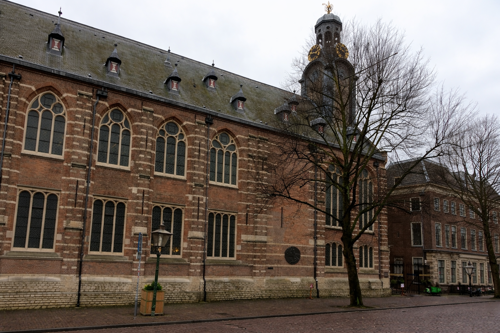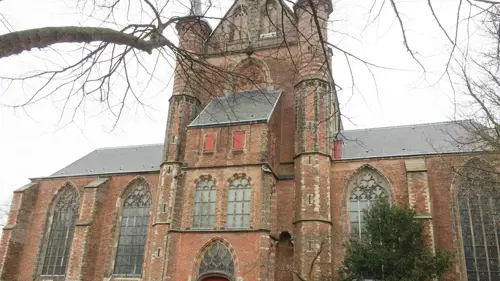




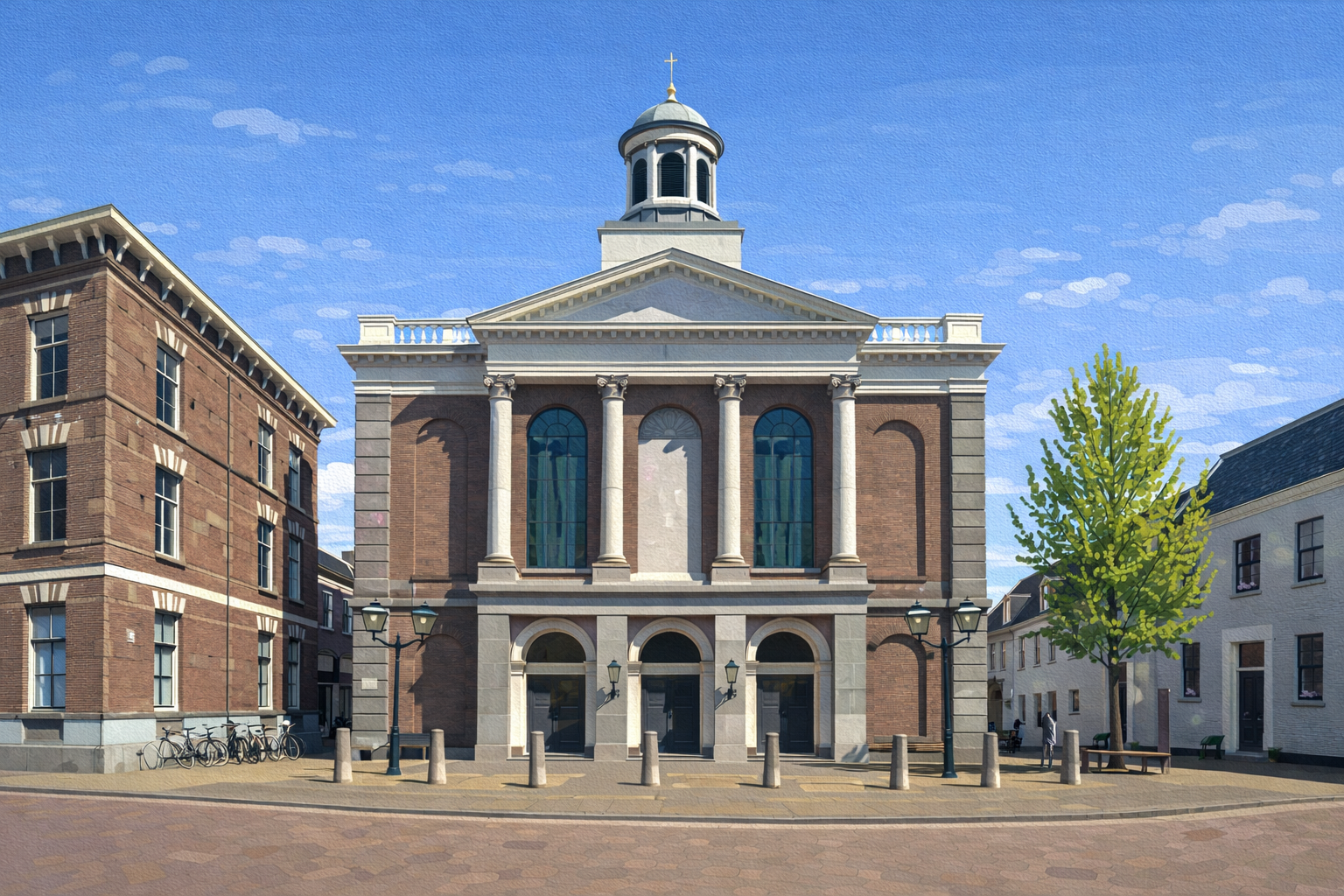





Situated along the elegant streets of Haarlem, St. Josephkerk showcases neoclassical architectural elements within a mainly residential area. Its red-brick exterior features pointed arch windows and buttresses, while the interior is highlighted by detailed woodwork. This style is characteristic of ecclesiastical buildings from the mid-19th century in the region. In close proximity, other important landmarks such as the Grote Kerk (St. Bavokerk) further illustrate Haarlem’s rich architectural tradition.
Archaeological and Historical Findings
Built between 1841 and 1843, St. Josephkerk was designed by H.H. Dansdorp in a neoclassical style and is classified as a "waterstaatskerk," a type of state-sponsored church. The interior includes stained glass windows crafted by Jules Dobbelaere and two side altars created by Pierre Cuypers. After the Catholic hierarchy was reestablished in 1853, the church served as the cathedral of the Haarlem diocese until the completion of the St. Bavo Cathedral in 1898. The church contains a dedicated Mary Chapel (Mariakapel), notable for a statue historically associated with the Beguines, a religious community linked to the location. The church has continually functioned as a parish and community center for local Catholics and has undergone various restoration efforts to preserve its original features.
Accessibility and Visitor Information
The church can be reached from its main entrance on Jansstraat, located about 120 meters down a paved walkway. The path is level and accessible for wheelchairs and strollers, with no steps or uneven ground. Access to the church is free of charge.